
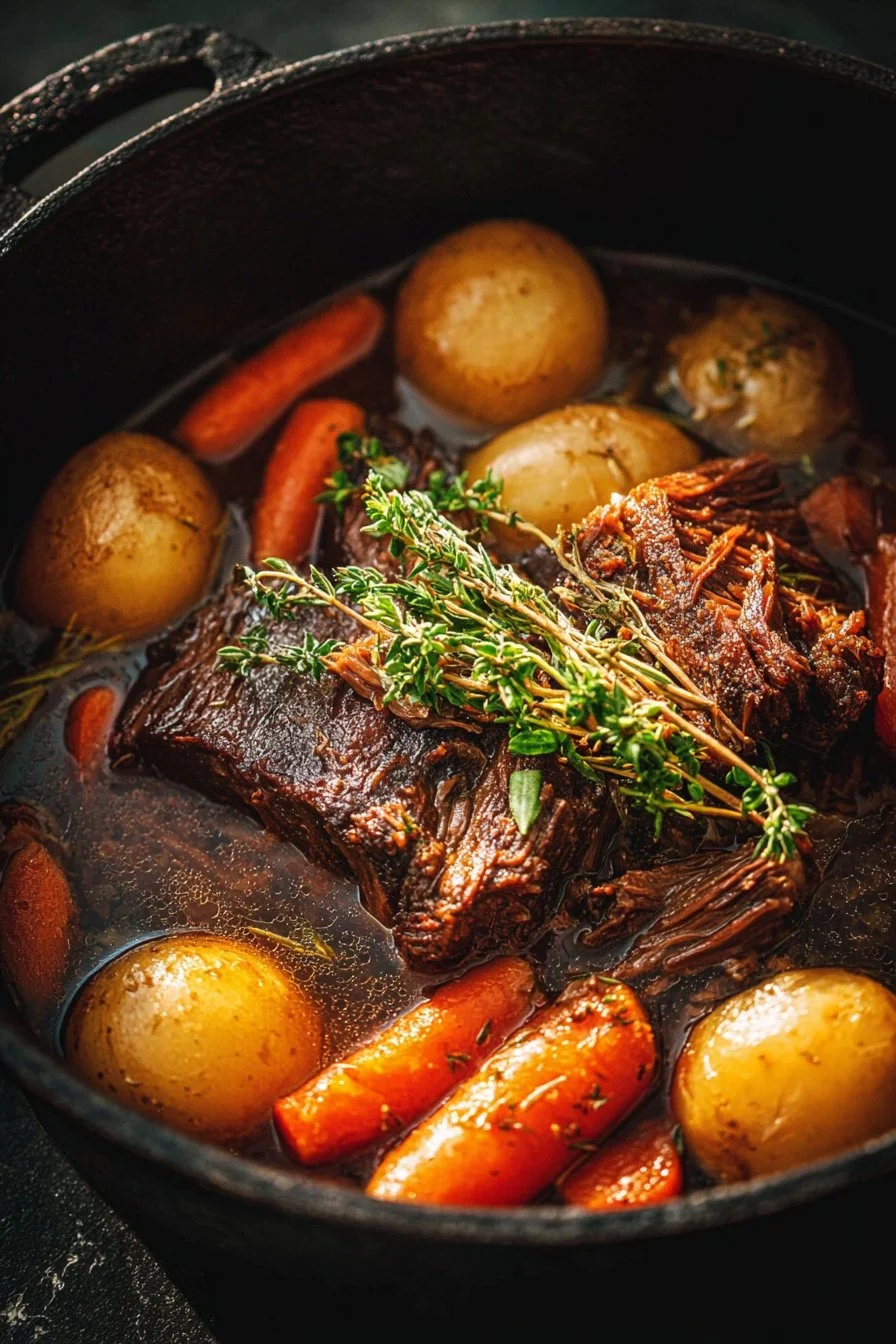
A Sunday-sized pot roast that’s braised low and slow in a heavy Dutch oven can turn an ordinary evening into something cozy and memorable. This recipe uses a 3–4 pound boneless beef chuck, simple aromatics, chicken stock, and a short oven braise that finishes with tender potatoes and carrots — the kind of meal that feeds a crowd and makes leftovers worth saving. If you’re planning a full menu, consider a show-stopping marzipan Thanksgiving dessert to finish the night on a sweet note.
Why you’ll love this dish
This Dutch oven pot roast is the kind of cooking that rewards patience. Searing builds deep flavor, gentle braising breaks down connective tissue into silky meat, and finishing the sauce concentrates everything into a rich gravy.
“The roast fell apart with a fork and the sauce tasted like it had simmered for hours—total comfort food.” — a home cook’s quick review
Reasons to make it:
- Economical: chuck roast is flavorful, forgiving, and budget-friendly.
- Crowd-pleaser: easy to scale up for family meals or holiday gatherings.
- Make-ahead friendly: flavors deepen overnight and it reheats beautifully.
Step-by-step overview
- Season and sear the chuck roast to develop a brown crust.
- Saute aromatics (onion, celery) and build flavor with tomato paste and Worcestershire.
- Deglaze with stock, return the roast, and braise in the oven at 300°F until nearly tender.
- Add potatoes and carrots for the final hour to cook through in the braising liquid.
- Remove everything, skim fat, reduce the braising liquid, and thicken with cornstarch to make gravy.
This preview sets expectations: expect about 3–3.5 hours total cooking time (active hands-on time is mostly searing and a few mid-cook adjustments).
What you’ll need
- 3–4 lb boneless beef chuck roast, trimmed of excess silver skin
- 2 tablespoons olive oil (can substitute vegetable oil)
- 1 large onion, diced
- 1 rib celery, diced
- 2 cloves garlic, smashed (or 1 teaspoon garlic paste)
- 2 tablespoons tomato paste
- 1 tablespoon Worcestershire sauce
- 3 cups chicken stock (see notes)
- 1 lb Yukon Gold potatoes, halved or quartered depending on size
- 1 lb carrots, peeled and diced into 1–2 inch pieces
- 2 tablespoons cornstarch (for thickening)
- Salt and freshly ground black pepper, to taste
- Optional garnish: chopped parsley
Ingredient notes and substitutions:
- Stock: chicken stock keeps the sauce lighter; swap for beef stock for deeper beef flavor or use 1 cup red wine + 2 cups stock for a richer braise.
- Potatoes: Yukon Golds hold their shape well; russets will break down more and can thicken the sauce.
- Cornstarch alternative: 2 tablespoons all-purpose flour mixed with cold water (or a beurre manié of equal parts butter and flour).
Step-by-step instructions
- Preheat oven to 300°F. Pat the chuck roast dry with paper towels and season generously on all sides with salt and pepper.
- Heat the Dutch oven over medium-high heat. Add olive oil. When shimmering, sear the roast 5–7 minutes per side until a deep golden-brown crust forms. Transfer the roast to a plate and set aside.
- Lower heat to medium. Add the diced onion and celery to the pot and cook, stirring occasionally, until softened and beginning to brown, about 8–10 minutes. Stir in the smashed garlic, tomato paste, and Worcestershire sauce and cook 1–2 minutes to caramelize the paste.
- Pour in the chicken stock and use a wooden spoon to scrape any browned bits from the bottom of the pot (deglazing). Return the roast to the Dutch oven; the liquid should come about halfway up the meat. Bring to a gentle simmer on the stovetop.
- Cover the Dutch oven and transfer to the preheated oven. Braise for 2 hours.
- After 2 hours, add the halved potatoes and diced carrots around the roast. Cover tightly and continue cooking for another 1–1.5 hours, until the meat and vegetables are fork-tender.
- Remove the roast and vegetables to a platter and tent with foil to rest. Skim excess fat from the surface of the braising liquid. Place the pot over medium heat and simmer to reduce slightly if desired.
- Mix 2 tablespoons cornstarch with about 3 tablespoons cold water to make a slurry. Whisk the slurry into the simmering liquid until the gravy thickens. Taste and adjust seasoning with salt and pepper.
- Slice or shred the roast and serve with the vegetables, spooning gravy over the top and finishing with parsley if you like.
Best ways to enjoy it
Serve slices or shredded pieces over a bed of mashed potatoes, buttered egg noodles, or spooned onto crusty bread for an open-faced sandwich. A crisp green salad or braised green beans provides a bright contrast to the rich meat.
For a playful sweet-and-salty pairing, place a small bowl of chocolate-covered potato chips on the dessert table — their crunch and sweetness make an unexpected counterpoint to the savory gravy.
Wine and drink pairings:
- Red: a medium-bodied Merlot or Zinfandel complements the roast.
- Non-alcoholic: a lightly sparkling apple cider refreshes the palate.
Storage and reheating tips
- Refrigerate: Store roast and gravy in separate airtight containers. Keep in the refrigerator up to 3–4 days.
- Freeze: Freeze meat and sauce for up to 3 months. Cool completely before freezing and use freezer-grade containers or vacuum bags.
- Thawing: Thaw overnight in the refrigerator.
- Reheating: Reheat gently on the stovetop over low heat, covered, or in a 325°F oven until warmed through. Microwave reheating is fine for single portions but cover to retain moisture. Add a splash of stock or water if the sauce has tightened.
- Safety: Reheat to an internal temperature of 165°F when serving to ensure safety.
Helpful cooking tips
- Sear well: Don’t skip a proper sear—Maillard browning gives the final gravy depth that simmering alone can’t create.
- Don’t overcrowd the pan while searing; work in batches if necessary.
- Low & slow: Maintain 300°F braising temperature for even breakdown of collagen; higher heat can dry the meat.
- Fork-tender test: Instead of relying only on time, test with a fork — the roast should pull apart easily at the center when done.
- Skim fat: After resting, spoon off excess fat from the surface before thickening the sauce for a cleaner-tasting gravy.
- Rest before slicing: Rest the roast 10–15 minutes to let the juices redistribute; this keeps sliced meat moist.
Creative twists
- Slow cooker: After searing and sautéing, transfer everything to a slow cooker and cook on low for 8–9 hours, adding potatoes and carrots for the final 2 hours.
- Instant Pot: Brown on Sauté, then pressure cook on high for about 60–75 minutes (natural release). Add vegetables and pressure for another 5–8 minutes.
- Herb-forward: Add a couple sprigs of thyme and rosemary and a bay leaf to the braising liquid for aromatic depth.
- Spiced twist: Stir in smoked paprika or a teaspoon of Dijon mustard with the tomato paste for a different profile.
- Vegetarian option: Swap beef for large portobello mushrooms and use vegetable stock; reduce braising time.
Common questions
Q: Can I use beef stock instead of chicken stock?
A: Yes. Beef stock will deepen the beefy flavor and make a richer gravy. Use whichever you prefer or a mix with a splash of red wine.
Q: How long should I braise a 3–4 pound chuck roast?
A: The recipe plan (2 hours covered, then 1–1.5 hours with vegetables) is a reliable guideline. Because cuts vary, start checking at the 2.5-hour mark — the roast is done when it’s fork-tender and easily pulls apart.
Q: Can I thicken the gravy without cornstarch?
A: Yes. Whisk in a slurry of all-purpose flour and water, or simmer the sauce longer to reduce. A beurre manié (equal parts softened butter and flour kneaded together) whisked in at the end also works and adds silkiness.
Q: Is this safe to prepare ahead?
A: Absolutely. Pot roast is a classic make-ahead dish. Refrigerate overnight; flavors meld and often taste better the next day. Reheat gently and add a splash of stock if the sauce has thickened.
Q: How do I know if the roast should be shredded or sliced?
A: For fork-tender chuck (typically reached around 195–205°F internal), shredding works beautifully. If you prefer slices, aim for a little less breakdown so the roast holds its grain when cut. Either way tastes delicious.
Q: Can I halve the recipe?
A: Yes. If you halve the roast size, reduce cooking time modestly and check for tenderness earlier; smaller roasts reach fork-tender faster.
Dutch Oven Pot Roast
Ingredients
For the pot roast
- 3–4 lb boneless beef chuck roast, trimmed of excess silver skin
- 2 tablespoons olive oil (can substitute vegetable oil)
- 1 large onion, diced
- 1 rib celery, diced
- 2 cloves garlic, smashed (or 1 teaspoon garlic paste)
- 2 tablespoons tomato paste
- 1 tablespoon Worcestershire sauce
- 3 cups chicken stock (for deeper flavor, swap for beef stock or use 1 cup red wine + 2 cups stock)
- 1 lb Yukon Gold potatoes, halved or quartered depending on size
- 1 lb carrots, peeled and diced into 1–2 inch pieces
- 2 tablespoons cornstarch (for thickening)
- Salt and freshly ground black pepper, to taste
- Optional garnish: chopped parsley
Instructions
Preparation
- Preheat oven to 300°F. Pat the chuck roast dry with paper towels and season generously on all sides with salt and pepper.
- Heat the Dutch oven over medium-high heat. Add olive oil. When shimmering, sear the roast 5–7 minutes per side until a deep golden-brown crust forms. Transfer the roast to a plate and set aside.
- Lower heat to medium. Add the diced onion and celery to the pot and cook, stirring occasionally, until softened and beginning to brown, about 8–10 minutes.
- Stir in the smashed garlic, tomato paste, and Worcestershire sauce and cook 1–2 minutes to caramelize the paste.
- Pour in the chicken stock and use a wooden spoon to scrape any browned bits from the bottom of the pot (deglazing). Return the roast to the Dutch oven; the liquid should come about halfway up the meat. Bring to a gentle simmer on the stovetop.
Braising
- Cover the Dutch oven and transfer to the preheated oven. Braise for 2 hours.
- After 2 hours, add the halved potatoes and diced carrots around the roast. Cover tightly and continue cooking for another 1–1.5 hours, until the meat and vegetables are fork-tender.
- Remove the roast and vegetables to a platter and tent with foil to rest.
- Skim excess fat from the surface of the braising liquid. Place the pot over medium heat and simmer to reduce slightly if desired.
Thickening Gravy
- Mix 2 tablespoons cornstarch with about 3 tablespoons cold water to make a slurry. Whisk the slurry into the simmering liquid until the gravy thickens.
- Taste and adjust seasoning with salt and pepper.
- Slice or shred the roast and serve with the vegetables, spooning gravy over the top and finishing with parsley if you like.