
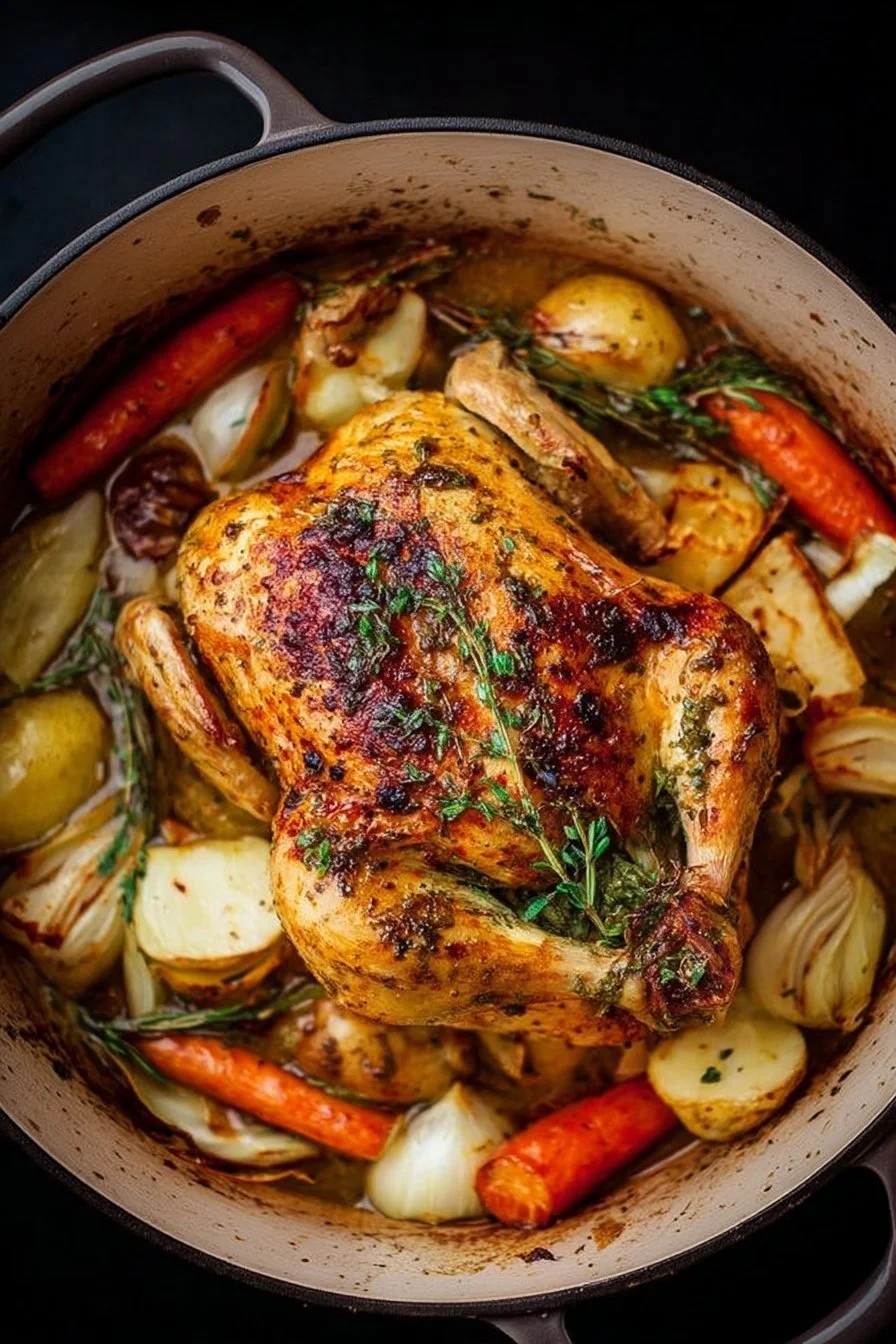
A Dutch-oven roast chicken with vegetables is the kind of dinner that smells like home: crackling skin, herb-scented butter slipped under the breast, and a pan of caramelized carrots and potatoes soaking up all the juices. It’s a one-pot roast that’s simple enough for a weeknight yet polished enough for guests. If you love hands-off, cozy cooking, try my notes on a classic Dutch-oven pot roast for more one-pot dinner inspiration while this chicken roasts.
Why you’ll love this dish
This roast is the kind of recipe that delivers maximum flavor with minimal babysitting. A few reasons to try it:
- One-pot convenience: the Dutch oven traps steam, browns the bird, and yields vegetables cooked in the pan juices.
- Flavor layering: herb butter under the skin flavors the meat directly; lemon in the cavity brightens the whole roast.
- Economical and family-friendly: a single bird feeds several people and stores well for leftovers.
"Hands-off but restaurant-worthy — the herbs under the skin make the chicken taste like it’s been slow-roasted all day."
This recipe works for weeknight suppers, Sunday family meals, or a small holiday table when you don’t want to fuss with multiple dishes.
The cooking process explained
Before you dive in, here’s the short version so you know what to expect: preheat a heavy Dutch oven, prepare a herb butter and tuck it under the breast skin, stuff the cavity with lemon, and layer chopped carrots, potatoes, onions, and smashed garlic in the base. Roast covered at high heat to jump-start browning, then lower the temperature to finish cooking gently until the thickest part of the thigh hits 165°F (74°C). Rest, carve, and spoon the pan juices over the vegetables.
This method splits the roast into two stages: a short, hot blast for color and a longer, moderate roast for even doneness and juicy meat.
What you’ll need
- 1.5 kg (3–4 lb) whole chicken, patted dry
- 50 g slightly salted butter, softened (about 3½ tablespoons)
- Salt and freshly ground black pepper, to taste
- ½ cup low-sodium chicken stock
- ½ tbsp dried rosemary
- ½ tbsp dried parsley
- ½ tbsp dried tarragon
- ½ tbsp dried coriander
- ½ tbsp dried thyme
- ½ tsp red pepper flakes (optional, for a touch of heat)
- 1 lemon, quartered
- 2 medium carrots, chopped into chunks
- 1½ lb baby potatoes, halved or quartered depending on size
- 1 medium onion, chopped
- 5 garlic cloves, smashed
Ingredient notes and substitutions:
- Butter under the skin gives a silky mouthfeel; use olive oil for dairy-free (rub oil under the skin and outside).
- If you prefer fresh herbs, double the quantity and finely chop them before mixing with the butter.
- Yukon or baby potatoes both work; cut to about equal size for even cooking.
Step-by-step instructions
- Preheat the oven to 220°C / 425°F with a clean cast-iron Dutch oven (lid on) inside—this builds an instant-hot vessel for the chicken.
- Pat the chicken dry with paper towels. Season the cavity and the outside generously with salt and pepper.
- In a small bowl, mash the softened butter with rosemary, parsley, tarragon, coriander, thyme, and red pepper flakes until combined. Gently separate the skin over the chicken breasts and rub half of the herb butter directly on the meat under the skin. Smear the remaining butter on the outside of the chicken.
- Stuff lemon quarters into the cavity and truss the legs with kitchen twine for even cooking.
- Carefully remove the hot Dutch oven from the oven. Place the chopped carrots, potatoes, onion, and smashed garlic in the base. Season the vegetables with salt and pepper and squeeze the remaining lemon juice over them.
- Set the chicken on top of the vegetables, breast-side up. Pour ½ cup low-sodium chicken stock into the pot (not over the bird). Cover with the lid and return to the oven.
- Roast covered at 220°C / 425°F for 20–30 minutes to get a head start on browning. Then reduce the oven to 180°C / 365°F and continue roasting, covered, for another 40–50 minutes. Use an instant-read thermometer in the thickest part of the thigh (avoiding bone): the safe internal temperature is 165°F / 74°C.
- Once it reaches temperature, remove the Dutch oven and let the chicken rest, uncovered, for 10–15 minutes before carving. Resting lets juices redistribute and the pan juices thicken slightly. Carve and serve with the vegetables and pan juices spooned over.
Timing tips: total roast time varies with bird size and oven accuracy—expect roughly 1 hour 10 minutes for a 1.5 kg bird, plus resting.
How to serve Dutch-oven roast chicken with vegetables
Best ways to enjoy it:
- Carve the breast and thighs and arrange over the roasted vegetables, then spoon pan juices and drippings over everything.
- For a cleaner presentation, place vegetables in the center of a warm platter and carve the chicken on top or alongside.
- Serve with simple sides like a green salad, steamed broccoli, or buttered peas. A crusty baguette is great for mopping up juices.
Pairing ideas:
- Wines: medium-bodied Chardonnay or Grenache; for a lighter option, a crisp Sauvignon Blanc.
- Non-alcoholic: a lemon-mint iced tea or sparkling water with a twist of citrus.
Storage and reheating tips
Safety and shelf life:
- Refrigerate leftovers within 2 hours of cooking. Store chicken and vegetables in airtight containers.
- Refrigerated: 3–4 days; frozen: up to 3–4 months for best quality. Label with the date.
Reheating:
- Oven: reheat at 160–170°C / 325–340°F until internal temperature reaches 165°F (74°C). Cover with foil to prevent drying and add a splash of stock to revive the pan juices.
- Microwave: OK for single portions, but expect slightly drier meat—cover and heat in short bursts, checking temperature.
- To make a quick gravy: pour pan juices into a skillet, whisk in 1 tsp flour or cornstarch mixed with cold water, simmer until thickened, and season.
Helpful cooking tips
- Dry the skin thoroughly: this is the single most important step for crisp skin. Pat the bird thoroughly with paper towels.
- Use a thermometer: visual cues can lie—167°F at the thigh bone often corresponds to a safe 165°F in the thickest meat.
- Slide butter under the skin carefully: slide a finger or the back of a spoon between skin and breast to create a pocket, then distribute butter evenly for flavored meat and a glossy finish.
- Hot Dutch oven trick: preheating the pot jump-starts browning and helps the skin crisp. Use oven mitts and a stable surface when transferring.
- Rest before carving: at least 10 minutes for a 3–4 lb bird; larger birds need longer to allow juices to settle.
Recipe variations
- Citrus-herb swap: use orange or lime instead of lemon and add a touch of honey to the butter for a glazed finish.
- Garlic-rosemary butter: increase fresh garlic and rosemary in the butter for a rustic flavor.
- Mediterranean: add olives and cherry tomatoes to the vegetable layer, and finish with a drizzle of olive oil and chopped parsley.
- Low-carb: swap potatoes for extra zucchini, fennel, or cauliflower florets.
- Want a spicy, smaller-piece option? If you like cooking chicken in an air fryer for intense heat and a crisp finish, try the air fryer bang-bang chicken recipe for spicy wings and tenders.
Common questions
Q: Can I use fresh herbs instead of dried?
A: Yes. Use roughly double the amount of fresh herbs by volume (e.g., 1 tbsp dried ≈ 2 tbsp fresh). Finely chop fresh herbs and mix into the butter before slipping it under the skin.
Q: How do I know the chicken is done without a thermometer?
A: The safest method is a thermometer. If you don’t have one, pierce the thigh near the bone—clear juices that run without pink indicate doneness—but this is less reliable than checking temperature.
Q: Can I roast vegetables under the chicken to save time?
A: Absolutely — layering the vegetables under the bird lets them bathe in drippings and pick up flavor. Cut them into evenly sized pieces so they cook through at the same rate.
Q: Is it OK to roast at a single temperature instead of starting high then lowering?
A: You can roast at a constant 180°C / 365°F, but the two-stage method (hot then lower) gives better browning and more color on the skin while ensuring even internal cooking.
Q: Can I brine the chicken ahead of time?
A: Yes—brining (wet or dry) can improve juiciness and seasoning. If you brine, reduce added salt during seasoning. Pat the bird very dry after brining before applying butter.
If you want more one-pot roast inspiration or alternative cooking methods, check the linked recipes above for additional techniques and flavor ideas. Enjoy the cozy, aromatic roast—and don’t forget to save those pan juices; they’re small-batch gravy gold.
Dutch-Oven Roast Chicken with Vegetables
Ingredients
For the chicken
- 1.5 kg whole chicken, patted dry About 3–4 lb.
- 50 g slightly salted butter, softened About 3½ tablespoons.
- Salt and freshly ground black pepper, to taste
- ½ cup low-sodium chicken stock
- 1 lemon, quartered
Herb mixture
- ½ tbsp dried rosemary
- ½ tbsp dried parsley
- ½ tbsp dried tarragon
- ½ tbsp dried coriander
- ½ tbsp dried thyme
- ½ tsp red pepper flakes (optional) For a touch of heat.
For the vegetables
- 2 medium carrots, chopped into chunks
- 1.5 lb baby potatoes, halved or quartered depending on size
- 1 medium onion, chopped
- 5 cloves garlic, smashed
Instructions
Preparation
- Preheat the oven to 220°C / 425°F with a clean cast-iron Dutch oven (lid on) inside.
- Pat the chicken dry with paper towels. Season the cavity and the outside generously with salt and pepper.
- In a small bowl, mash the softened butter with rosemary, parsley, tarragon, coriander, thyme, and red pepper flakes until combined.
- Gently separate the skin over the chicken breasts and rub half of the herb butter directly on the meat under the skin. Smear the remaining butter on the outside of the chicken.
- Stuff lemon quarters into the cavity and truss the legs with kitchen twine for even cooking.
Cooking
- Carefully remove the hot Dutch oven from the oven. Place the chopped carrots, potatoes, onion, and smashed garlic in the base.
- Season the vegetables with salt and pepper and squeeze the remaining lemon juice over them.
- Set the chicken on top of the vegetables, breast-side up. Pour ½ cup low-sodium chicken stock into the pot (not over the bird).
- Cover with the lid and return to the oven.
- Roast covered at 220°C / 425°F for 20–30 minutes to get a head start on browning.
- Then reduce the oven to 180°C / 365°F and continue roasting, covered, for another 40–50 minutes. The internal temperature should reach 165°F / 74°C.
- Once done, remove from the oven and let the chicken rest, uncovered, for 10–15 minutes.