
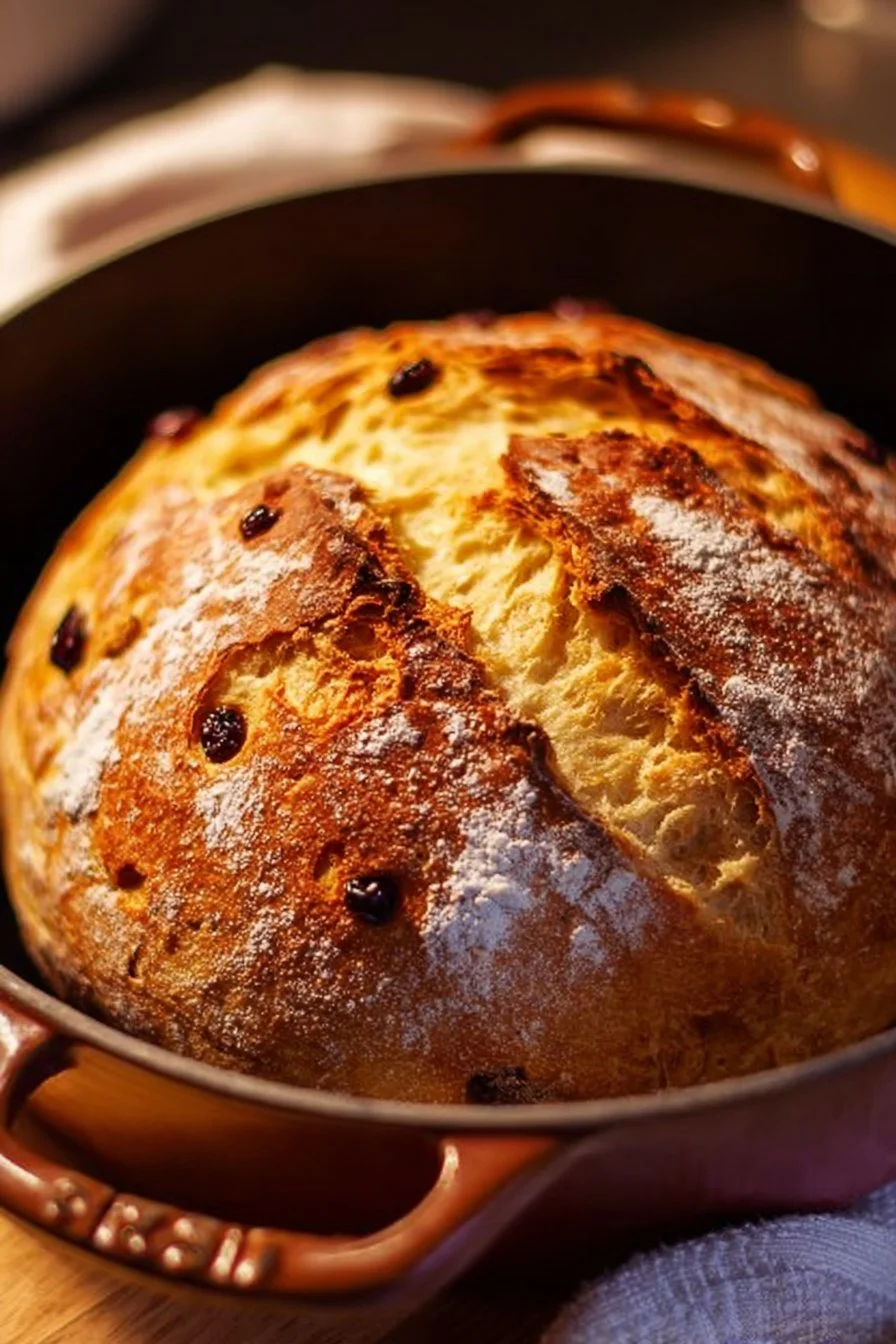
This no-knead Dutch oven loaf produces a crisp, blistered crust and a soft, open crumb with almost no hands-on time. It’s the kind of bread you can mix up the night before, forget about while you sleep, and pull out of the oven the next day looking — and tasting — like an artisan loaf.
If you enjoy using heavy cookware for big flavor, this method pairs beautifully with other one-pot recipes such as Dutch oven pot roast, making the Dutch oven a kitchen workhorse.
Why you’ll love this dish
This recipe is essentially foolproof: minimal ingredients, minimal kneading, and maximum crunch. The long, slow room-temperature rest develops flavor and texture without a mixer or complicated techniques. It’s perfect for:
- Weeknight dinners when you want fresh bread but not a full baking day.
- Weekend brunches where a rustic loaf makes the table feel special.
- Beginner bakers who want stunning results without hours of active work.
“I made this with just pantry staples and still ended up with a bakery-worthy crust. Super simple and so satisfying.” — home baker review
The crusty exterior and open, slightly chewy crumb make it a versatile loaf: sandwiches, toast, soup dipping, or just buttered with a pinch of flaky salt.
Step-by-step overview
This recipe follows a simple timeline so you know what to expect before you start:
- Mix dry ingredients and add lukewarm water to make a shaggy dough. No kneading required.
- Rest the covered dough at room temperature for 12–18 hours. This is where flavor and structure develop.
- Shape lightly, rest 30 minutes while the oven and Dutch oven preheat.
- Bake covered (steam traps in), then uncover to deepen the crust color.
- Cool completely before slicing to finish the crumb.
Total hands-on time: about 20 minutes across the whole process. Active time is concentrated in mixing and transferring to the Dutch oven.
What you’ll need
- 4 cups all-purpose flour (about 500 g) — can substitute up to 100–150 g with whole wheat for a nuttier loaf (see Variations).
- 2 teaspoons fine salt
- 1/2 teaspoon instant yeast
- 1 1/2 cups lukewarm water (about 360 ml, 75–80°F / 24–27°C)
Notes and substitutions:
- Instant yeast works best straight in the flour. If using active dry yeast, dissolve it in the water and let sit 5–10 minutes before mixing.
- For a more open crumb, use high-protein flour (bread flour) or a blend of AP and bread flour.
- Optional: 1–2 tablespoons olive oil for a slightly softer crust.
Step-by-step instructions
- In a large bowl, whisk the flour, salt, and instant yeast until evenly distributed.
- Pour in the lukewarm water and stir with a spoon or spatula until you have a shaggy, sticky dough. Don’t overmix — you’re only looking to hydrate the flour.
- Cover the bowl with a clean dish towel and leave the dough on the counter for 12–18 hours. Aim for a warm spot, but avoid direct heat or drafts. The dough should rise and show bubbles on the surface when ready.
- Lightly flour a work surface and turn the dough out. Gently shape it into a round by folding the edges under to build surface tension; handle it gently to retain air pockets.
- Place the shaped dough seam-side down on lightly floured parchment and cover loosely. Let it rest about 30 minutes while you preheat the oven to 450°F (232°C). Put your Dutch oven (lid on) inside the oven as it preheats so it’s smoking hot — this creates the steam and blast of heat that makes the crust.
- When preheated, carefully remove the hot Dutch oven. Lift the dough on the parchment and place it into the pot. Cover with the lid and return to the oven. Bake covered for 30 minutes.
- Remove the lid and bake another 15–20 minutes until the crust is deep golden brown and the loaf registers about 200–205°F (93–96°C) if you use an instant-read thermometer.
- Carefully transfer the bread to a cooling rack and let it cool completely before slicing — at least 1 hour. Cooling lets the crumb finish setting; slicing too early makes the crumb gummy.
Best ways to enjoy it
This loaf is incredibly versatile. Try:
- Thick slices with butter and flaky sea salt for breakfast.
- Warmed and split for grilled cheese with sharp cheddar.
- Served alongside soups and stews for dipping and soaking up broth.
- Topped with olive oil, crushed garlic, and herbs for an instant bruschetta.
For a contrasting texture experience, pair a warm slice with fried components or regional bakes such as Indian fry bread when building a brunch spread — the fried, puffy flatbread contrasts nicely with the crusty loaf.
Storage and reheating tips
- Room temperature: Store the cooled loaf in a paper bag or wrapped in a clean kitchen towel for 2–3 days. Avoid plastic for freshly baked crusty bread — it softens the crust.
- Freezing: Slice the loaf, wrap slices or the whole loaf tightly in plastic wrap and foil, and freeze up to 3 months. Toast or reheat from frozen.
- Reheating: For crust restoration, reheat in a 350°F (175°C) oven for 8–12 minutes. For single slices, use a toaster or skillet.
- Don’t refrigerate: Refrigeration accelerates staling; keep the loaf at room temperature or freeze for longer storage.
Pro chef tips
- Preheat the Dutch oven for at least 20–30 minutes so it’s thoroughly hot; the thermal shock creates oven spring and a blistered crust.
- Use parchment to transfer the dough safely into the hot pot — it prevents sticking and makes handling easier.
- If you want a more dramatic oven spring and defined ear, score the top quickly with a sharp lame or razor before baking. This is optional for the rustic look.
- Water temperature matters: 75–80°F (24–27°C) gives a comfortable environment for the long ferment; warmer water speeds fermentation and shorter rest times.
- If your kitchen is cold and the dough doesn’t show bubbles after 18 hours, give it a bit more time or place it in a slightly warmer spot (not hot). Patience is better than rushing with extra yeast.
Creative twists
- Seeded top: Brush the dough lightly with water and sprinkle sesame, poppy, or sunflower seeds before baking.
- Herb and garlic: Fold in 1–2 tablespoons of chopped herbs (rosemary, thyme) and 1 minced garlic clove for an aromatic loaf.
- Whole grain: Replace 100–150 g of the AP flour with whole wheat flour; expect a denser crumb and robust flavor.
- No Dutch oven? Bake on a preheated baking stone or heavy sheet pan. Create steam by throwing a cup of hot water into a preheated pan at the bottom of the oven, then closing quickly.
- Try different formats: Make boules, bâtards, or divide the dough into smaller portions to make sandwich loaves or rolls.
Common questions
Q: Can I shorten the 12–18 hour rest?
A: You can shorten to 6–8 hours if your kitchen is warm (or if you use warmer water), but the flavor and texture will be milder. Longer cold fermentation (refrigerating the dough overnight) can deepen flavor.
Q: Can I use active dry yeast instead of instant yeast?
A: Yes. Dissolve active dry yeast in the lukewarm water and let it proof for 5–10 minutes until slightly foamy before mixing with the flour. Use the same weight/volume; 1/2 teaspoon instant equals roughly 2/3–3/4 teaspoon active dry.
Q: Why is my crumb dense?
A: Common reasons: under-hydration (dough too dry), insufficient fermentation time, or rough handling that degasses the dough. Ensure you mix to a shaggy, sticky dough and allow the full rest to develop structure.
Q: Do I have to cool the bread completely?
A: It’s best. Cooling finishes starch gelatinization; slicing too early can make the crumb gummy. Wait at least an hour for optimal texture.
Q: Is this recipe good for beginners?
A: Absolutely. The no-knead method is very forgiving and a great way to learn how dough behaves without technical steps.
If you want to explore more oven-based comfort dishes that use the same heavy cookware, try a one-pot roast or experiment with different regional breads to expand your home-baking repertoire.
No-Knead Dutch Oven Bread
Ingredients
Dry ingredients
- 4 cups all-purpose flour Can substitute up to 100–150 g with whole wheat for a nuttier loaf
- 2 teaspoons fine salt
- 1/2 teaspoon instant yeast Works best straight in the flour
Wet ingredients
- 1 1/2 cups lukewarm water 75–80°F / 24–27°C
Optional ingredients
- 1–2 tablespoons olive oil For a slightly softer crust
Instructions
Preparation
- In a large bowl, whisk the flour, salt, and instant yeast until evenly distributed.
- Pour in the lukewarm water and stir with a spoon until you have a shaggy, sticky dough. Do not overmix.
- Cover the bowl with a clean dish towel and let the dough rise at room temperature for 12–18 hours.
Shaping and Preheating
- Lightly flour a work surface and turn out the dough. Shape it into a round by folding the edges under.
- Place the shaped dough seam-side down on floured parchment and cover loosely. Let it rest for 30 minutes while preheating your Dutch oven to 450°F (232°C).
Baking
- When the oven is preheated, remove the hot Dutch oven. Lift the dough on the parchment and place it into the pot.
- Cover with the lid and bake for 30 minutes.
- Remove the lid and bake for an additional 15–20 minutes until the crust is deep golden brown.
- Transfer the bread to a cooling rack and let it cool completely before slicing, at least 1 hour.