
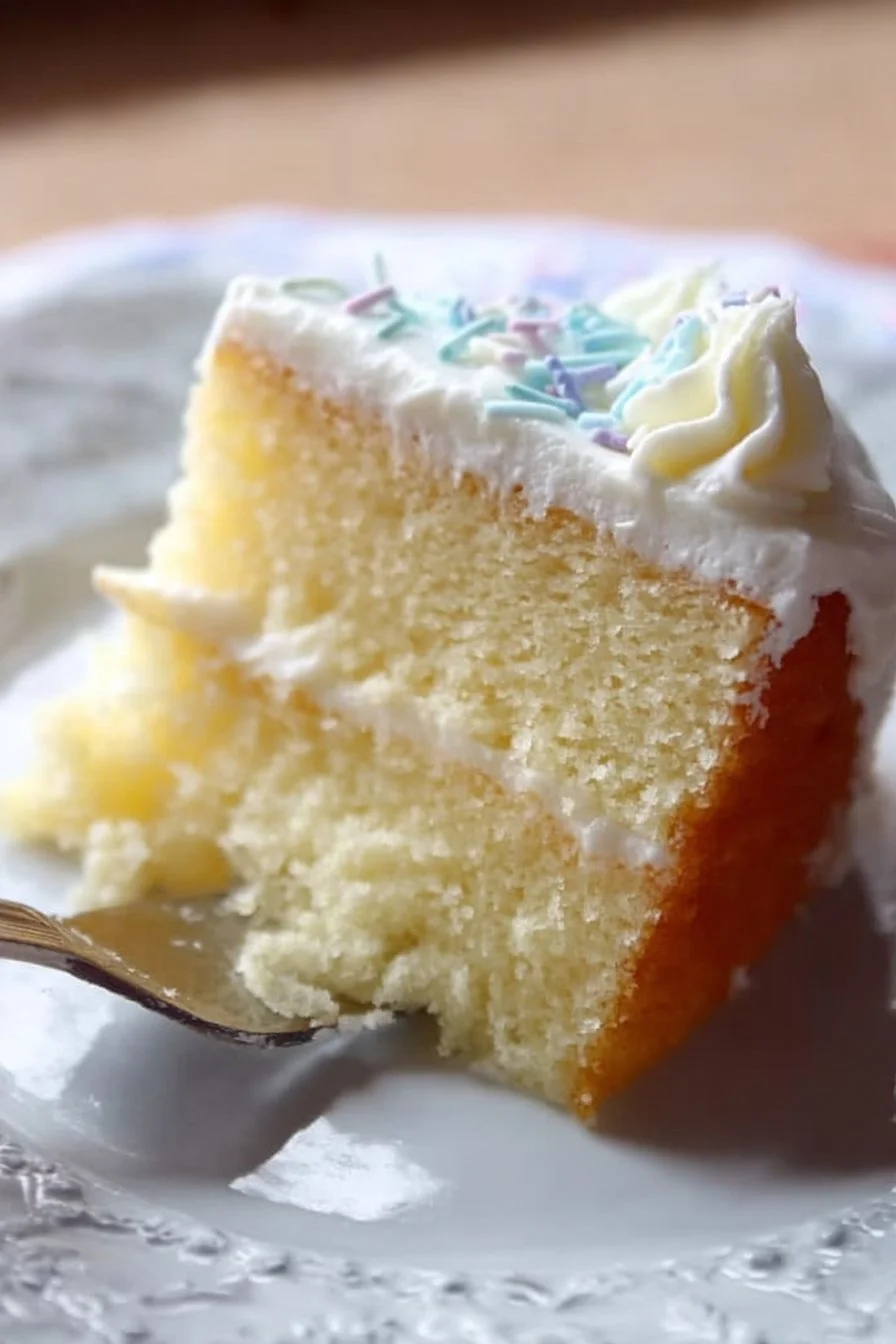
A soft, pillowy sheet cake frosted with a classic buttercream—this Costco Vanilla Cake copycat delivers the same familiar, crowd-pleasing slice you remember from the bakery case. It’s an ideal make-ahead dessert for birthdays, potlucks, or whenever you want a simple, old-fashioned vanilla cake that feeds a crowd. If you like big-batch baking and straightforward techniques, this is one to keep in your repertoire; it pairs well with simple fruit or richer desserts like a cheesecake and fruit plate for variety, such as this Caramel Crunch Cheesecake & Fruit Salad for a party spread.
Reasons to try it
This cake hits the sweet spot between easy and impressive. It’s forgiving, uses pantry-staple ingredients, and scales well when you need to feed a group. Bakers who want the Costco-style texture—moist but not dense—will appreciate how the butter and milk balance the crumb.
“The perfect sheet cake for a crowd—light, buttery, and exactly the comfort-bakery flavor my family asks for again and again.”
Why it’s practical:
- Budget-friendly: simple ingredients, large yield.
- Kid-approved: familiar vanilla flavor and soft texture.
- Versatile: frost plainly or decorate for birthdays and holidays.
- Quick-ish: active time about 20 minutes, bake ~25–30 minutes.
The cooking process explained
Before you start, here’s the game plan: dry ingredients get whisked together, butter is creamed into the mix to create a tender crumb, then eggs, vanilla, and milk finish the batter. You bake in a sheet cake pan for 25–30 minutes, cool fully, then spread a classic buttercream. The steps are straightforward; the most important checks are making sure all dairy items are at room temperature and not overmixing once you add the eggs and milk.
What you’ll need
- 2 cups (240 g) all-purpose flour (spoon and level or weigh for accuracy)
- 1 1/2 cups (300 g) granulated sugar
- 1 tablespoon baking powder
- 1/2 teaspoon salt
- 1 cup (226 g) unsalted butter, softened (for cake)
- 4 large eggs, room temperature
- 1 tablespoon vanilla extract
- 1 cup (240 ml) whole milk
For the buttercream:
- 4 cups (480 g) powdered sugar, sifted if lumpy
- 1/2 cup (113 g) unsalted butter, softened
- 1/4 cup (60 ml) heavy cream (optional—use to loosen frosting)
- 1 teaspoon vanilla extract
Ingredient notes and substitutions:
- For a lighter crumb, substitute 1/4 cup of the AP flour with cake flour.
- Use buttermilk (1 cup) in place of whole milk for a tangier, more tender cake—reduce baking powder by 1/2 teaspoon.
- For dairy-free, use a plant-based butter and non-dairy milk; texture will vary.
Directions to follow
- Preheat the oven to 350°F (175°C). Grease and lightly flour a 9×13-inch sheet cake pan (or line with parchment).
- In a large mixing bowl, whisk together the flour, granulated sugar, baking powder, and salt until evenly combined.
- Add the 1 cup softened butter to the dry mix. Use a hand mixer or stand mixer on low to blend until the mixture looks crumbly and no large butter pieces remain. This step helps create a tender, even crumb.
- Add the eggs one at a time, then the tablespoon of vanilla. Pour in the milk and increase speed to medium; mix just until the batter is smooth and homogenous. Avoid overmixing—stop as soon as there are no streaks of flour.
- Pour the batter into the prepared pan and spread it level with an offset spatula. Tap the pan lightly on the counter to release any large air bubbles.
- Bake for 25–30 minutes, rotating the pan once halfway through if your oven bakes unevenly. The cake is done when a toothpick inserted into the center comes out clean or with a few moist crumbs.
- Let the cake cool in the pan for about 10 minutes, then run a knife around the edge and transfer to a wire rack to cool completely before frosting. Frosting a warm cake will make the buttercream melt and slide.
- For the frosting, beat the 1/2 cup softened butter until smooth and creamy. Gradually add the powdered sugar, then the vanilla. Add heavy cream a tablespoon at a time until you reach a spreadable consistency. Beat on medium-high for 1–2 minutes for a fluffy texture.
- Once the cake is completely cool, spread the buttercream evenly. If you want clean edges, use a bench scraper and chill briefly to set the frosting before slicing.
How to plate and pair
Serve slices at room temperature—this brings out the buttery flavor and keeps the frosting soft but not greasy. For a simple finish, dust with a little powdered sugar or scatter fresh berries across the top. If you’re offering a dessert buffet, this vanilla sheet cake pairs nicely with richer options and savory mains; for instance, it complements a casual lunch spread alongside a savory sandwich like the Crispy Chicken Sandwich copycat recipe for a sweet-and-salty contrast. For celebrations, pipe rosettes along the edge and add sprinkles or edible pearls.
Storage and reheating tips
- Room temperature: Store the frosted cake covered loosely at room temperature for up to 24–48 hours in a cool room (buttercream can soften in heat).
- Refrigerator: For longer life, store in an airtight cake container or wrap tightly and refrigerate for up to 4–5 days. Bring to room temperature before serving for best texture.
- Freezing: Unfrosted cake layers freeze best—wrap tightly in plastic and foil for up to 3 months. You can also freeze a frosted cake (flash-freeze until the frosting firms, then wrap) for up to 2 months. Thaw overnight in the fridge, then bring to room temperature.
- Reheating: Do not microwave whole slices with frosting. For a slightly warmer slice, remove frosting-heavy slices to room temp, or warm an unfrosted piece in a low oven (300°F/150°C) for a few minutes and add fresh frosting.
Helpful cooking tips
- Bring eggs, butter, and milk to room temperature before starting—this helps the batter emulsify and yields a smoother texture.
- Measure flour by weight for consistent results. Overpacked flour makes cakes dense.
- Don’t overbeat after adding flour; overmixing develops gluten and toughens the crumb.
- Use an oven thermometer; many home ovens run 10–25°F off. Set to the correct temp for reliable bake times.
- If your frosting is too stiff, add cream a teaspoon at a time. If too thin, add more powdered sugar.
- For extra-moist cake, brush just-baked layers with a simple syrup (equal parts sugar and water, boiled and cooled).
Different ways to try it
- Lemon-vanilla: Add 1 tablespoon lemon zest and 1–2 tablespoons lemon juice to the batter and swap the vanilla in the frosting for lemon extract.
- Almond twist: Replace 1/2 teaspoon vanilla with almond extract for a nutty note.
- Chocolate swirl: Drop spoonfuls of cocoa-thinned batter into the pan and swirl gently for a marbled look.
- Gluten-free: Use a 1:1 gluten-free flour blend and add 1/4 teaspoon xanthan gum if your blend lacks it.
- Low-sugar: Use a sugar substitute appropriate for baking and follow manufacturer conversion guidance—results may differ.
FAQ
Q: How long does this cake take from start to finish?
A: Active prep is about 20 minutes. Bake time is 25–30 minutes, plus cooling and frosting—plan for roughly 1.5 to 2 hours total, including cooling. You can speed things up by chilling the cake briefly in the fridge to set the crumb before frosting.
Q: Can I make this cake ahead of time?
A: Yes. Bake the cake a day ahead, wrap tightly, and store at room temperature or refrigerate. Frost the day you serve for a fresher finish. Unfrosted layers freeze well for longer storage.
Q: Why did my cake turn out dense?
A: Likely reasons: too much flour (common when scooping), overmixing after adding flour, or old baking powder. Weighing flour and using an oven thermometer can prevent these problems.
Q: Can I omit the heavy cream in the frosting?
A: Yes. Heavy cream makes the buttercream lighter and smoother but is optional. Replace with milk for a thinner frosting or leave it out and beat longer for a denser, pipe-able consistency.
Q: Is this recipe safe with raw eggs?
A: This recipe bakes the eggs into the cake, making them safe to eat once fully baked. If you have immune-compromised guests or are serving young children, ensure the cake reaches a full bake (center toothpick clean) and store/freeze appropriately.
If you’d like, I can convert this into a printable recipe card or scale it up/down to feed a different number of guests. Which would you prefer?
Vanilla Sheet Cake
Ingredients
For the cake
- 2 cups all-purpose flour Spoon and level or weigh for accuracy.
- 1.5 cups granulated sugar
- 1 tablespoon baking powder
- 0.5 teaspoon salt
- 1 cup unsalted butter, softened For cake.
- 4 large eggs, room temperature
- 1 tablespoon vanilla extract
- 1 cup whole milk
For the buttercream
- 4 cups powdered sugar, sifted if lumpy
- 0.5 cup unsalted butter, softened
- 0.25 cup heavy cream (optional) Use to loosen frosting.
- 1 teaspoon vanilla extract
Instructions
Preparation
- Preheat the oven to 350°F (175°C). Grease and lightly flour a 9x13-inch sheet cake pan or line with parchment.
- In a large mixing bowl, whisk together the flour, granulated sugar, baking powder, and salt until evenly combined.
- Add the 1 cup softened butter to the dry mix. Use a hand mixer or stand mixer on low to blend until the mixture looks crumbly and no large butter pieces remain.
- Add the eggs one at a time, then the tablespoon of vanilla. Pour in the milk and increase speed to medium; mix just until the batter is smooth and homogenous.
- Pour the batter into the prepared pan and spread it level with an offset spatula. Tap the pan lightly on the counter to release any large air bubbles.
Baking
- Bake for 25-30 minutes, rotating the pan once halfway through if your oven bakes unevenly.
- The cake is done when a toothpick inserted into the center comes out clean or with a few moist crumbs.
- Let the cake cool in the pan for about 10 minutes, then transfer to a wire rack to cool completely before frosting.
Frosting
- For the frosting, beat the 1/2 cup softened butter until smooth and creamy.
- Gradually add the powdered sugar, then the vanilla. Add heavy cream a tablespoon at a time until you reach a spreadable consistency.
- Once the cake is completely cool, spread the buttercream evenly on top.