
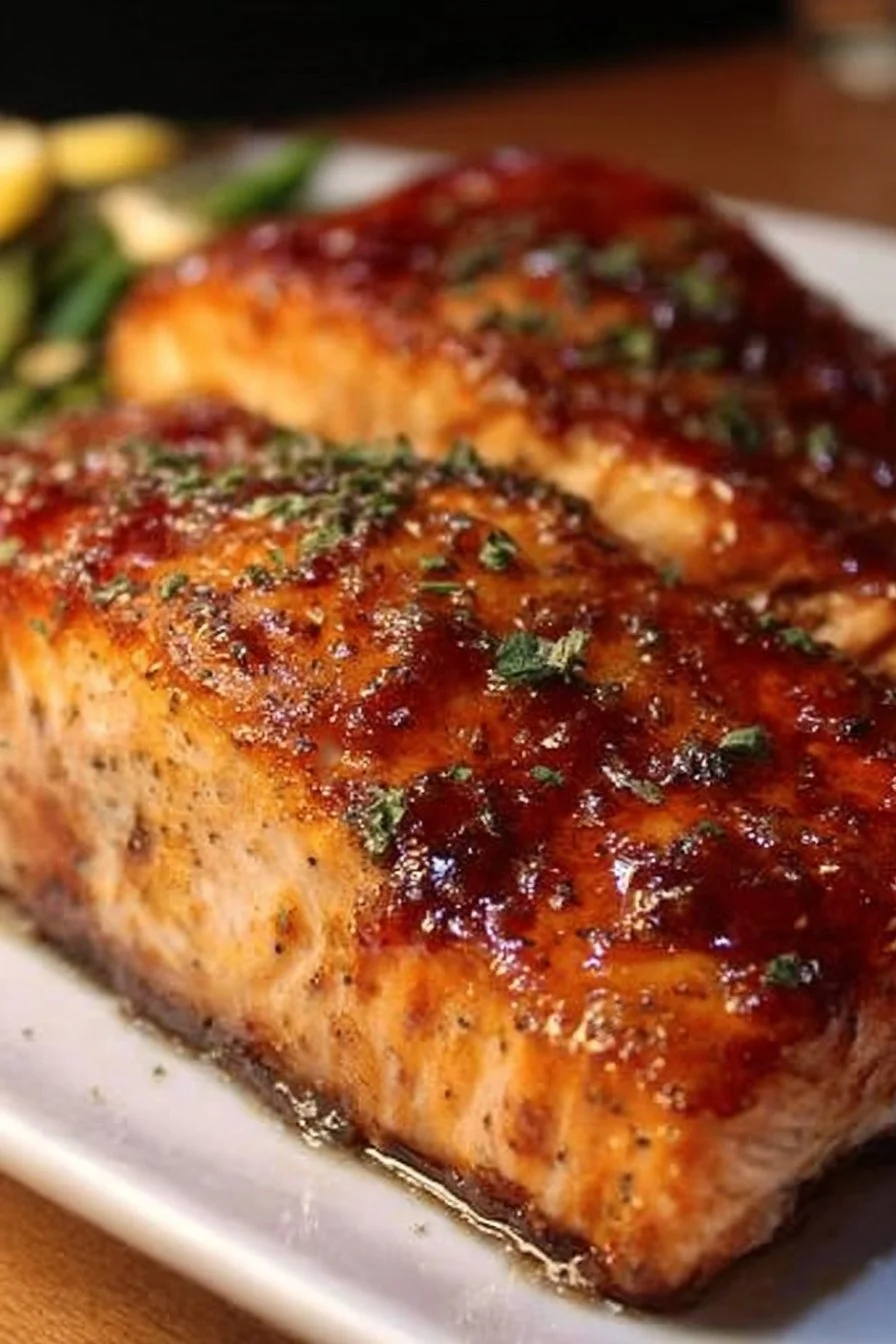
Start with a sweet, sticky glaze, pop the fillets into a hot oven, and dinner is ready in about half an hour. This Texas Roadhouse–style salmon uses brown sugar, soy, butter, and honey for a caramelized crust and tender interior — ideal for busy weeknights or when you want something a little special without fuss. If you like a light, fruity contrast on the side, pair it with a quick 30-minute strawberry spinach salad for a restaurant-worthy plate in under an hour.
Why you’ll love this dish
This recipe gives you glazed, flavorful salmon with minimal hands-on time. The brown sugar and honey caramelize for a glossy finish while soy sauce adds depth — no complicated marinade required. It’s also forgiving: you can scale the glaze up or down, swap sweeteners, or finish under the broiler briefly for extra color.
"My kids called it ‘roadhouse salmon’ and asked for seconds — fast, sweet, and perfectly flaky." — a weeknight-tested review
Perfect occasions: busy weeknight dinners, date nights, simple entertaining. Benefits include quick cook time, pantry-friendly ingredients, and a crowd-pleasing sweet-savory profile.
Step-by-step overview before you begin
You’ll preheat the oven, whisk a quick glaze, brush the salmon, bake briefly, glaze again, and finish until the fish flakes easily. Total active prep is about 10 minutes; bake time is 16–18 minutes. Expect a total elapsed time of roughly 25–30 minutes from oven on to table.
What you’ll need
- 4 salmon fillets, about 6 oz each (skin-on or skinless; adjust baking time slightly if very thick)
- 1/4 cup brown sugar (packed)
- 2 tablespoons soy sauce (use low-sodium or tamari for gluten-free)
- 2 tablespoons butter, melted
- 1 tablespoon honey (maple or agave works as a substitute)
- 1 teaspoon garlic powder
- 1/2 teaspoon black pepper
- 1/4 teaspoon paprika (smoked paprika if you want a smoky note)
- 2 tablespoons fresh parsley, chopped (for finishing)
Ingredient notes: Pat salmon dry before glazing for better caramelization. For a keto version, replace brown sugar with a granular erythritol or omit and increase honey slightly.
Directions to follow
- Preheat the oven to 400°F (200°C). Line a baking sheet with parchment paper and arrange the salmon fillets skin-side down if the skin is on. Pat each fillet dry with paper towels.
- In a small bowl, whisk together the brown sugar, soy sauce, melted butter, honey, garlic powder, black pepper, and paprika until smooth and slightly glossy.
- Brush the salmon with about half of the glaze, coating the tops and sides. Reserve the remaining glaze.
- Bake the salmon for 8 minutes in the preheated oven. This initial bake sets the glaze and starts cooking the fish evenly.
- Remove the baking sheet, brush the fillets with the remaining glaze, and return to the oven. Bake an additional 8–10 minutes until the salmon flakes easily with a fork and registers 145°F (63°C) in the thickest part. If you prefer a deeper caramelized top, broil 30–60 seconds at the end — watch closely to avoid burning.
- Remove from the oven, let rest for 2 minutes, sprinkle with chopped parsley, and serve immediately.
Timing tip: thinner fillets will finish closer to 16 minutes total; thicker pieces may need the full 18 minutes. Use an instant-read thermometer for accuracy.
How to plate and pair
Best ways to enjoy it: serve the salmon whole on a warm plate with a spoon of extra glaze drizzled over. A simple lemon wedge brightens the sweetness. For starch and texture, try mashed potatoes or cilantro-lime rice. For a cool contrast, a crisp cucumber and carrot salad or steamed green beans works beautifully. For wine, go with a lightly oaked Chardonnay or a fruity Pinot Noir.
Plating idea: place the fillet slightly off-center, mound a scoop of rice or potatoes, and fan a lemon wedge beside it. Sprinkle parsley and a little extra cracked pepper on top.
Storage and reheating tips
- Refrigerate: Cool leftovers within 2 hours and store in an airtight container for 3–4 days.
- Freeze: Place cooled fillets in a freezer-safe container for up to 2 months. Thaw overnight in the fridge before reheating.
- Reheat: Warm gently to avoid drying. Best method is a 275°F oven for 10–15 minutes until warmed through. You can microwave on 50% power in short bursts, covered, but watch to prevent overcooking. Reheat briefly with a splash of water or extra glaze to preserve moisture.
Food safety: Cook salmon to an internal temperature of 145°F for full doneness. Pregnant people and immunocompromised individuals should follow this guideline strictly.
Pro chef tips
- Pat salmon thoroughly dry to help the glaze stick and caramelize rather than steam.
- Use parchment or a lightly oiled sheet to prevent sticking and make cleanup easy.
- Reserve half the glaze for brushing midway; that second brush builds layers of flavor and a glossy finish.
- If using skin-on salmon and you prefer crispy skin, finish the fillets skin-side down under high heat for 2–3 minutes before serving.
- Swap melted butter for olive oil for a dairy-free option, though butter gives a richer glaze.
Creative twists
- Spicy roadhouse: add 1/2 teaspoon cayenne or a drizzle of sriracha to the glaze.
- Maple-chipotle: replace honey with maple syrup and add 1/2 teaspoon chipotle powder.
- Keto/gluten-free: use a sugar substitute and tamari in place of soy.
- Citrus-bright: stir 1 teaspoon orange or lime zest into the glaze for a fresh lift.
- Herb crust: after the final glaze, sprinkle with panko mixed with parsley and broil briefly for a crunchy top.
Common questions
Q: How long does this take from start to finish?
A: Active prep is about 10 minutes. Bake time is 16–18 minutes. Including preheating, plan 25–30 minutes total.
Q: Can I use frozen salmon?
A: Yes — thaw overnight in the fridge before using. Pat dry thoroughly and proceed with the recipe. Cooking time may be slightly longer for thicker fillets.
Q: Can I make the glaze ahead of time?
A: Absolutely. Make the glaze up to 48 hours ahead and refrigerate in a sealed container. Warm gently before brushing so it spreads easily.
Q: Is 145°F necessary? I like my salmon medium-rare.
A: The USDA recommends 145°F for fish for safety. Many chefs and home cooks prefer 120–125°F for a medium-rare, silky texture — that’s a personal choice for healthy adults, but pregnant people and those with weakened immune systems should follow 145°F.
Q: How can I get the glaze more caramelized without drying the salmon?
A: Brush on a little extra glaze at the end and broil for 30–60 seconds, watching carefully. Alternatively, finish in a hot skillet skin-side down for a crisp edge, then rest briefly.
Texas Roadhouse-Style Salmon
Ingredients
Salmon Fillets
- 4 pieces salmon fillets about 6 oz each (skin-on or skinless) Adjust baking time slightly for thick fillets
Glaze
- 1/4 cup brown sugar, packed
- 2 tablespoons soy sauce Use low-sodium or tamari for gluten-free
- 2 tablespoons butter, melted Can swap with olive oil for dairy-free option
- 1 tablespoon honey Maple or agave works as a substitute
- 1 teaspoon garlic powder
- 1/2 teaspoon black pepper
- 1/4 teaspoon paprika Smoked paprika adds a nice smoky note
- 2 tablespoons fresh parsley, chopped For finishing
Instructions
Preparation
- Preheat the oven to 400°F (200°C).
- Line a baking sheet with parchment paper and arrange the salmon fillets skin-side down if the skin is on.
- Pat each fillet dry with paper towels.
Make the Glaze
- In a small bowl, whisk together the brown sugar, soy sauce, melted butter, honey, garlic powder, black pepper, and paprika until smooth and slightly glossy.
Bake the Salmon
- Brush the salmon with about half of the glaze, coating the tops and sides. Reserve the remaining glaze.
- Bake the salmon for 8 minutes in the preheated oven.
- Remove the baking sheet, brush the fillets with the remaining glaze, and return to the oven.
- Bake an additional 8–10 minutes until the salmon flakes easily and registers 145°F in the thickest part.
- If desired, broil for 30–60 seconds at the end for extra caramelization.
Serving
- Remove from the oven, let rest for 2 minutes, sprinkle with chopped parsley, and serve immediately.