
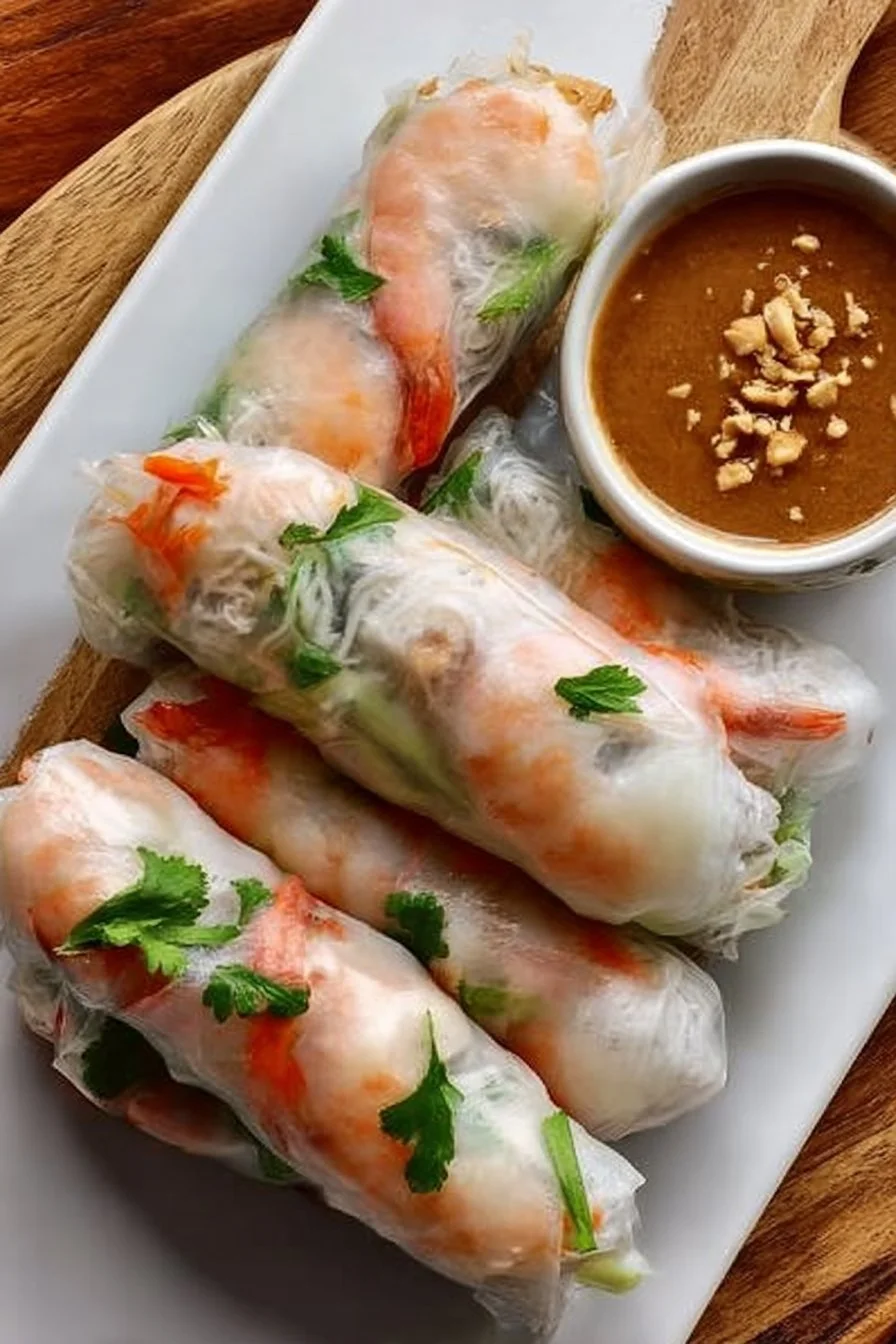
Vietnamese spring rolls are bright, fresh, and utterly addictive — the kind of dish you bring out for summer dinners, make-ahead parties, or when you want something light that still feels celebratory. These rolls combine tender boiled shrimp and slow‑cooked pork belly with cool herbs, rice vermicelli, and woven banh hoi, all wrapped in translucent rice paper and dunked in a silky, easy peanut sauce. If you like versatile dipping sauces alongside fresh rolls, you might also enjoy a tangy dinner-side that complements them well — try this savory-sweet barbecue-style sauce when you want a smoky alternative to peanut.
Why you’ll love this dish
These spring rolls deliver contrast — cool lettuce and herbs against warm pork and shrimp, soft vermicelli with some crisp cucumber, and a salty-sweet peanut sauce that ties everything together. They’re:
- Impressively flexible: scale up for a crowd or make them individually for lunches.
- Kid-friendly and party-ready: hand-held, customizable, and fun to assemble.
- Balanced and fresh: lots of herbs and veggies make them feel lighter than fried rolls.
"We served these at a family brunch and everyone assembled their own — the herb combo made every bite different. The peanut sauce was the real showstopper."
Why else choose this recipe? It’s a great way to use inexpensive pork belly and mid-sized shrimp (16–20 count), and the banh hoi threads add a special, restaurant-style touch without extra fuss.
How this recipe comes together
A quick overview so you know the workflow before getting your hands wet:
- Boil the pork belly and shrimp together with a slice of ginger to make stock and gently cook proteins.
- Strain the broth for later use in the peanut sauce and to keep flavors cohesive.
- Prepare fresh vegetables, herbs, banh hoi, and rice vermicelli.
- Make the peanut sauce by thinning peanut butter with stock, hoisin, and aromatics.
- Soften rice paper one at a time, layer fillings, and roll snugly.
- Serve immediately with crushed peanuts and chili on the side.
This order keeps the warm proteins juicy and prevents the rice paper from getting soggy while you prep.
What you’ll need
- 1.5 lb shrimp, 16–20 count (about 27 shrimp), peeled and deveined
- 2 lb pork belly, skin removed or left on (your choice)
- 1 slice ginger (about 1-inch piece, smashed)
- 18 sheets rice paper
- 1 pack banh hoi (18 pieces) — thin woven rice vermicelli sheets
- 1/2 pack vermicelli rice noodles (adjust to appetite)
- 1 head lettuce (butter or romaine work well)
- 1 cucumber, julienned
- Fresh cilantro, mint, and chives (small bunches)
- For the peanut sauce: 1/3 cup smooth peanut butter, 3.5 tbsp hoisin sauce, 1/2 tbsp fish sauce, 1/4 tbsp rice vinegar, 1/4 tbsp sesame oil, 1/2–3/4 cup stock (from boiled pork & shrimp)
- Garnish: 1 tbsp crushed peanuts, Thai pepper slices or chili paste to taste
Substitutions & notes:
- Gluten-free: use gluten-free hoisin.
- Nut-free: swap peanut butter for tahini and add a touch more soy/fish sauce for savory depth.
- Banh hoi is optional — you can double the vermicelli or use thin rice vermicelli nests.
Step-by-step instructions
- Make the stock and cook proteins: Place pork belly, shrimp, and the ginger slice in a large pot. Cover with water, bring to a simmer, and cook gently until pork is tender (1–1.5 hours depending on thickness) and shrimp are opaque (2–4 minutes at a gentle simmer if added later). To keep shrimp perfectly tender, remove them as soon as they turn opaque and finish cooking the pork. Reserve 2/3–3/4 cup of the strained cooking liquid for the peanut sauce. Slice the pork belly thinly against the grain once cool.
- Prepare noodles and banh hoi: Cook vermicelli according to package directions (usually 3–5 minutes in boiling water). Drain and rinse under cold water. Separate banh hoi layers gently and set aside.
- Prep produce: Wash and dry lettuce leaves. Julienne cucumber. Trim herbs and cut chives into 2–3 inch lengths.
- Make the peanut sauce: In a small saucepan or bowl, whisk together 1/3 cup smooth peanut butter, 3.5 tbsp hoisin sauce, 1/2 tbsp fish sauce, 1/4 tbsp rice vinegar, 1/4 tbsp sesame oil. Gradually whisk in 1/2–3/4 cup warm reserved stock until you reach a smooth, dipping consistency. Adjust salt/sweetness: add more hoisin to sweeten or fish sauce to salt it. Warm slightly if preferred; top with crushed peanuts and a few slices of Thai pepper or a teaspoon of chili paste.
- Soften rice paper: Fill a shallow dish with warm water. Dip one rice paper sheet for 5–8 seconds until pliable but not over-soft (it will continue to soften on the work surface).
- Assemble each roll: Lay softened rice paper on a damp cutting board. Place lettuce near the bottom third, add some vermicelli/banh hoi, a few cucumber sticks, herbs, 2–3 shrimp (halved lengthwise if large) and 2–3 thin slices of pork belly. Fold sides over the filling, then roll tightly from the bottom to seal. Repeat with remaining sheets.
- Serve: Arrange rolls seam-side down, serve with the peanut sauce and extra crushed peanuts and chili on the side.
Timing tip: Have all fillings prepped before you soften the first rice paper — rice paper becomes sticky quickly.
Best ways to enjoy it
Serve the rolls immediately for the best texture. Presentation ideas:
- Arrange rolls in a crescent around a shallow bowl of peanut sauce; sprinkle chopped peanuts and fresh Thai pepper slices over the sauce.
- Offer small bowls of hoisin, nuoc cham, or a chilli-garlic oil for variety.
- Pair with light sides: a green papaya salad, steamed edamame, or a cold cucumber salad. For a grilled contrast, serve alongside skewered lemongrass chicken.
- For a party: set up a “roll bar” with fillings laid out buffet-style so guests can assemble their own.
If you enjoy crunchy rice-paper textures, also check this guide to achieving the ideal crispness when you want a textural twist: crispy rice paper spring rolls technique.
Storage and reheating tips
Storage safety:
- Assembled rolls: best eaten within 4–24 hours. Wrap each roll individually in plastic wrap and place in an airtight container; keep refrigerated. Rice paper darkens and becomes chewier over time.
- Peanut sauce: stores well for 5–7 days in the fridge in a sealed jar.
- Cooked pork and shrimp (separated): refrigerate up to 3–4 days or freeze for up to 2 months.
Reheating:
- Reheat pork slices in a little of the reserved stock over low heat to avoid drying. Shrimp can be briefly warmed in hot stock for 30–60 seconds.
- Avoid microwaving assembled rolls — they’ll get soggy. Instead, separate fillings and reassemble if needed.
Freezing note: Do not freeze fully assembled rolls — the rice paper and lettuce will lose structure. Freeze only the cooked proteins or banh hoi if necessary.
Pro chef tips
- Don’t over-soften rice paper: dip briefly. It should be slightly firm when you lay it down — it softens more as you assemble.
- Layering order matters: place lettuce closest to the rice paper so it creates a moisture barrier and prevents sogginess.
- Slice pork thinly while slightly warm; cold pork is firmer and harder to slice evenly.
- Thin the peanut sauce gradually with warm stock to avoid lumps; if it gets too thick, a teaspoon of warm water at a time fixes it.
- Taste and adjust: shrimp and pork are mildly seasoned from the broth; the sauce should carry the punch — balance salty, sweet, and acidic notes before serving.
Creative twists
- Vegetarian version: replace pork and shrimp with grilled tofu, marinated mushrooms, or tempeh. Use vegetable stock for the sauce.
- Spicy-sweet glaze: brush pork slices with a mix of honey and sriracha before finishing on a hot pan.
- Crunch factor: add fried shallots or toasted sesame seeds inside for texture (or use the crispy rice paper technique linked above).
- Low-carb: swap banh hoi and vermicelli for extra julienned vegetables.
- Vietnamese regional spin: add pickled carrot and daikon for a northern-style tang.
Common questions
Q: How long does it take to make these spring rolls?
A: Active hands-on time is about 30–45 minutes if proteins are already cooked; if you need to simmer pork belly, plan 1.5–2 hours total. Prep and assembly for 18 rolls typically takes 45–75 minutes.
Q: Can I assemble these ahead for a party?
A: Yes, but assemble no more than a few hours ahead and store wrapped in the fridge. Ideally, keep wet ingredients (cucumber, sauces) separate and let guests roll for peak quality.
Q: Is it safe to eat shrimp and pork cooked together?
A: Yes — just monitor shrimp closely. Shrimp cook much faster than pork; remove shrimp as soon as they turn opaque to prevent toughness, and continue simmering pork until tender. Always cool and refrigerate leftovers promptly.
Q: Can I make the peanut sauce nut-free?
A: Substitute tahini for peanut butter and add a touch more hoisin (or a sweetener) and fish/soy sauce to deepen the flavor. Taste and adjust acidity and salt.
Q: Why is my rice paper tearing?
A: Common causes are leaving it in water too long (becomes overly soft and fragile) or using water that’s too hot. Use warm water and dip briefly, handling gently on a damp surface.
If you have a specific dietary restriction or want substitution ideas for crispness/texture, tell me which one and I’ll suggest exact swaps and proportions.
Vietnamese Spring Rolls
Ingredients
Main Ingredients
- 1.5 lb shrimp, 16–20 count, peeled and deveined
- 2 lb pork belly, skin removed or left on
- 1 slice ginger (about 1-inch piece, smashed)
- 18 sheets rice paper
- 1 pack banh hoi (18 pieces), thin woven rice vermicelli sheets
- 1/2 pack vermicelli rice noodles adjust to appetite
- 1 head lettuce (butter or romaine work well)
- 1 cucumber julienned
- 1 bunch fresh cilantro
- 1 bunch fresh mint
- 1 bunch chives small bunches
For the Peanut Sauce
- 1/3 cup smooth peanut butter
- 3.5 tbsp hoisin sauce
- 1/2 tbsp fish sauce
- 1/4 tbsp rice vinegar
- 1/4 tbsp sesame oil
- 1/2–3/4 cup stock (from boiled pork & shrimp)
For Garnish
- 1 tbsp crushed peanuts
- Thai pepper slices or chili paste to taste
Instructions
Make Stock and Cook Proteins
- Place pork belly, shrimp, and the ginger slice in a large pot. Cover with water, bring to a simmer, and cook gently until pork is tender (1–1.5 hours depending on thickness) and shrimp are opaque (2–4 minutes at a gentle simmer if added later).
- To keep shrimp perfectly tender, remove them as soon as they turn opaque and finish cooking the pork.
- Reserve 2/3–3/4 cup of the strained cooking liquid for the peanut sauce.
- Slice the pork belly thinly against the grain once cool.
Prepare Noodles and Banh Hoi
- Cook vermicelli according to package directions (usually 3–5 minutes in boiling water). Drain and rinse under cold water.
- Separate banh hoi layers gently and set aside.
Prep Produce
- Wash and dry lettuce leaves.
- Julienne cucumber.
- Trim herbs and cut chives into 2–3 inch lengths.
Make the Peanut Sauce
- In a small saucepan or bowl, whisk together 1/3 cup smooth peanut butter, 3.5 tbsp hoisin sauce, 1/2 tbsp fish sauce, 1/4 tbsp rice vinegar, and 1/4 tbsp sesame oil.
- Gradually whisk in 1/2–3/4 cup warm reserved stock until you reach a smooth, dipping consistency.
- Adjust salt/sweetness: add more hoisin to sweeten or fish sauce to salt it.
- Warm slightly if preferred; top with crushed peanuts and a few slices of Thai pepper or a teaspoon of chili paste.
Soften Rice Paper
- Fill a shallow dish with warm water. Dip one rice paper sheet for 5–8 seconds until pliable but not over-soft.
Assemble Each Roll
- Lay softened rice paper on a damp cutting board.
- Place lettuce near the bottom third, add some vermicelli/banh hoi, a few cucumber sticks, herbs, 2–3 shrimp (halved lengthwise if large), and 2–3 thin slices of pork belly.
- Fold sides over the filling, then roll tightly from the bottom to seal.
- Repeat with remaining sheets.
Serve
- Arrange rolls seam-side down, serve with the peanut sauce and extra crushed peanuts and chili on the side.