
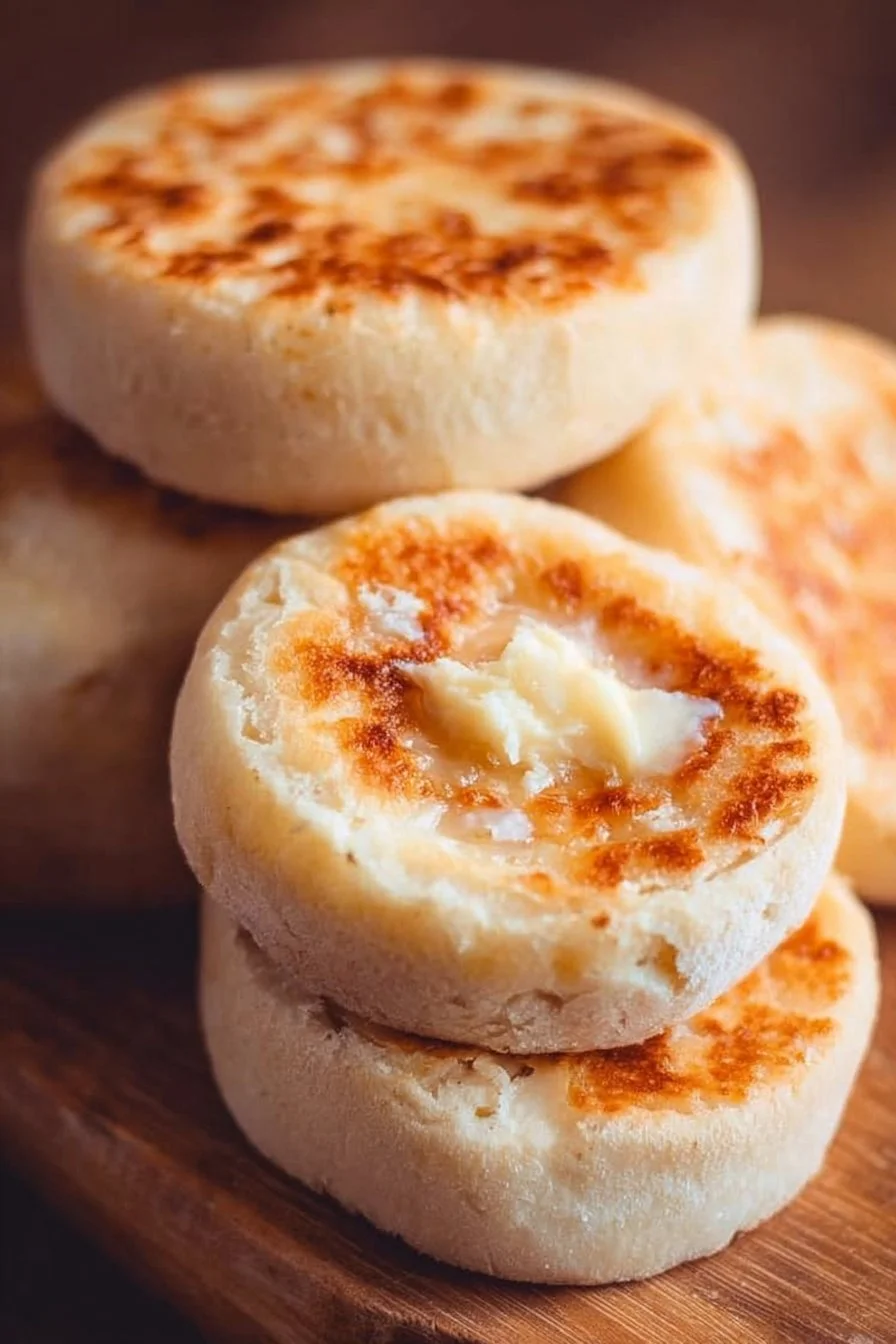
There’s something wonderfully nostalgic about splitting a warm, chewy English muffin and watching butter melt into its nooks and crannies. These homemade English muffins come out with a tender, slightly chewy interior full of the classic honeycomb craters, and a golden, lightly crisp exterior from the griddle — perfect for butter, jam, eggs Benedict, or a hearty breakfast sandwich. This recipe is surprisingly approachable: no fancy equipment, a straightforward rise, and a quick griddle cook that lets you enjoy fresh muffins the same day. If you’re looking for a small weekend baking win or a batch to impress brunch guests, these muffins deliver consistent texture and flavor every time; you can even learn more about mastering the technique from a detailed guide to homemade English muffins for extra tips.
Why You’ll Love This Homemade English Muffins
- Classic texture: crisp on the outside and soft, airy, and slightly chewy inside with the signature craters that hold butter and jam.
- Easy method: simple yeast dough with two rises — no complicated laminating or equipment needed.
- Versatile: perfect for sweet spreads, savory sandwiches, eggs Benedict, or breakfast sliders.
- Comforting: warm, fresh-baked muffins are a cozy weekend ritual that make mornings feel special.
- Economical: made with pantry staples — flour, milk, butter, and yeast — so it’s budget-friendly.
- Make-ahead friendly: dough can be prepared ahead, or muffins can be frozen for quick breakfasts.
- Kid-friendly: the hands-on shaping and cutting are fun for little helpers.
- Impressive results: homemade flavor and texture that beats store-bought muffins every time.
What Is Homemade English Muffins?
English muffins are small, round, flat yeast breads cooked on a griddle instead of baked in an oven. They have a crisp, slightly toasted exterior and an interior full of irregular holes or “nooks and crannies” that soak up butter and toppings. The flavor is mildly sweet and tangy from the yeast and milk, with a soft chew that’s satisfying without being heavy. These muffins are typically served at breakfast or brunch — split and toasted, topped with butter and jam, or used as the base for eggs Benedict and breakfast sandwiches. Overall, they feel like comforting, old-fashioned bakery goods you can make at home with straightforward techniques.

Ingredients for Homemade English Muffins
For the Dough
- 2 cups all-purpose flour
- 1 cup whole wheat flour
- 1 teaspoon salt
- 1 tablespoon sugar
- 1 tablespoon active dry yeast
- 1 cup milk
- 1/4 cup water
- 2 tablespoons butter
For Dusting
- Cornmeal (for dusting)
Do not add other ingredients if you want the recipe to turn out as tested. You can add optional variations later if desired.
Ingredient Notes (Substitutions, Healthy Swaps)
- Milk alternatives: Swap whole milk for any unsweetened plant milk (soy, oat, or almond) in equal amounts; the texture will be slightly different but still works. Use a richer option like oat or soy for best creaminess.
- Butter swaps: Replace butter with an equal amount of plant-based butter for a dairy-free option.
- Flour adjustments: The recipe relies on a mix of all-purpose and whole wheat flour for structure and flavor. You can increase all-purpose flour to 3 cups (replace the whole wheat) for a lighter, less dense muffin, or substitute up to half of the all-purpose with bread flour for more chew.
- Gluten-free: This exact method uses wheat flours, so for gluten-free muffins you’ll need a tested gluten-free flour blend and likely xanthan gum; that’s an optional adaptation and will change texture significantly.
- Lower-fat option: Reduce butter to 1 tablespoon, but expect slightly less tender crumb.
- Sugar: You can reduce sugar to 2 teaspoons if you prefer less sweetness; yeast needs a small amount of sugar to activate, but it will also feed on flour.
Step-by-Step Instructions
Step 1 – Activate the yeast
In a small bowl, combine the warm water (about 105–115°F / 40–46°C) with the active dry yeast and the tablespoon of sugar. Let it sit for 5–10 minutes until frothy and bubbling.
Visual cue: The mixture should be foamy on top and smell slightly yeasty.
Pro cue: If no foam appears after 10 minutes, your yeast may be inactive — try again with fresh yeast and ensure the water isn’t too hot.
Step 2 – Mix the dry ingredients
In a large bowl, whisk together the all-purpose flour, whole wheat flour, and salt until evenly combined.
Visual cue: The flours should look uniform with salt distributed evenly.
Pro cue: Measure flour by spooning into the measuring cup and leveling with a knife to avoid dense dough from overpacking.
Step 3 – Add warm milk and butter
Warm the milk in a saucepan with the butter until the butter melts and the milk is warm to the touch (do not boil). Add the warm milk mixture and the frothy yeast mixture to the flour mixture, stirring until a shaggy dough forms.
Visual cue: Dough will be soft and slightly sticky but coming together into a mass.
Pro cue: Warm milk helps accelerate the first rise; keep temperatures moderate so yeast is happy.
Step 4 – Knead and first rise
Turn the dough out onto a lightly floured surface and knead for about 5 minutes until smooth and elastic. Place the dough in a greased bowl, cover, and let it rise in a warm place until doubled in size, roughly 1 hour.
Visual cue: Dough should be noticeably puffed and spring back slowly to the touch.
Pro cue: For a warm proofing spot, use the oven with the light on (oven off) or set the bowl near a warm stovetop.
Step 5 – Shape and second rise
Roll the dough out to about 1-inch thickness and use a round cutter (or drinking glass) to cut out muffin rounds. Dust each round generously with cornmeal and transfer to a baking sheet. Cover and let rise again for about 30 minutes until puffy.
Visual cue: Rounds should look puffed and soft with a dusting of cornmeal on each side.
Pro cue: Press any remaining scraps of dough together and re-roll gently once; avoid overworking or the muffins will be dense.
Step 6 – Griddle cook
Preheat a heavy skillet or griddle over medium heat. Cook each muffin 5–7 minutes per side until golden brown and firm — you should hear a gentle sizzle when they hit the pan. Transfer to a rack and let cool briefly before splitting and toasting.
Visual cue: Exterior should be golden with slight crisping; the interior will have visible nooks when split.
Pro cue: Cook slowly over medium to prevent the outside from browning too fast before the inside cooks through. Use a light press to check for doneness; the muffin should feel set and not doughy.
Pro Tips for Success
- Control proofing temperature: Aim for 75–85°F (24–29°C) for yeast activity; too cold and the rise is slow, too hot and yeast may die.
- Dough texture: The dough should be tacky but not sticky; add small dustings of flour while kneading if it’s overly sticky.
- Uniform thickness: Roll to an even 1-inch thickness so muffins cook at the same rate.
- Cornmeal layer: Don’t skimp on cornmeal — it creates the classic texture and prevents sticking.
- Don’t overcrowd the griddle: Cook with enough space so muffins brown evenly.
- Test one first: If it’s your first batch, cook a test muffin to fine-tune heat and timing.
- Split and toast: For perfect nooks and crannies, split with a fork or a serrated knife and toast to crisp up the interior.
Flavor Variations (Optional)
- Cinnamon-sugar: Add 1 teaspoon ground cinnamon to the dry mix and sprinkle cinnamon sugar on the cut side before toasting for a sweet breakfast twist.
- Cheesy version: Gently press 1–2 tablespoons grated sharp cheddar into the top of each round before the second rise for a savory cheese crust.
- Herb & garlic: Fold 1 tablespoon finely chopped fresh herbs (parsley or chives) and 1/2 teaspoon garlic powder into the dough for a savory sandwich base.
- Seeded: Sprinkle sesame or poppy seeds onto the cornmeal-dusted surface before the second rise for extra texture.
- Lighter: Swap the whole wheat for an additional cup of all-purpose flour for a lighter crumb.
- Wholegrain boost: Add 1–2 tablespoons of ground flax or oat bran into the dough for a subtle nuttiness (optional, keep dough hydration in mind).
Serving Suggestions
- Classic butter & jam: Split, toast, and slather with butter and your favorite jam or marmalade.
- Eggs Benedict: Use as the base for eggs Benedict with Canadian bacon or smoked salmon and hollandaise.
- Breakfast sandwich: Layer with scrambled eggs, cheese, and a slice of tomato or avocado for a filling start to the day.
- Savory snack: Toast and top with cream cheese and smoked salmon or herbed ricotta.
- Weekend brunch board: Serve warm muffins alongside fruit, yogurts, and a selection of spreads for a relaxed brunch spread.
- Comfort pairing: These muffins are great with easy skillet gravies for brunch; try them with a creamy white gravy for a homestyle pairing like this simple 4-ingredient white gravy to soak into the nooks.
Make-Ahead, Storage & Reheating
- Make-ahead dough: After the first rise, you can refrigerate the dough (covered) overnight. Bring it to room temperature, roll, cut, and complete the second rise before cooking.
- Short-term storage: Store cooled muffins in an airtight container at room temperature for up to 2 days.
- Refrigeration: For longer keeping, store in the refrigerator for up to 4 days; bring to room temp and re-toast to revive texture.
- Reheating: Slice and toast directly from room temperature, or reheat in a 350°F (175°C) oven for 5–7 minutes. For crisp edges, finish in a hot skillet for 1 minute per side after toasting.
- Texture changes: Over time, muffins will become denser; toasting helps restore crispness and highlight the interior nooks.
Storage and Freezing Instructions
- Freezing: English muffins freeze very well. Cool completely, then individually wrap each muffin in plastic wrap and place in a freezer bag. Freeze up to 3 months.
- To reheat from frozen: Thaw at room temperature or toast directly from frozen (2–3 cycles through the toaster may be needed). For a crisper exterior, toast then warm briefly in a skillet.
- If you don’t freeze: Use within 4 days refrigerated to avoid staling. If muffins become overly dry, transform them into breadcrumbs for recipes or bread pudding.
Nutrition Facts (Per Serving)
| Calories | Protein | Carbs | Fat | Fiber | Sodium |
|———|——–|——|—–|——|——-|
| 210 kcal | 6 g | 34 g | 6 g | 3 g | 220 mg |
Nutrition values are estimates and may vary depending on ingredients and portion sizes.
FAQ About Homemade English Muffins
- How do I know the yeast is active?
- If the yeast mixture foams within 5–10 minutes after mixing with warm water and sugar, it’s active. No foam means try fresh yeast.
- Why are my muffins dense instead of airy?
- Possible causes: under-kneading, not enough rising time, or too much flour. Ensure the dough doubles during the first rise and knead until elastic.
- How can I make sure muffins cook through without burning?
- Keep heat at medium and cook 5–7 minutes per side. If the outside browns too quickly, lower the heat slightly and cook longer.
- Can I bake these in the oven instead of griddling?
- The recipe is designed for stovetop cooking to create the classic crust and texture; oven baking will change the exterior but can be attempted at 375°F until golden (timing will vary).
- What’s the best way to split a muffin for toasting?
- Use a fork or a serrated knife to split gently along the natural seam; pulling apart with a fork preserves the nooks and crannies.
- How long can I freeze homemade English muffins?
- Properly wrapped, they keep well for up to 3 months in the freezer. Toast directly from frozen or thaw before toasting.
Notes
- Plating idea: Serve warm muffins on a wooden board with small bowls of butter, honey, and fruit preserves for a cozy presentation.
- Small flavor upgrade: Brush the tops lightly with melted butter right after griddling for extra sheen and flavor.
- Seasoning: If you add savory variations, taste the dough before the final rise (small pinch) to adjust salt carefully.
- Presentation tip: Cut and toast just before serving to maintain the best texture; reheated or pre-toasted muffins lose some crispness.
- Use leftover muffins: Stale muffins can be cubed for stuffing or toasted and turned into croutons for salads.
- Timing note: If you need faster results, use a slightly warmer proofing spot, but avoid temperatures above 115°F to keep yeast healthy.
Enjoy the ritual of homemade muffins — the smell alone makes mornings better, and once you’ve mastered this recipe you’ll be looking for every excuse to make a fresh batch.

English Muffins
Ingredients
For the Dough
- 2 cups all-purpose flour
- 1 cup whole wheat flour
- 1 teaspoon salt
- 1 tablespoon sugar
- 1 tablespoon active dry yeast Must be activated
- 1 cup milk Warm
- 1/4 cup water Warm, about 105–115°F / 40–46°C
- 2 tablespoons butter Melted
For Dusting
- Cornmeal For dusting the muffins
Instructions
Activate the yeast
- In a small bowl, combine the warm water with the active dry yeast and sugar. Let it sit for 5–10 minutes until frothy.
Mix the dry ingredients
- In a large bowl, whisk together the all-purpose flour, whole wheat flour, and salt until evenly combined.
Add warm milk and butter
- Warm the milk in a saucepan with the butter until melted and warm to the touch. Combine with the frothy yeast mixture and add to the flour mixture.
Knead and first rise
- Turn the dough out onto a floured surface and knead for about 5 minutes until smooth. Place in a greased bowl, cover, and let rise until doubled in size, about 1 hour.
Shape and second rise
- Roll out to about 1-inch thickness and cut out muffin rounds. Dust with cornmeal and let rise for another 30 minutes.
Griddle cook
- Preheat a skillet over medium heat. Cook each muffin 5–7 minutes per side until golden brown. Let cool before splitting and toasting.