
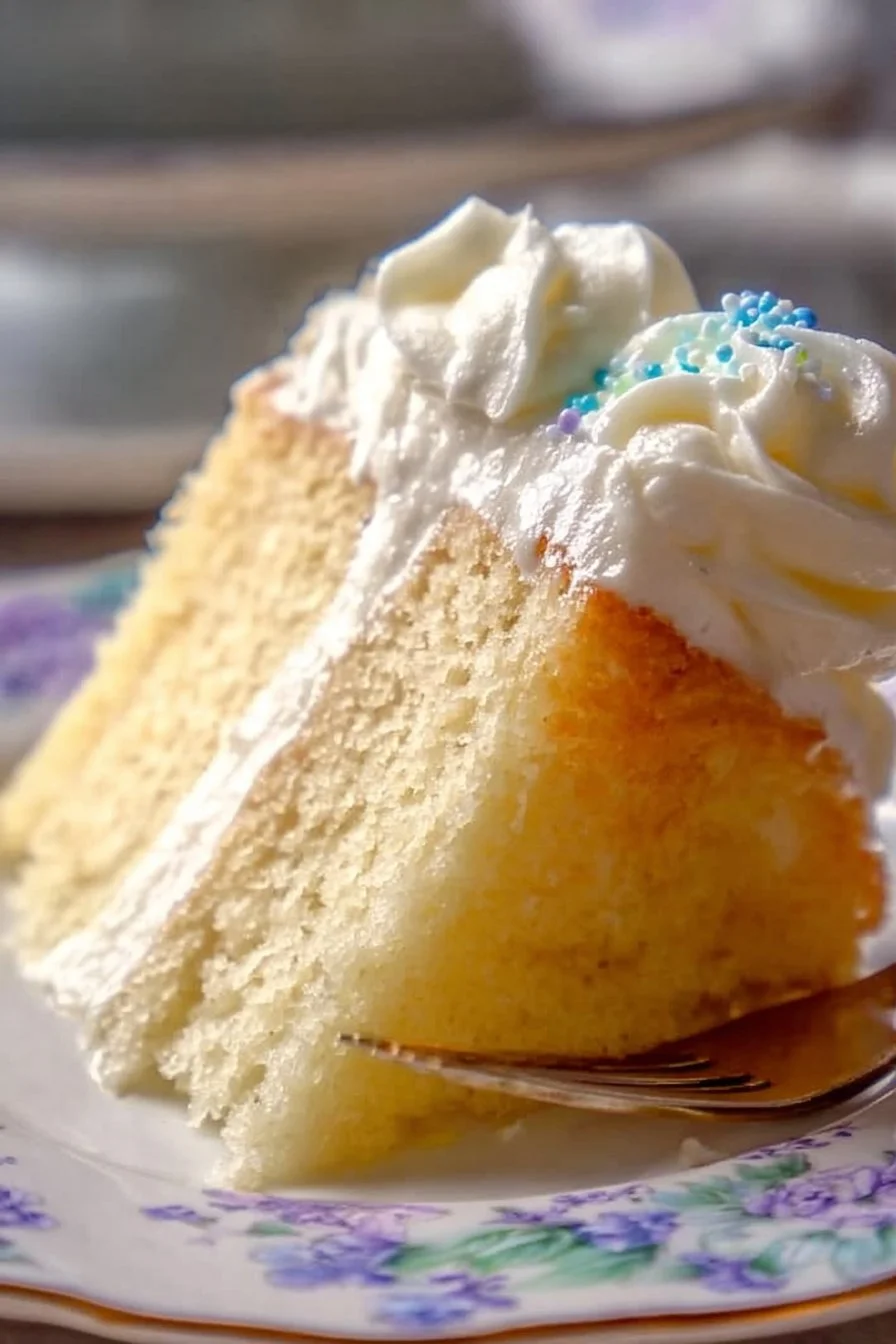
This is the cake you’ll find yourself baking on repeat: tender, buttery layers with a fine crumb and a sweet, silky buttercream that melts on the tongue. The flavor is pure vanilla — comforting, familiar, and exactly what a classic sheet cake should be. It’s deceptively simple to make (no fancy equipment required), and the texture balances a light crumb with enough richness to feel decadent. Serve it at a birthday party, slice it for an afternoon coffee, or dress it up with simple piping for a holiday table. If you’re into copycat bakery cakes, you’ll want to see my full Costco Vanilla Cake Copycat write-up for inspiration and plating ideas.
Why You’ll Love This Costco Vanilla Cake Copycat
- Classic vanilla flavor that’s universally loved — not too sweet, not bland.
- Soft, fine crumb that stays moist for days when stored properly.
- Straightforward ingredients you probably already have on hand.
- Easy hands-on method: no complicated techniques or special pans.
- Versatile — perfect plain, frosted, or dressed up for celebrations.
- Makes two 9-inch layers, ideal for spreading buttercream and decorating.
- Buttercream is creamy and pipeable but simple to make.
- Great for feeding a crowd without fuss.
What Is Costco Vanilla Cake Copycat?
This is a homemade version of the iconic vanilla layer cake you might find at a bakery or warehouse store. It’s built from a classic creamed-butter cake batter that bakes into two 9-inch round layers and is finished with a smooth, stable buttercream. Taste-wise you’ll get a pronounced vanilla note, rich butteriness, and a tender, slightly dense crumb that slices cleanly. The cooking method is simple: creaming, alternating dry and wet additions, and baking in standard round pans. People often serve it for birthdays, family gatherings, bake sales, or anytime you want a reliable, crowd-pleasing dessert. The overall vibe is classic comfort-food baking — nostalgic, unfussy, and very shareable.
Ingredients for Costco Vanilla Cake Copycat
For the Cake
- 2 1/2 cups all-purpose flour
- 2 1/2 tsp baking powder
- 1/4 tsp salt
- 1 cup unsalted butter, softened
- 2 cups granulated sugar
- 4 large eggs
- 1 tbsp vanilla extract
- 1 cup whole milk
For the Buttercream
- 1 cup unsalted butter, softened
- 4 cups powdered sugar
- 1/4 cup heavy cream
- 2 tsp vanilla extract
Ingredient Notes (Substitutions, Healthy Swaps)
- Butter: You can substitute salted butter if that’s what you have; reduce added salt slightly (the recipe only calls for 1/4 tsp salt, so consider omitting it if using salted butter).
- Milk: Whole milk gives the best texture and flavor. For a lighter option, use 2% milk — the cake will still be tender but a touch less rich. Non-dairy milks (oat or whole-almond milk) can work in a pinch; use unsweetened versions for the best result.
- Flour: To make this gluten-free, replace the all-purpose flour with a 1:1 gluten-free baking flour blend that contains xanthan gum. Expect slightly different crumb and texture.
- Sugar: Granulated sugar is standard here. For a slightly less sweet cake, you can reduce sugar by up to 1/4 cup, but texture and browning may change.
- Buttercream: For a lighter frosting, reduce powdered sugar to 3 cups and increase heavy cream to 1/3 cup, whipping until fluffy. Alternatively, swap heavy cream for an equal amount of whole milk (but the buttercream will be softer).
- Eggs: No suitable substitutes are listed in the base recipe; if you need egg-free, consider using a commercial egg replacer but note texture will change.
Step-by-Step Instructions
Step 1 – Prepare pans and preheat oven
Preheat your oven to 350°F (175°C). Grease and flour two 9-inch round cake pans, or line the bottoms with parchment circles for easy removal.
Visual cue: Pans should look evenly greased with a light dusting of flour or have neat parchment bottoms.
Step 2 – Whisk dry ingredients
In a medium bowl, whisk together 2 1/2 cups all-purpose flour, 2 1/2 tsp baking powder, and 1/4 tsp salt until evenly combined. Set aside.
Pro cue: Sifting is optional, but whisking removes lumps and ensures even leavening distribution.
Step 3 – Cream butter and sugar, then add eggs and vanilla
In a large bowl, cream 1 cup softened unsalted butter and 2 cups granulated sugar until light and fluffy, about 3–4 minutes with a mixer. Add 4 large eggs one at a time, mixing well after each addition, then stir in 1 tbsp vanilla extract.
Visual cue: The mixture should look pale and aerated, with no streaks of unmixed butter.
Step 4 – Alternate adding dry ingredients and milk
With the mixer on low, alternate adding the flour mixture and 1 cup whole milk to the creamed mixture, starting and ending with the flour. Mix just until combined — do not overmix.
Pro cue: Use three additions (flour, milk, flour) for the most even batter and tender crumb. Stop mixing as soon as you no longer see streaks of flour.
Step 5 – Bake the layers
Divide the batter evenly between the two prepared pans and smooth the tops. Bake at 350°F for 25–30 minutes, or until a toothpick inserted in the center comes out clean. Let the cakes cool in the pans for 10 minutes, then turn them out onto a wire rack to cool completely.
Visual cue: Tops should be golden and spring back slightly when pressed; edges will start to pull away from the pan.
Step 6 – Make the buttercream and assemble
For the buttercream: beat 1 cup softened unsalted butter until creamy. Gradually add 4 cups powdered sugar, then 1/4 cup heavy cream and 2 tsp vanilla extract. Beat until smooth and spreadable. Frost the cooled cakes with the buttercream and serve.
Pro cue: If the frosting is too stiff, add a teaspoon or two of heavy cream until it loosens; if too loose, add a bit more powdered sugar and chill briefly.
Pro Tips for Success
- Always bring butter and eggs to room temperature before baking — they emulsify better and trap air for a lighter texture.
- Measure flour by spooning it into the cup and leveling off; packing flour into the cup will make the cake dense.
- Don’t overmix batter after adding flour — overworking gluten causes toughness. Mix only until combined.
- Use an oven thermometer to ensure accurate baking temperature; ovens can vary by several degrees.
- Cool the cakes slightly in the pan before turning out to avoid cracking the top layer.
- For clean, even layers when assembling, level the cake crowns with a serrated knife or cake leveler.
- Chill the layers briefly (15–20 minutes) after a crumb coat before final frosting to get smooth edges.
- If your buttercream is too soft for piping in a warm kitchen, chill for 10–15 minutes and re-whip briefly.
Flavor Variations (Optional)
- Lemon-vanilla: Add 1 tbsp finely grated lemon zest to the batter and 1 tsp lemon juice to the buttercream for a bright twist.
- Almond: Swap 1 tsp of the vanilla in the cake for 1 tsp almond extract (optional) and add 1/2 tsp almond extract to the frosting for a nutty note.
- Chocolate layer: Fold 1/4 cup unsweetened cocoa into 1/2 cup of the flour and reduce flour accordingly to create a chocolate-vanilla marbled cake (optional).
- Lighter frosting: Use 3 cups powdered sugar and 1/3 cup heavy cream for a lighter buttercream (optional).
- Fresh berries: Fill the center with fresh sliced strawberries or raspberries for a fruity layer (optional).
- Coffee-kissed: Add 1 tbsp instant espresso dissolved in 1 tbsp hot water to the buttercream (optional) for a subtle coffee flavor.
Serving Suggestions
- Slice and serve with fresh berries and a dusting of powdered sugar for a simple dessert plate.
- Pair a slice with coffee or tea for brunch or an afternoon break.
- Make a celebratory layer cake: use the buttercream to pipe swirls or rosettes for birthdays.
- Serve at family gatherings — the recipe yields two 9-inch layers that feed a crowd.
- Plate with a scoop of vanilla ice cream and warm berry compote for a more decadent dessert.
- For a dessert table, cut into squares and arrange on a platter for easy serving.
Make-Ahead, Storage & Reheating
- Make-ahead: You can bake the cake layers up to 2 days in advance. Wrap cooled layers tightly in plastic wrap and refrigerate. Assemble and frost on the day you plan to serve for the freshest look.
- Refrigerator storage: Frosted cake can be stored in the refrigerator for up to 4–5 days. Keep in a cake carrier or covered loosely with plastic wrap to prevent the buttercream from absorbing other flavors.
- Reheating: Cake is best served at room temperature. Remove from the refrigerator 30–60 minutes before serving to let the buttercream soften. If you prefer warm slices, microwave individual slices for 10–15 seconds — avoid overheating or the frosting may melt.
- Texture note: Refrigeration will firm the buttercream and slightly dry the crumb; allowing the cake to come to room temperature restores softness.
Storage and Freezing Instructions
- Freezing unfrosted layers: Wrap fully cooled layers tightly in plastic wrap and then in foil. Freeze up to 2–3 months. Thaw overnight in the refrigerator, then bring to room temperature before frosting.
- Freezing frosted cake: You can freeze a fully frosted cake, but the texture of the buttercream can change slightly. Freeze for up to 2 months wrapped well. Thaw in the refrigerator overnight, then bring to room temperature before serving.
- If freezing isn’t ideal: If you prefer not to freeze, consider baking just before the event or storing unfrosted layers and frosting fresh the day of. This preserves the best texture and appearance.
Nutrition Facts (Per Serving)
| Calories | Protein | Carbs | Fat | Fiber | Sodium |
|———|——–|——|—–|——|——-|
| 430 kcal | 5 g | 62 g | 18 g | 1 g | 210 mg |
Nutrition values are estimates and may vary depending on ingredients and portion sizes.
FAQ About Costco Vanilla Cake Copycat
How can I tell when the cake is done?
A clean toothpick inserted in the center is the classic test — it should come out clean or with a few moist crumbs, not wet batter. The top should spring back when lightly pressed.Why did my cake sink in the middle?
Common causes are underbaking, opening the oven door too early, or too much leavening. Make sure to measure baking powder accurately and bake until set.My cake is dry — what went wrong?
Overbaking or using too much flour can dry the cake. Also, storing the cake uncovered will dry it out; keep layers wrapped or covered.Can I make this recipe in a single sheet pan instead of two rounds?
Yes, you can adapt the batter to a sheet pan, but baking time will change. Watch the cake closely and test for doneness with a toothpick.How do I get a smooth buttercream finish?
Apply a thin crumb coat and chill for 15–20 minutes before applying the final layer. Use an offset spatula and a bench scraper for smooth sides.Can I use this recipe to make cupcakes?
Yes — fill cupcake liners about 2/3 full and bake at 350°F for about 16–20 minutes. Adjust time and test with a toothpick.
Notes
- Plating idea: For a café-style presentation, slice a wedge, add a dollop of whipped cream and a few berries on the side.
- Small flavor upgrade: Fold a teaspoon of vanilla bean paste into the batter for a deeper vanilla aroma.
- Seasoning adjustment: If using salted butter, omit the 1/4 tsp salt or reduce to a pinch.
- Presentation tip: Chill cakes slightly before slicing to get cleaner slices and reduce frosting smearing.
- Pairing note: For a fun dessert spread, pair slices with a small, flavorful bite like a mini cake pop — try my copycat Starbucks cake pop recipe for a coordinated treat.
Costco Vanilla Cake Copycat
Ingredients
For the Cake
- 2 1/2 cups all-purpose flour
- 2 1/2 tsp baking powder
- 1/4 tsp salt
- 1 cup unsalted butter, softened
- 2 cups granulated sugar
- 4 large eggs
- 1 tbsp vanilla extract
- 1 cup whole milk
For the Buttercream
- 1 cup unsalted butter, softened
- 4 cups powdered sugar
- 1/4 cup heavy cream
- 2 tsp vanilla extract
Instructions
Preparation
- Preheat your oven to 350°F (175°C). Grease and flour two 9-inch round cake pans, or line the bottoms with parchment circles for easy removal.
- In a medium bowl, whisk together flour, baking powder, and salt until evenly combined. Set aside.
- In a large bowl, cream the softened butter and granulated sugar until light and fluffy, about 3–4 minutes with a mixer. Add eggs one at a time, mixing well after each addition, and stir in vanilla extract.
Baking
- With the mixer on low, alternate adding the flour mixture and milk to the creamed mixture, starting and ending with the flour. Mix just until combined.
- Divide the batter evenly between the two prepared pans and smooth the tops. Bake for 25–30 minutes, or until a toothpick inserted in the center comes out clean. Let the cakes cool in the pans for 10 minutes, then turn them out onto a wire rack to cool completely.
Buttercream Preparation
- Beat the softened butter until creamy. Gradually add powdered sugar, followed by heavy cream and vanilla extract. Beat until smooth and spreadable.
- Frost the cooled cakes with the buttercream and serve.