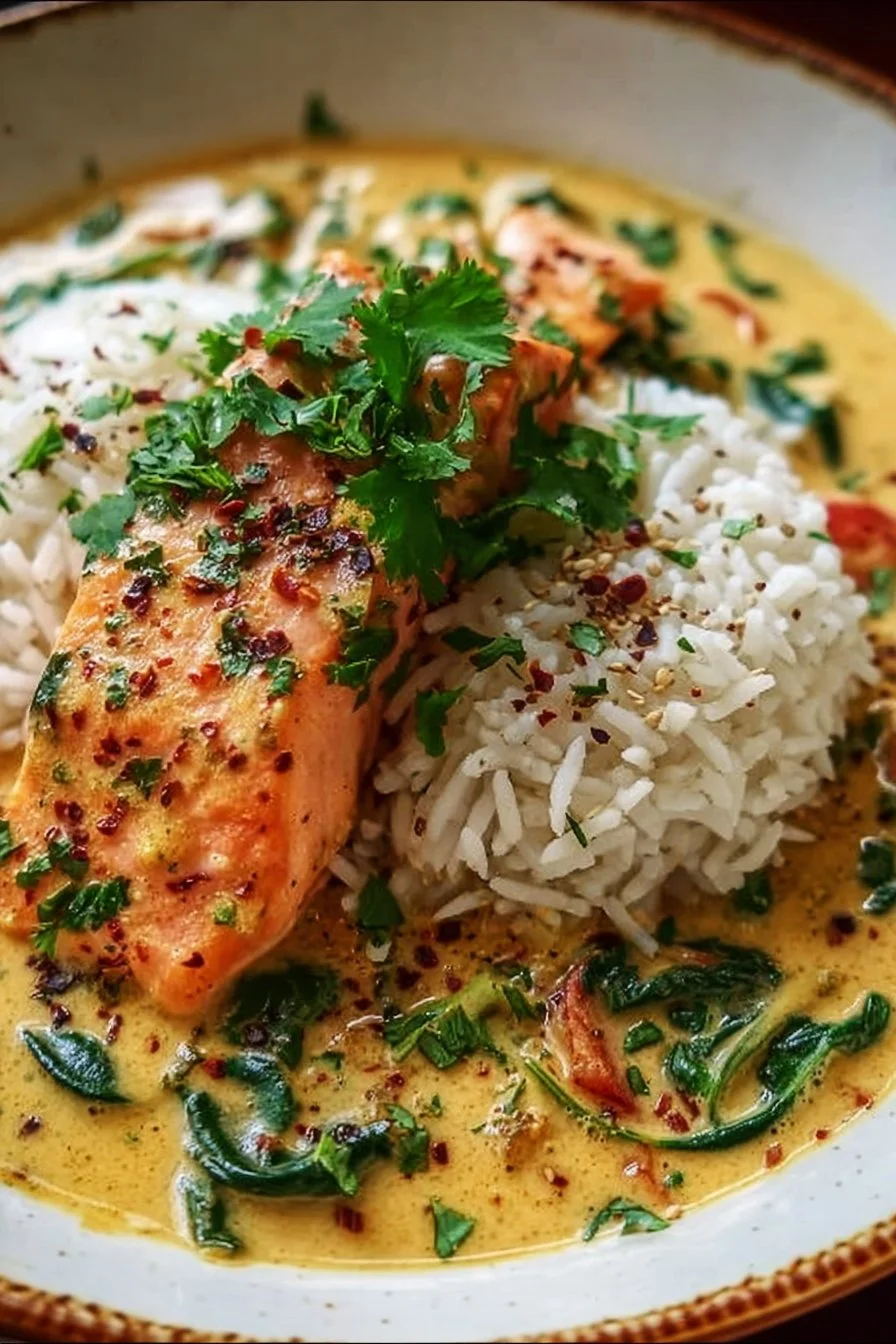
Bright, creamy, and gently spiced, this Salmon Curry is the kind of weeknight comfort food that feels special without asking for much effort. The rich coconut milk and Thai red curry paste form a silky sauce that clings to flaky oven-baked salmon, while bright lime and tender spinach keep the dish lively and balanced. It comes together in about 30 minutes and is perfect spooned over steaming white rice for a cozy dinner. If you want to compare techniques or see a slightly different oven-baked salmon idea, take a look at this Salmon Curry for inspiration.
Why You’ll Love This Salmon Curry
- Deep, layered flavor from simple pantry ingredients: coconut milk, red curry paste, and fish sauce.
- Luxuriously creamy texture without cream — coconut milk does the heavy lifting.
- Fast and fuss-free: oven-baked salmon plus a quick stovetop sauce.
- Balanced — the lime juice brightens the richness and the spinach adds a fresh note.
- Flexible for weeknights or an easy dinner party when served over rice.
- Minimal cleanup: one baking dish and one pan for the sauce.
- Uses accessible ingredients and takes under an hour from start to finish.
- Easily doubles for more servings with almost no extra effort.
What Is Salmon Curry?
Salmon Curry is a simple, comforting dish where oven-baked salmon is finished in a fragrant coconut curry sauce. The palate finds creamy, slightly sweet coconut milk, warm umami from Thai red curry paste and fish sauce, and a citrus lift from lime juice. Cooking method combines dry-heat (baking) for the salmon with a quick stovetop simmer for the sauce, which keeps the fish tender and allows the flavors to marry. This is a weeknight favorite but also feels elevated enough for casual dinner guests — essentially comfort food with a Southeast Asian twist.
Ingredients for Salmon Curry
For the Salmon
- 2 salmon fillets
- Salt and pepper to taste
- 1 tablespoon vegetable oil (for the pan; used in the sauce step)
For the Curry Sauce
- 1 can coconut milk (13.5 oz / about 400 ml)
- 2 tablespoons Thai red curry paste
- 1 tablespoon fish sauce
- 1 tablespoon lime juice
- 1 cup spinach
For Serving
- Cooked rice for serving
Ingredient Notes (Substitutions, Healthy Swaps)
- Coconut milk: You can use light coconut milk to reduce calories and fat, though the sauce will be a bit less rich. Full-fat coconut milk gives the creamiest texture.
- Thai red curry paste: If you prefer less heat, reduce to 1 tablespoon or use a milder curry paste; if you want more depth, keep 2 tablespoons. Store-bought pastes vary in intensity.
- Fish sauce: Adds savory umami and salt — use a low-sodium fish sauce if watching sodium. If you need a vegetarian alternative, consider a mushroom-based seasoning (optional).
- Lime juice: Fresh lime is best for brightness; bottled lime can be used in a pinch.
- Spinach: Baby spinach works well and wilts quickly; if you prefer sturdier greens (optional), kale or Swiss chard are acceptable swaps but will need slightly longer cooking.
- Vegetable oil: You can swap in canola or light olive oil if desired.
Step-by-Step Instructions
Step 1 – Preheat the oven
Preheat the oven to 375°F (190°C). Pat the salmon fillets dry and season both sides with salt and pepper. Place the fillets in a baking dish.
Visual cue: The salmon should look matte and seasoned, not wet or overly oily.
Step 2 – Bake the salmon
Bake the salmon for 15–20 minutes, depending on thickness, until cooked through and flaky when tested with a fork.
Visual cue: The edges will be opaque and firm; the center should just flake when nudged with a fork.
Step 3 – Sauté the curry paste
While the salmon bakes, heat 1 tablespoon of vegetable oil in a pan over medium heat. Add the Thai red curry paste and sauté for 1–2 minutes until fragrant, stirring constantly to prevent burning.
Pro cue: Blooming the paste in oil unlocks its aromatics — you should smell the curry releasing its fragrance and see it darken slightly.
Step 4 – Build the sauce
Stir in the can of coconut milk, the fish sauce, and the lime juice. Bring the sauce to a gentle simmer, stirring to combine.
Visual cue: Look for a glossy, homogenous sauce with no separated oils.
Step 5 – Add the spinach
Add the 1 cup of spinach and cook until wilted, about 1–2 minutes.
Pro cue: Add the spinach near the end so it stays tender and bright instead of overcooked and limp.
Step 6 – Flake the salmon into the curry
Once the salmon is done, use a fork to flake it into large chunks and gently fold the pieces into the simmering curry sauce so they soak up flavor.
Visual cue: The salmon should break into moist flakes that remain in sizable pieces — avoid over-mashing.
Step 7 – Serve
Spoon the curry and salmon over cooked rice and serve immediately.
Pro cue: Serve with extra lime wedges if you like an extra citrus lift; a light squeeze brightens the dish right before eating.
Pro Tips for Success
- Heat control: Keep the curry at a gentle simmer — fast boiling can break the coconut milk and make the sauce grainy.
- Texture control: Don’t overbake the salmon. Start checking at 15 minutes; thickness determines final timing.
- Seasoning balance: Fish sauce is salty and intensely savory. Taste the sauce after adding it and adjust with lime juice to balance saltiness.
- Prevent separation: Stir the coconut milk into the warmed curry paste slowly and keep heat moderate to prevent the sauce from splitting.
- Flake gently: Fold salmon into the sauce in large chunks rather than shredding; this keeps a pleasant texture.
- Timing tip: If your oven runs hot, reduce baking time and finish salmon in the sauce for a minute or two to reach perfect doneness.
- Leftover tip: The curry will thicken as it cools; thin with a splash of water when reheating if needed.
Flavor Variations (Optional)
- Spicier version: Add up to 1 teaspoon red chili flakes or extra curry paste to increase heat (optional).
- Extra creamy: Stir in a splash more coconut milk if you prefer an even richer sauce (optional).
- Lighter version: Use light coconut milk and reduce oil to lower calories and fat (optional).
- Green twist: Substitute part of the red curry paste with a small spoonful of green curry paste for a different aromatic profile (optional).
- Add more greens: Stir in extra spinach or chopped greens at the end to bulk up the dish without changing core flavors (optional).
- Citrus-forward: Increase lime juice slightly for a brighter, tangier finish (optional).
Serving Suggestions
- Rice: Serve over steamed jasmine or basmati rice to soak up the sauce.
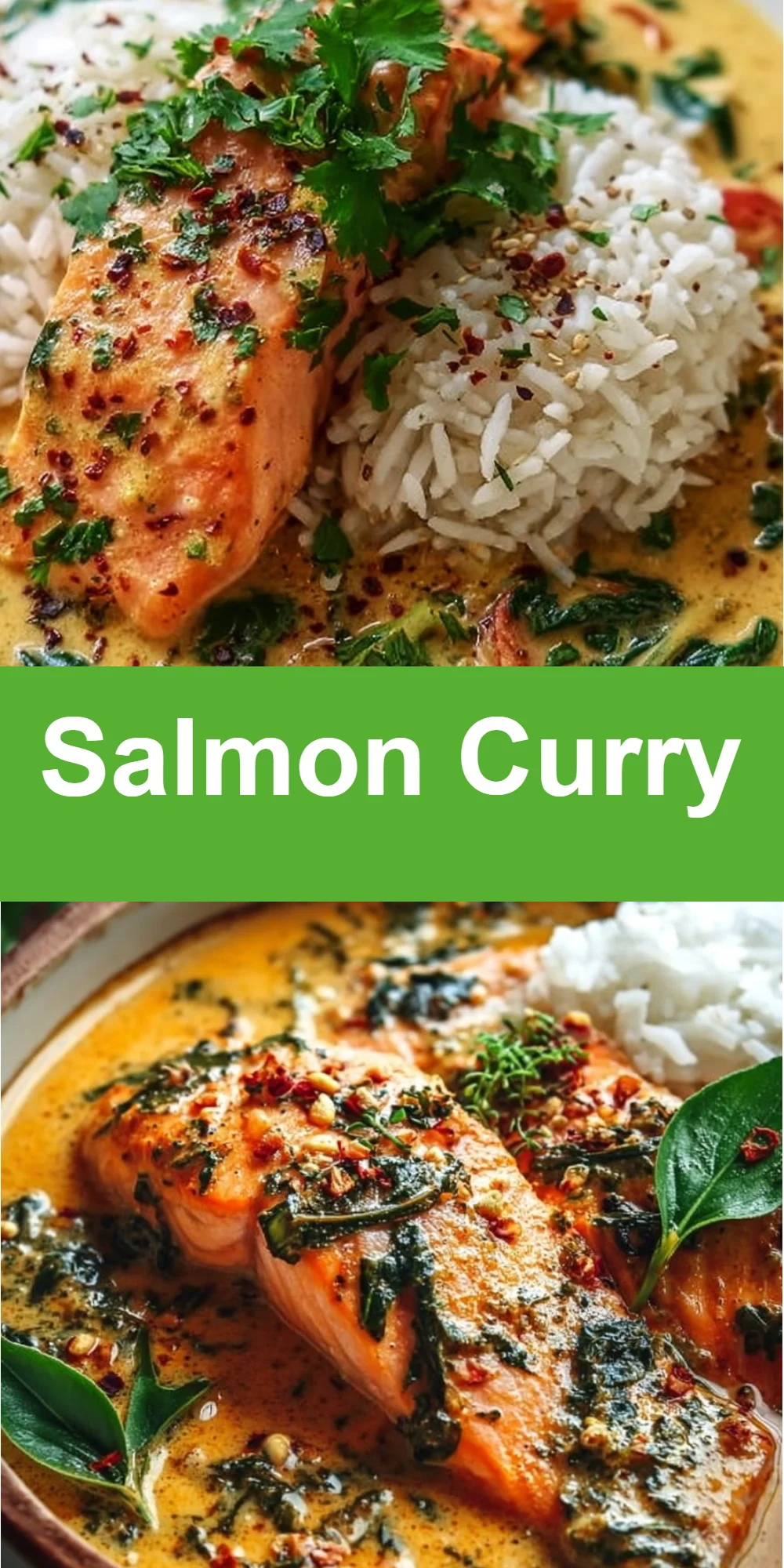
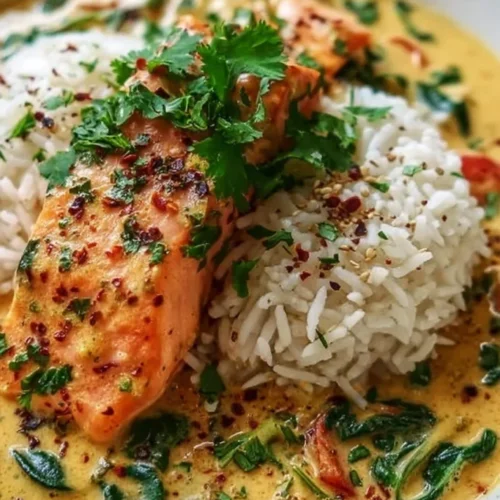
- Plating idea: Spoon rice in a shallow bowl and nestle the salmon curry to one side so the vibrant sauce is visible.
- Occasion: Perfect for a cozy weeknight, date-night in, or casual dinner with friends.
- Meal pairing: Offer simple sides like a quick cucumber salad, steamed vegetables, or light pickles to cut the richness.
- Leftovers as lunch: Pack with rice for an easy next-day meal.
- For a lighter plate: Serve alongside extra wilted greens and reduce rice portion.
For another simple oven-baked salmon idea, try baked salmon with garlic mayo which pairs beautifully with similar sides.
Make-Ahead, Storage & Reheating
- Make-ahead: You can prepare the curry sauce up to 24 hours ahead and refrigerate it. Reheat gently and flake freshly baked salmon into the warmed sauce just before serving to keep the fish tender.
- Refrigerator storage time: Store leftovers in an airtight container for up to 3 days.
- Reheating methods:
- Stovetop: Reheat gently over low heat, adding a splash of water if the sauce has thickened.
- Microwave: Reheat short bursts (30–45 seconds), stirring between intervals to avoid overheating the salmon.
- Texture changes: Keep in mind that the salmon will become firmer after refrigeration; flake it into the warmed sauce and stir gently to restore a pleasant mouthfeel.
Storage and Freezing Instructions
- Freezing the complete dish: Freezing the curry with salmon can change texture — coconut milk may separate and salmon can become dry. For best results, freeze only the sauce.
- Recommended approach: Freeze the curry sauce in airtight containers for up to 2 months. Thaw overnight in the refrigerator and reheat gently, then fold in freshly cooked or oven-baked salmon.
- If you must freeze everything: Use an airtight, freezer-safe container and consume within 1 month for better quality, knowing texture may degrade.
Nutrition Facts (Per Serving)
| Calories | Protein | Carbs | Fat | Fiber | Sodium |
|———|——–|——|—–|——|——-|
| 1050 kcal | 45 g | 53 g | 73 g | 3 g | 1050 mg |
Nutrition values are estimates and may vary depending on ingredients and portion sizes.
FAQ About Salmon Curry
- How do I know when the salmon is cooked through?
- The salmon is done when it flakes easily with a fork and is opaque throughout. Start checking at 15 minutes in a 375°F (190°C) oven.
- Can I use frozen salmon?
- Yes. Thaw completely in the refrigerator before baking to ensure even cooking.
- My coconut milk separated — can I fix it?
- Gently whisk the sauce over low heat and add a splash of water to bring it back together. Avoid high heat which can make separation worse.
- Is the curry very spicy?
- Heat depends on the curry paste brand. If you’re sensitive to spice, reduce the curry paste to 1 tablespoon and taste as you go.
- How should I reheat leftovers without overcooking the salmon?
- Warm the sauce gently on low heat, then fold in the cold salmon in large pieces and heat just until warmed through to prevent dryness.
- Can I make this for meal prep?
- Make the sauce ahead and store separately. Add freshly cooked or reheated salmon to portions when serving to keep the texture best.
Notes
- Plating tip: Serve in shallow bowls so the sauce pools around the rice and salmon for an attractive presentation.
- Small flavor upgrade: Finish each serving with a tiny squeeze of lime for an instant lift.
- Seasoning adjustment: Taste the sauce before adding more salt — fish sauce is quite salty and provides much of the seasoning.
- Presentation tip: Keep salmon flakes large when folding into the sauce for a more elegant look and satisfying texture.
- Rice ratio: Plan for about 1 cup cooked rice per person for a hearty serving; adjust down for lighter meals.
Salmon Curry
Ingredients
For the Salmon
- 2 fillets salmon fillets
- Salt and pepper to taste
- 1 tablespoon vegetable oil for the pan; used in the sauce step
For the Curry Sauce
- 1 can coconut milk (13.5 oz / about 400 ml)
- 2 tablespoons Thai red curry paste
- 1 tablespoon fish sauce
- 1 tablespoon lime juice
- 1 cup spinach
For Serving
- Cooked rice for serving
Instructions
Preparation
- Preheat the oven to 375°F (190°C). Pat the salmon fillets dry and season both sides with salt and pepper. Place the fillets in a baking dish.
- Bake the salmon for 15–20 minutes, depending on thickness, until cooked through and flaky when tested with a fork.
Cooking the Sauce
- While the salmon bakes, heat 1 tablespoon of vegetable oil in a pan over medium heat. Add the Thai red curry paste and sauté for 1–2 minutes until fragrant.
- Stir in the can of coconut milk, fish sauce, and lime juice. Bring to a gentle simmer, stirring to combine.
- Add the spinach and cook until wilted, about 1–2 minutes.
- Once the salmon is done, use a fork to flake it into large chunks and gently fold the pieces into the simmering curry sauce.
Serving
- Spoon the curry and salmon over cooked rice and serve immediately.