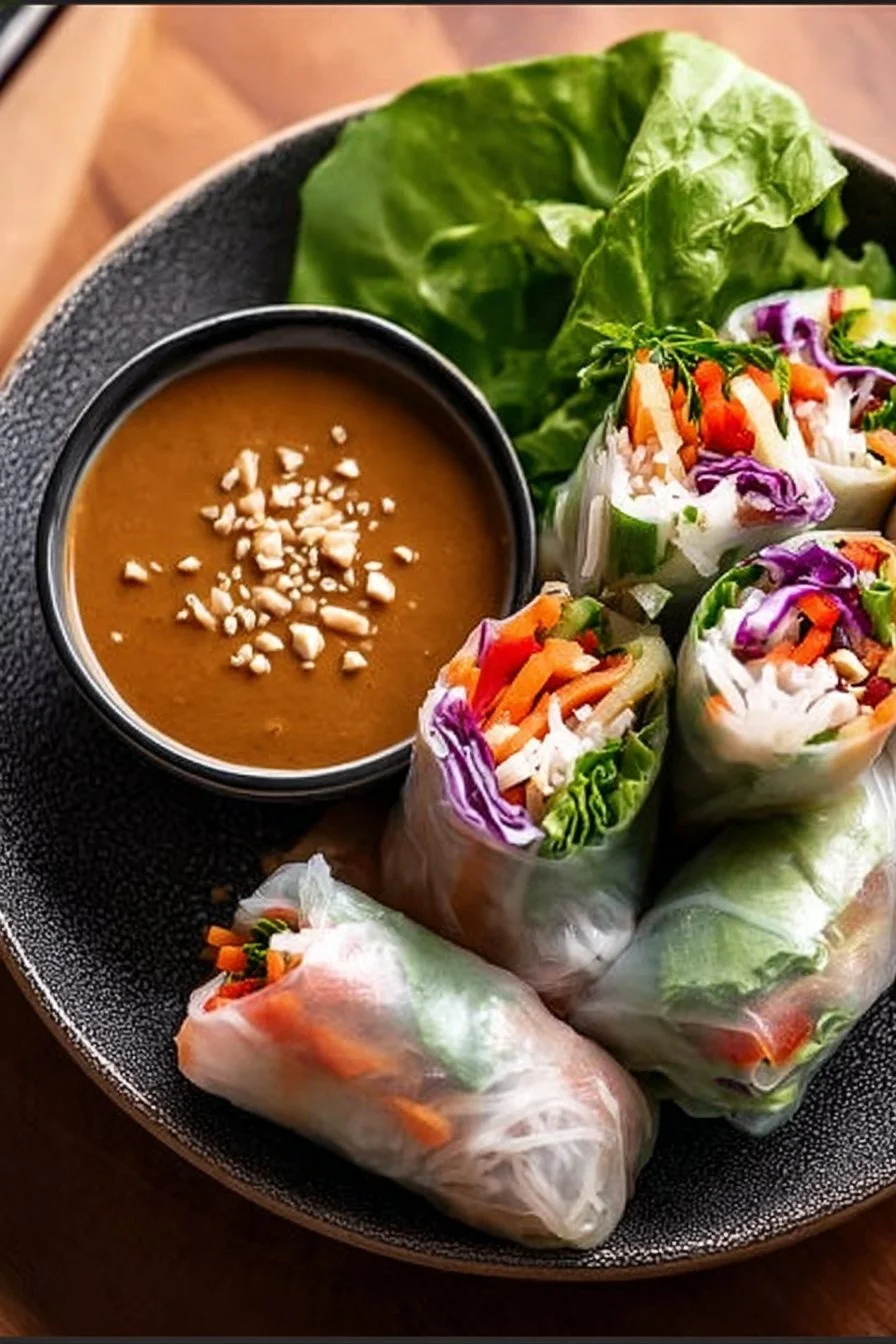
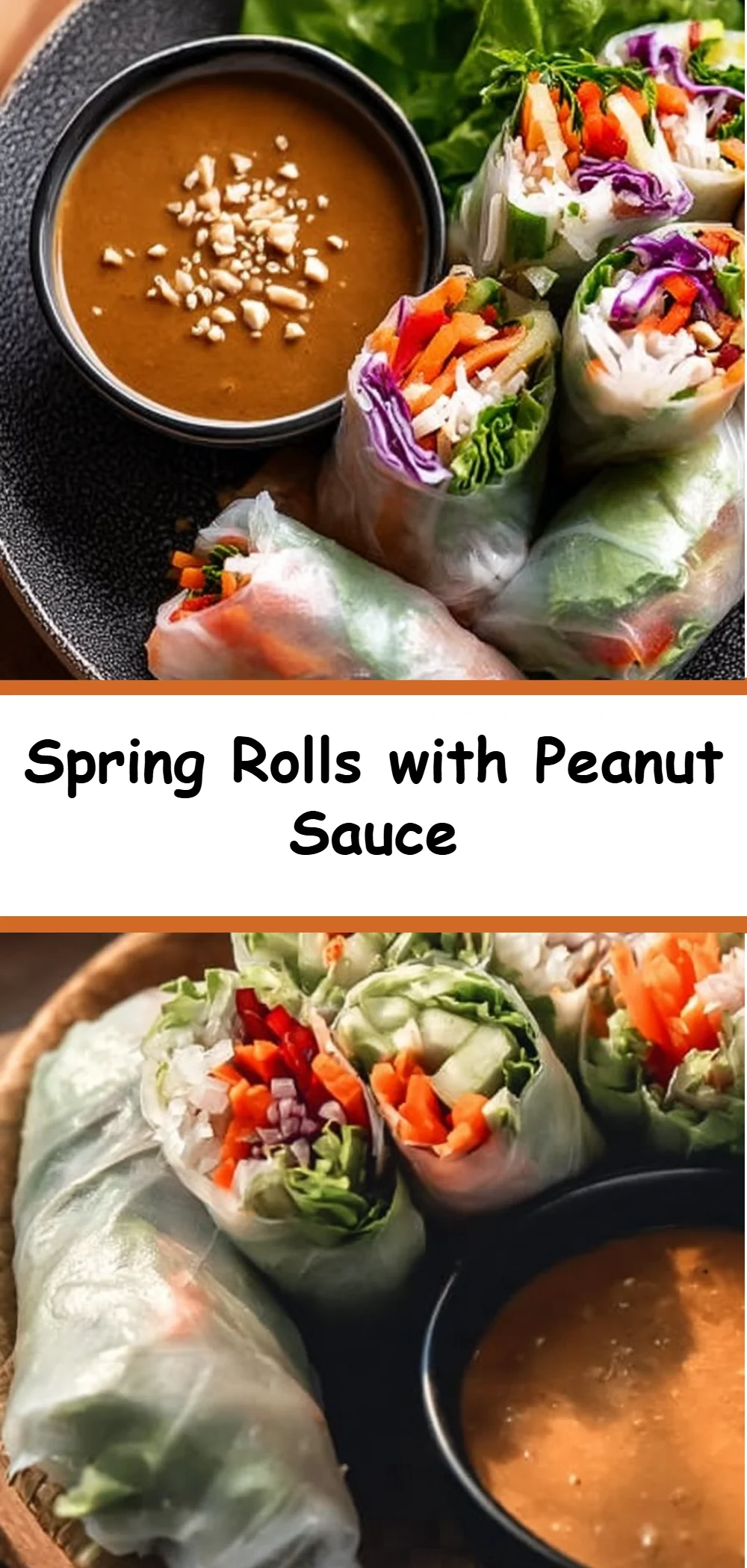
Bright, fresh, and irresistibly crunchy—these spring rolls with peanut sauce are the kind of light, vibrant food you want on a warm evening or when you need a satisfying, no-fuss meal. Crisp lettuce and julienned carrots, cucumbers, and red peppers are wrapped in delicate rice paper that gives you a clean bite every time; the herb lift from mint and cilantro cuts through the richness of the peanut sauce and keeps each roll bright. The peanut dip is tangy, a touch sweet, and silky, pulling everything together without overpowering the vegetables. They’re quick to assemble, endlessly shareable, and perfect for a picnic, a light dinner, or an impressive appetizer for guests—if you want a printable version of this spring rolls with peanut sauce recipe, grab it here: spring rolls with peanut sauce.
Why You’ll Love This Spring Rolls with Peanut Sauce
- Fresh, crunchy vegetables wrapped in soft rice paper create a satisfying contrast in every bite.
- The peanut sauce is creamy, tangy, and slightly sweet—simple ingredients, big flavor.
- No cooking required beyond softening the wrappers and whisking the sauce, making it a fast weeknight option.
- Easily made vegetarian, light, and packed with raw veggies for a healthy boost.
- Portable and mess-free—great for packed lunches and picnics.
- Customizable herb forwardness: add more mint or cilantro for a brighter profile.
- Kid-friendly—mild, sweet peanut sauce appeals to younger palates.
- Makes an attractive platter for entertaining; colorful and elegant without fuss.
What Is Spring Rolls with Peanut Sauce?
Spring rolls with peanut sauce are fresh, uncooked rolls built on rice paper wrappers and filled with crisp vegetables and aromatic herbs. They’re meant to showcase simple, raw ingredients—lettuce, julienned carrots and cucumbers, thinly sliced red bell pepper, fresh mint, and cilantro—rolled tightly for neat, easy-to-eat bites. The cooking method is minimal: rice paper is briefly softened in warm water and used as a wrapper; everything else is raw and assembled. Flavor-wise, these rolls are light and herbaceous, with sweet-vegetable notes and a creamy, savory-sour peanut dip that adds depth. They’re commonly served as a starter, a light lunch, or a snack and carry a fresh, clean vibe—think casual entertaining, summer meals, and healthy weeknight dinners. For more spring roll inspiration and dipping options, check out this curated collection of best spring roll recipes with dipping sauces.
Ingredients for Spring Rolls with Peanut Sauce
For the Base
- Rice paper wrappers
- Lettuce
- Carrots, julienned
- Cucumbers, julienned
- Red bell peppers, sliced
- Mint leaves
- Cilantro leaves
For the Sauce
- Peanut butter
- Soy sauce
- Lime juice
- Honey or maple syrup
- Water
For Serving
- Peanut sauce (prepared)
Ingredient Notes (Substitutions, Healthy Swaps)
- Soy sauce: For a gluten-free swap, use tamari in place of soy sauce. Keep the amount the same and taste before serving to adjust saltiness.
- Peanut butter: Choose natural or reduced-fat peanut butter if you prefer a lighter sauce; creamy peanut butter will make a smoother dip. Chunky peanut butter works too if you like texture.
- Honey or maple syrup: Either sweetener listed works—maple syrup is a great vegan option (already included in the base list).
- Lime juice: Fresh lime juice is best for brightness, but bottled is acceptable in a pinch.
- Water: Adjust the amount of water to thin the sauce to your desired consistency; start with a splash and add more as needed.
- Vegetables: Stick to the listed produce to preserve the recipe’s profile; you can adjust quantities of each vegetable based on preference.
Step-by-Step Instructions
Step 1 – Make the Peanut Sauce
- In a small bowl combine peanut butter, soy sauce, lime juice, honey or maple syrup, and a splash of water.
- Whisk until smooth and cohesive. Add more water a teaspoon at a time to reach a dipping consistency.
- Visual cue: The sauce should be glossy, pourable but not runny—thick enough to cling to a roll.
- Pro cue: If your peanut butter is very stiff, microwave briefly (5–8 seconds) to loosen it before mixing.
Step 2 – Soften the Rice Paper
- Fill a shallow dish or wide bowl with warm (not hot) water. Dip one rice paper wrapper in the water for a few seconds until it softens.
- Visual cue: The wrapper should be pliable and translucent; it will continue to soften as you assemble.
- Pro cue: Don’t soak rice paper too long—over-soaking makes it gummy and tear-prone.
Step 3 – Layer the Filling
- Place the softened wrapper on a clean surface. Arrange a small amount of lettuce, carrots, cucumbers, red bell peppers, mint, and cilantro in the center.
- Visual cue: Keep the filling compact and centered, leaving about an inch of wrapper free on each side.
Step 4 – Roll and Seal
- Fold the sides of the wrapper over the filling, then roll from the bottom to the top, sealing tightly as you go.
- Visual cue: The finished roll should be tightly wrapped with a neat seam and the vegetables visible through the translucent rice paper.
- Pro cue: Press gently as you roll to expel pockets of air and keep the roll compact.
Step 5 – Repeat and Serve
- Repeat the softening, filling, and rolling process for the remaining wrappers and filling.
- Serve the spring rolls whole or sliced in half with the prepared peanut sauce on the side for dipping.
- Visual cue: Arrange rolls on a platter with a small dish of sauce in the center for an attractive presentation.
Pro Tips for Success
- Work in batches: Prepare fillings and sauce ahead, then soften and assemble rice paper as you go to avoid soggy wrappers.
- Dry your herbs and lettuce well: Excess moisture will make the rice paper wet and harder to seal.
- Keep filling quantities modest: Too much filling makes rolling difficult and causes tearing.
- Use warm water—not hot—for softening: Hot water weakens rice paper and leads to tearing; warm water gives better control.
- Taste the sauce and adjust: Add a bit more soy sauce if you want saltiness, or a touch more lime juice if you want brightness.
- Serve immediately: Rice paper can lose its chewy texture over time—fresh rolls are best within a few hours.
- Slice at a slight diagonal with a sharp knife if you want a pretty display; wipe the blade occasionally to keep cuts clean.
Flavor Variations (Optional)
- Spicier peanut sauce (optional): Stir a small amount of chili (paste or flakes) into the peanut sauce—start small and taste as you go.
- Herb-forward (optional): Increase the mint and cilantro quantities for a brighter, aromatic roll.
- Sweet swap (optional): Use maple syrup instead of honey for a vegan-friendly sauce—both are already listed as options.
- Chunky sauce (optional): Use chunky peanut butter or leave a bit of texture in the sauce by not fully smoothing the peanut butter.
- Extra-crisp (optional): Double up on carrots for an extra crunchy bite while keeping other ingredients the same.
Serving Suggestions
- Serve as an appetizer platter at gatherings—arrange rolls neatly with the peanut sauce in the middle for dipping.
- Make a light lunch by pairing with a simple green salad or a bowl of miso soup for a balanced meal.
- Pack for picnics or lunches—the rolls travel well if kept chilled and the sauce in a separate container.
- Serve with extra lime wedges for guests to squeeze over the rolls for an extra zing.
- Offer the peanut sauce in small dipping bowls so everyone can control how much they use.
Make-Ahead, Storage & Reheating
- What you can prepare ahead:
- Make the peanut sauce up to 3 days in advance and refrigerate in an airtight container.
- Julienne all vegetables and wash, dry, and store them separately in airtight containers.
- Assembly timing:
- For best texture, roll the rice paper wrappers shortly before serving—rice paper gets softer and stickier over time.
- Refrigerator storage:
- Store fully assembled rolls in the refrigerator for up to 1 day. Wrap individual rolls in plastic wrap to keep moisture controlled.
- Reheating methods:
- These spring rolls are best served cold or at room temperature. Reheating is not necessary and not recommended.
- Texture changes:
- Expect rice paper to become chewier after refrigeration; they will still taste good but lose some of their fresh snap.
Storage and Freezing Instructions
- Freezing is not recommended because rice paper and raw vegetables become limp and watery after thawing.
- If you need to prepare in advance, store components separately (sauce, vegetables) and assemble just before serving for the best texture.
- If frozen accidentally, thawing will cause a soggy texture—plan to eat fresh or store only the sauce and fillings, not assembled rolls.
Nutrition Facts (Per Serving)
| Calories | Protein | Carbs | Fat | Fiber | Sodium |
|———|——–|——|—–|——|——-|
| 220 kcal | 6 g | 18 g | 14 g | 3 g | 420 mg |
Nutrition values are estimates and may vary depending on ingredients and portion sizes.
FAQ About Spring Rolls with Peanut Sauce
- How long will the rice paper take to soften?
- A few seconds in warm water is usually enough; remove when the wrapper is pliable and slightly translucent.
- Why do my rice paper wrappers tear?
- Over-soaking in water or using cold water can make them fragile. Use warm water and work quickly.
- Can I make the peanut sauce ahead of time?
- Yes—make the sauce up to 3 days in advance and store it in the refrigerator in an airtight container.
- How should I store leftover rolls?
- Store assembled rolls in the fridge up to 1 day, wrapped individually to limit drying or sogginess.
- What if my peanut sauce is too thick?
- Thin it gradually with water, a teaspoon at a time, until it reaches your preferred dipping consistency.
- Can I serve these warm?
- These are best fresh and cool or at room temperature; reheating isn’t necessary and can change the texture.
Notes
- For neat presentation, trim the ends of lettuce stems and stack vegetables uniformly before rolling.
- Small tweaks to the sauce (more lime, less honey) can dramatically shift the balance—adjust to taste.
- Slice rolls on a sharp knife moistened with water for cleaner cuts and prettier halves.
- If you plan to serve to kids, offer the peanut sauce on the side so each person can choose how much to dip.
- Keep a damp towel over assembled rolls if you need to hold them for a short time before serving to prevent drying.
Spring Rolls with Peanut Sauce
Ingredients
For the Base
- 8 pieces Rice paper wrappers Use rice paper suitable for spring rolls.
- 2 cups Lettuce Any leaf lettuce can be used.
- 1 cup Carrots, julienned Julienne the carrots for easy wrapping.
- 1 cup Cucumbers, julienned Remove seeds if desired.
- 1 cup Red bell peppers, sliced Thinly slice the bell peppers.
- 1/4 cup Mint leaves Fresh mint enhances flavor.
- 1/4 cup Cilantro leaves Fresh cilantro complements the dish.
For the Sauce
- 1/2 cup Peanut butter Natural or creamy peanut butter recommended.
- 2 tablespoons Soy sauce Use tamari for gluten-free option.
- 2 tablespoons Lime juice Fresh lime juice preferred for brightness.
- 1 tablespoon Honey or maple syrup Maple syrup for vegan option.
- 2 tablespoons Water Adjust water for desired sauce consistency.
For Serving
- 1 cup Peanut sauce (prepared) Serve alongside the spring rolls.
Instructions
Make the Peanut Sauce
- In a small bowl combine peanut butter, soy sauce, lime juice, honey or maple syrup, and a splash of water.
- Whisk until smooth and cohesive. Add more water a teaspoon at a time to reach a dipping consistency.
- The sauce should be glossy and pourable but not runny.
Soften the Rice Paper
- Fill a shallow dish or wide bowl with warm water. Dip one rice paper wrapper in the water for a few seconds until it softens.
- The wrapper should be pliable and translucent.
Layer the Filling
- Place the softened wrapper on a clean surface. Arrange a small amount of lettuce, carrots, cucumbers, red bell peppers, mint, and cilantro in the center.
Roll and Seal
- Fold the sides of the wrapper over the filling, then roll from the bottom to the top, sealing tightly as you go.
- The finished roll should be tightly wrapped with a neat seam.
Repeat and Serve
- Repeat the softening, filling, and rolling process for the remaining wrappers and filling.
- Serve the spring rolls whole or sliced in half with the prepared peanut sauce on the side.