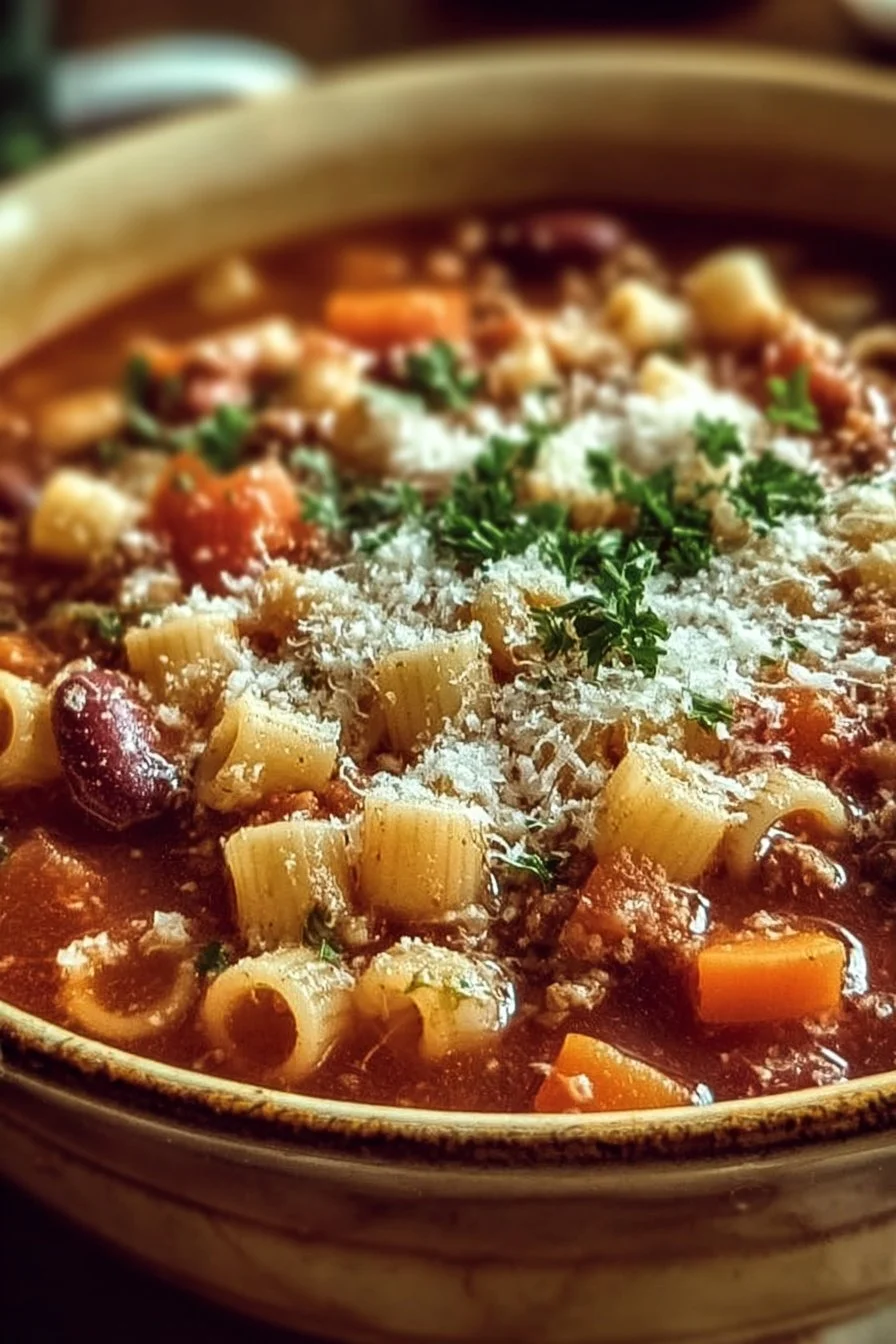
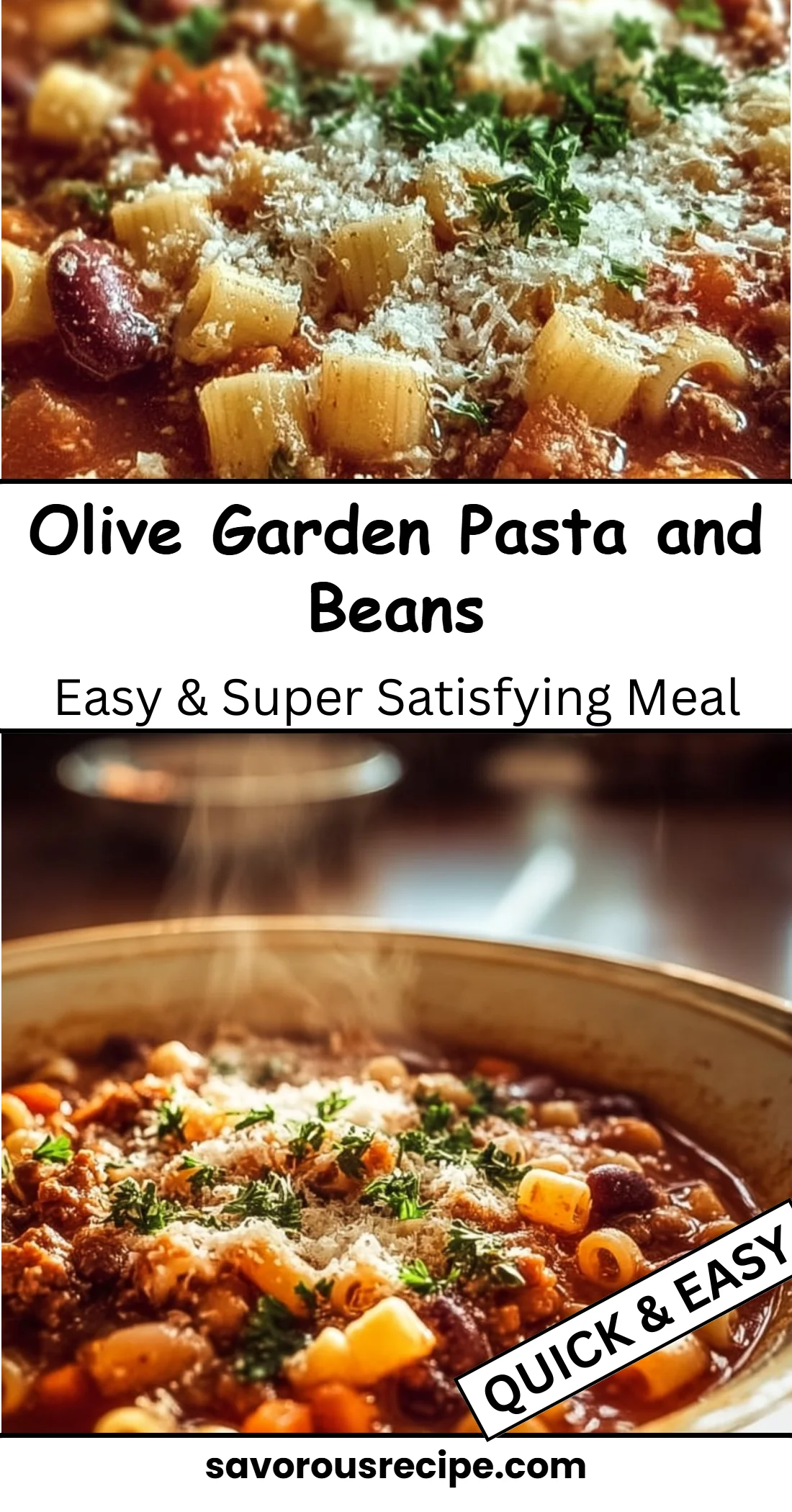
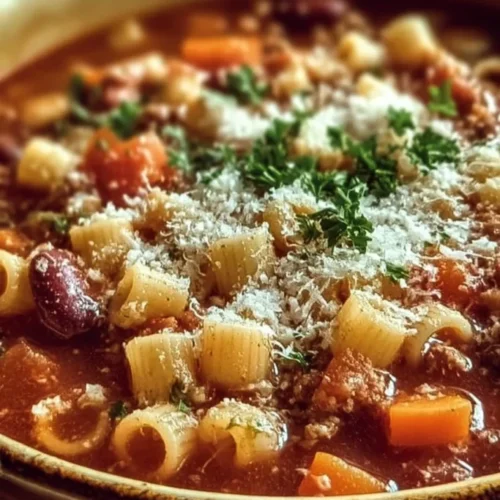
A bowl of Olive Garden Pasta and Beans is the kind of meal that hugs you from the inside out: rich, savory beef mingles with tender beans and little bits of pasta in a tomato-scented broth that’s both hearty and bright. The texture is comforting — a gentle chew from the pasta, creamy beans, and a satisfying crumble of browned beef, all finished with a sprinkle of sharp Parmesan. It’s an easy one-pot supper that comes together quickly on a weeknight, yet feels like something you’d order at a cozy trattoria. Serve it with crusty bread for dipping or a crisp green salad for balance. For a true Olive Garden-inspired combo, pair it with a copycat salad for a full, familiar spread: Olive Garden salad.
Why You’ll Love This Olive Garden Pasta and Beans
- Classic comfort-food flavors: tomato, beef, and beans in a savory broth that tastes like home.
- One-pot simplicity: everything cooks in a single large pot for easy cleanup.
- Budget-friendly: pantry staples and a pound of ground beef stretch into multiple servings.
- Textural balance: tender pasta, creamy beans, and browned beef offer variety in every spoonful.
- Flexible and family-friendly: mild, familiar flavors that kids and adults both enjoy.
- Easy to adjust: add herbs or spice to make it your signature version.
- Satisfying portion size: hearty enough to be a complete meal on cooler nights.
- Make-ahead friendly: flavors meld even better after a night in the fridge.
What Is Olive Garden Pasta and Beans?
This dish is a home-style, Olive Garden–inspired pasta and bean stew with ground beef, canned tomatoes, beans, and small pasta all simmered together in a flavorful beef broth. It tastes like a hybrid of minestrone and a rustic pasta e fagioli — tomato-forward, savory, and lightly herbaceous from dried oregano and basil. The cooking method is simple simmering: brown the beef, sweat the aromatics and vegetables, add the canned ingredients and broth, then finish by cooking the pasta in the pot so it absorbs flavor. People typically serve it as a weeknight dinner or a cozy weekend lunch; it’s the kind of comfort food that works for casual family meals or an easy dinner party when you want something warm and approachable. Overall vibe: unfussy, satisfying, and nostalgically Italian-American.
Ingredients for Olive Garden Pasta and Beans
For the Base
- 1 tablespoon olive oil
- 1 pound ground beef
- 1 medium onion, diced
- 2 garlic cloves, minced
For the Vegetables & Beans
- 1 carrot, diced
- 1 celery stalk, diced
- 2 cans (14.5 ounces each) diced tomatoes, undrained
- 1 can (15 ounces) cannellini beans, rinsed and drained
- 1 can (15 ounces) kidney beans, rinsed and drained
For the Broth & Seasoning
- 4 cups beef broth
- 1 teaspoon dried oregano
- 1 teaspoon dried basil
- Salt and pepper, to taste
For the Pasta & Serving
- 1 cup small pasta (such as ditalini or elbows)
- Grated Parmesan cheese, for serving
- Fresh parsley, chopped (optional, for garnish)
Ingredient Notes (Substitutions, Healthy Swaps)
- Ground beef: For a leaner dish, use 90% lean ground beef; reduce added salt slightly since leaner meat has less fat for flavor. You can also substitute ground turkey or chicken, but the flavor will be lighter.
- Olive oil: Use a neutral oil (canola) if preferred, but olive oil adds a touch of fruitiness that works well here.
- Beans: Keep both cannellini and kidney beans if possible for texture contrast. If you only have one, double that can and use it in place of the other.
- Canned tomatoes: If you prefer a smoother base, use crushed tomatoes instead of diced, though the given recipe uses diced tomatoes.
- Beef broth: For lower sodium, use low-sodium beef broth and adjust seasoning at the end. Vegetable broth works as a vegetarian swap if you omit the beef and sub in a plant protein.
- Pasta: For gluten-free, swap in a gluten-free small pasta shape and add it toward the end of cooking as directed.
- Dairy alternatives: Use a sprinkle of nutritional yeast in place of Parmesan for a dairy-free finish, though the classic Parmesan is part of the dish’s charm.
Step-by-Step Instructions
Step 1 – Heat the Oil & Brown the Beef
- Heat 1 tablespoon olive oil in a large pot over medium heat until shimmering.
- Add 1 pound ground beef and cook until nicely browned, breaking it apart as it cooks. Drain excess fat if the pot seems overly greasy.
Visual cue: The beef should be broken into small crumbles and have browned bits on the bottom of the pot, which gives great flavor.
Step 2 – Add the Aromatics and Vegetables
- Stir in the diced onion, minced garlic, diced carrot, and diced celery. Cook, stirring occasionally, until the vegetables are softened, about 5 minutes.
Pro cue: Don’t rush this step — softening the vegetables builds a sweet, aromatic base that balances the tomatoes.
Step 3 – Add Tomatoes and Beans
- Pour in both cans of diced tomatoes (with their juices), then add the rinsed and drained cannellini and kidney beans. Stir to combine.
Visual cue: The pot will take on a bright, red color with beans visible throughout; you should see a chunky, rustic mixture.
Step 4 – Add Broth and Seasonings
- Pour in 4 cups beef broth and add 1 teaspoon dried oregano, 1 teaspoon dried basil, and salt and pepper to taste. Mix well.
- Bring the mixture to a boil over medium-high heat.
Pro cue: Taste the broth before adding a lot of salt — canned tomatoes and broth can already have a fair amount of sodium.
Step 5 – Simmer to Develop Flavor
- Reduce heat to low and simmer, uncovered, for 15–20 minutes to let flavors meld. Stir occasionally to prevent sticking.
Visual cue: The sauce should slightly reduce and the aroma will become richer and more pronounced.
Step 6 – Cook the Pasta in the Soup
- In the last 10 minutes of cooking, add 1 cup small pasta to the pot and continue simmering until the pasta is tender. Adjust seasoning if necessary.
- Ladle into bowls and top with grated Parmesan and chopped parsley, if using.
Pro cue: Add the pasta toward the end to avoid overcooking; small shapes like ditalini cook quickly and absorb the broth’s flavor.
Pro Tips for Success
- Use a wide, heavy-bottomed pot to brown beef evenly and give the mixture room to simmer.
- Browning the meat well adds caramelized flavor — resist the urge to stir constantly during browning.
- If the pot gets too dry while simmering, add a splash more broth or water; you want a slightly brothy but hearty consistency.
- If your pasta absorbs too much liquid, reserve 1/2 cup of hot broth before adding the pasta and stir some back in as needed.
- Taste and adjust salt at the very end; canned ingredients and broth often change the final seasoning.
- For a cleaner presentation, rinse pasta with a little warm water before serving to remove excess starch if it clumps.
- If you prefer firmer pasta, undercook by 1–2 minutes as it will continue to soften in the hot soup when serving.
Flavor Variations
All of these are optional and keep the core recipe intact:
- Spicy kick: Stir in 1/4–1/2 teaspoon crushed red pepper flakes with the dried herbs for a subtle heat.
- Cheesy finish: Stir 1/2 cup shredded mozzarella into individual bowls for a melty top.
- Herb-forward: Add a tablespoon of chopped fresh basil or a handful of chopped fresh parsley right before serving for a brighter note.
- Leaner version: Substitute ground turkey and use low-sodium broth for a lighter but still satisfying bowl.
- More beans, less pasta: Double one can of beans and reduce pasta to 1/2 cup for a protein- and fiber-forward version.
- Tomato-forward: Replace one can of diced tomatoes with crushed tomatoes for a smoother broth.
Serving Suggestions
- Crusty bread or garlic bread for dunking — the broth is begging for sopping.
- A simple green side like arugula dressed with lemon, olive oil, salt, and pepper for freshness.
- Steamed green beans or roasted broccoli for added vegetables and color.
- Family-style bowls with grated Parmesan and red pepper flakes on the table so guests can season their own.
- For an Olive Garden–style night, serve this with a comforting copycat entree for variety; try pairing it alongside a copycat Olive Garden Chicken Scampi for a restaurant-inspired spread.
- Great for casual dinner parties — ladle into shallow bowls and garnish with parsley for an inviting presentation.
Make-Ahead, Storage & Reheating
- Make-ahead: You can prepare the entire recipe up to the point before adding the pasta and refrigerate for up to 24 hours. When ready to eat, bring it back to a simmer and add the pasta in the last 10 minutes. This helps prevent pasta from getting mushy.
- Refrigerator: Store leftovers in an airtight container for 3–4 days. The flavor often improves after sitting overnight.
- Reheating: Gently reheat on the stovetop over medium-low heat, stirring occasionally. Add a splash of broth or water to loosen the consistency if the pasta has soaked up too much liquid. Microwave reheating works, but stir periodically and add a splash of liquid to keep it saucy.
- Texture changes: Pasta absorbs liquid over time and will swell; plan to add extra broth or reheat gently to restore the soup-like consistency.
Storage and Freezing Instructions
- Freezing the whole cooked dish (with pasta) is not recommended because the pasta will become very soft and lose its texture after thawing.
- Freezing components: You can freeze the base (meat, tomatoes, beans, and broth) in a freezer-safe container for up to 3 months. Thaw overnight in the fridge, reheat, then add freshly cooked pasta just before serving.
- If you must freeze leftovers with pasta, expect a mushier texture — use the frozen portions mainly for convenience rather than ideal texture.
- To reheat from frozen, thaw in the refrigerator overnight then warm gently on the stovetop, adding extra broth as needed.
Nutrition Facts (Per Serving)
| Calories | Protein | Carbs | Fat | Fiber | Sodium |
|———|——–|——|—–|——|——-|
| 400 kcal | 29 g | 41 g | 18 g | 8 g | 900 mg |
Nutrition values are estimates and may vary depending on ingredients and portion sizes.
FAQ About Olive Garden Pasta and Beans
Q: My pasta turned mushy after storing. What went wrong?
A: Pasta absorbs liquid over time. To avoid mushiness, store the base separately or undercook the pasta slightly before serving. Reheat with a splash of broth.
Q: Can I skip the meat to make this vegetarian?
A: Yes — omit the ground beef and use vegetable broth, then consider adding extra beans or a plant protein for substance.
Q: How do I know when the pasta is perfectly cooked in the pot?
A: Taste it — small shapes like ditalini should be tender but still slightly firm (al dente). Cooking times vary by brand.
Q: The stew tastes bland. How can I fix it?
A: Adjust salt and pepper at the end, add a pinch of sugar if the tomatoes are too acidic, or stir in a little extra Parmesan for umami.
Q: Can I use dry beans instead of canned?
A: You can, but you must pre-soak and cook them separately before adding; canned beans are used here for speed and convenience.
Q: How long will leftovers keep in the fridge?
A: Store in an airtight container for 3–4 days. Reheat gently and add broth if needed.
Notes
- For a prettier bowl, reserve a few beans and a sprinkle of diced carrot to stir in at the end for color before serving.
- A squeeze of lemon or a splash of red wine vinegar at the table brightens the broth instantly.
- If you prefer a thicker stew, mash a small handful of beans against the side of the pot and stir — natural thickener, no extra ingredients needed.
- Garnish with freshly chopped parsley and a generous grating of Parmesan for a restaurant-style finish.
- Taste the pot frequently during cooking; simmering time can be adjusted slightly depending on how concentrated you like the broth.
Olive Garden Pasta and Beans
Ingredients
For the Base
- 1 tablespoon olive oil
- 1 pound ground beef For a leaner dish, use 90% lean ground beef.
- 1 medium onion, diced
- 2 cloves garlic, minced
For the Vegetables & Beans
- 1 medium carrot, diced
- 1 stalk celery, diced
- 2 cans diced tomatoes, undrained (14.5 ounces each)
- 1 can cannellini beans, rinsed and drained (15 ounces)
- 1 can kidney beans, rinsed and drained (15 ounces)
For the Broth & Seasoning
- 4 cups beef broth For lower sodium, use low-sodium beef broth.
- 1 teaspoon dried oregano
- 1 teaspoon dried basil
- Salt and pepper, to taste Taste before adding a lot of salt.
For the Pasta & Serving
- 1 cup small pasta (such as ditalini or elbows) Add toward the end of cooking to avoid overcooking.
- Grated Parmesan cheese, for serving Can substitute with nutritional yeast for dairy-free.
- Fresh parsley, chopped (optional, for garnish)
Instructions
Preparation
- Heat 1 tablespoon of olive oil in a large pot over medium heat until shimmering.
- Add 1 pound of ground beef and cook until nicely browned, breaking it apart as it cooks. Drain excess fat if the pot seems overly greasy.
- Stir in the diced onion, minced garlic, diced carrot, and diced celery. Cook, stirring occasionally, until the vegetables are softened, about 5 minutes.
Cooking
- Pour in both cans of diced tomatoes (with their juices), then add the rinsed and drained cannellini and kidney beans. Stir to combine.
- Pour in 4 cups of beef broth and add 1 teaspoon dried oregano, 1 teaspoon dried basil, and salt and pepper to taste. Mix well. Bring the mixture to a boil over medium-high heat.
- Reduce heat to low and simmer, uncovered, for 15–20 minutes to let flavors meld.
- In the last 10 minutes of cooking, add 1 cup of small pasta to the pot and continue simmering until the pasta is tender. Adjust seasoning if necessary.
- Ladle into bowls and top with grated Parmesan and chopped parsley, if using.