
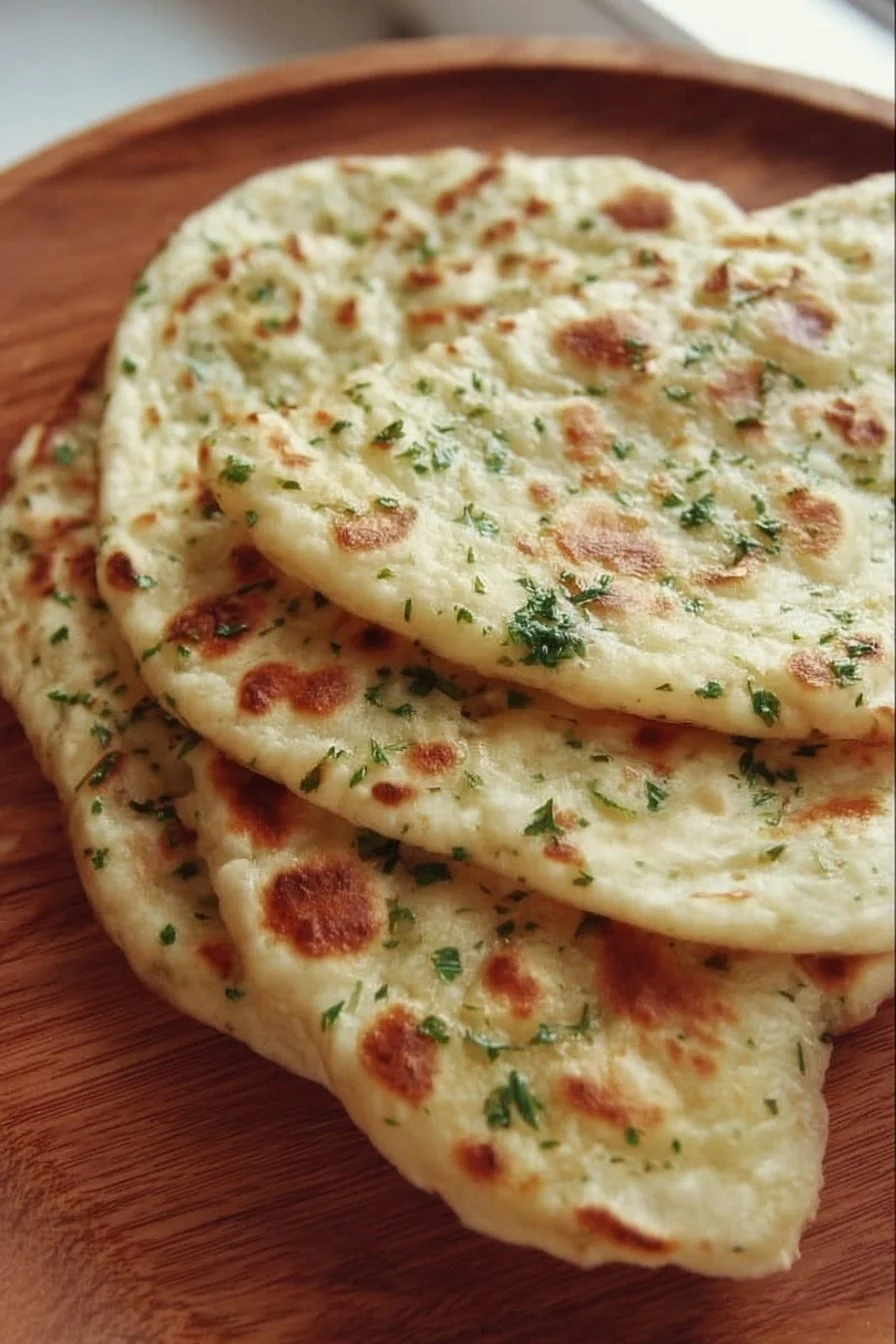
This garlic flatbread is all about warm, buttery layers with a tender chew and a golden, slightly crisp exterior — the kind of bread you’ll happily tear into with your hands. It’s rich with garlic and parsley, soft inside and ready in minutes because there’s no yeast to wait for. The texture is pillowy from a quick dough and slightly flaky from the olive oil and skillet heat, making it irresistibly comforting. It’s one of those easy recipes that doubles as an appetizer, a weeknight bread, or an accompaniment to a big bowl of stew. If you want the full printable recipe and measurements on a single page, see the Easy Garlic Flatbread (No Yeast!) recipe page for convenience.
Why You’ll Love This Easy Garlic Flatbread (No Yeast!)
- No-yeast convenience: ready in about 30 minutes with zero rising time.
- Big garlic flavor: fresh minced garlic and melted butter make every bite savory and aromatic.
- Soft yet slightly crisp: skillet cooking produces a tender interior and golden outside.
- Versatile: serves as bread for dips, a pizza base, or a sandwich wrap.
- Budget-friendly: pantry staples you likely already have on hand.
- Kid-friendly: mild, buttery, and great for dipping or building mini pizzas.
- Fussy-free technique: simple kneading and shaping — no special equipment required.
- Great for last-minute hosting: makes warm, fresh bread quickly to impress guests.
What Is Easy Garlic Flatbread (No Yeast!)
Easy Garlic Flatbread (No Yeast!) is a simple, quick skillet bread made from a baking powder–leavened dough. It tastes buttery and garlicky with a fresh parsley finish, leaning savory rather than sweet. The cooking method is stovetop: small rounds are cooked in a hot skillet until puffed and golden. People often serve this flatbread as an appetizer with dips, alongside soups, as a side to salads, or used to scoop up saucy mains. The overall vibe is cozy and homey — a weeknight staple that also shines on a casual brunch table.
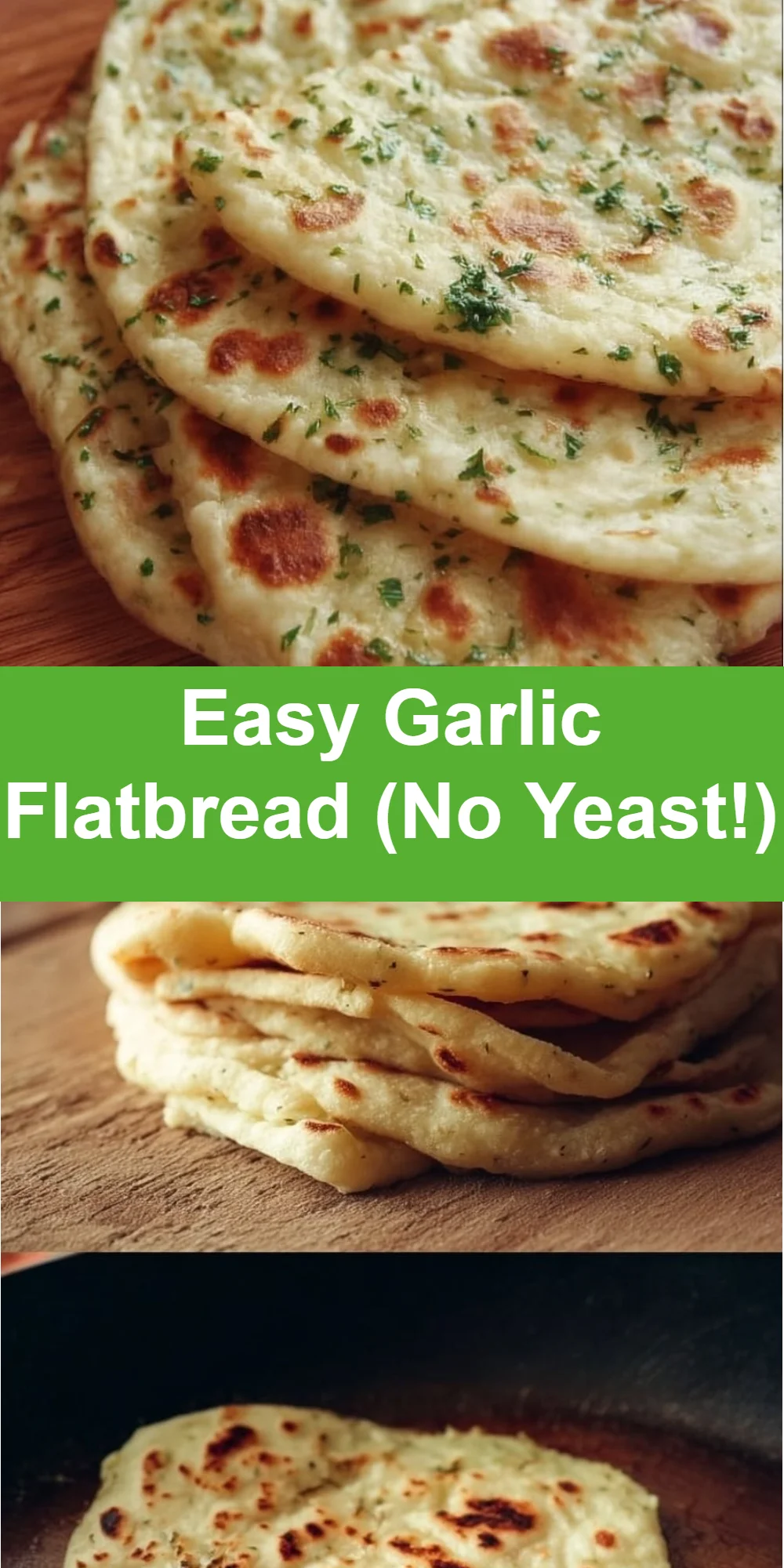
Ingredients for Easy Garlic Flatbread (No Yeast!)
For the Base
- 2 cups All-purpose flour
- 1 tsp Salt
- 1 tsp Sugar
- 1 tsp Baking powder
- ¾ cup Warm water (about ¾ cup; ~180–190 ml)
- 2 Tbsp Olive oil
For the Garlic Butter
- ¼ cup Unsalted butter, melted
- 3 cloves Garlic, minced
- 1 Tbsp Fresh parsley, chopped (Or 1 tsp dried parsley)
- ½ tsp Salt
- ¼ tsp Black pepper
Ingredient Notes (Substitutions, Healthy Swaps)
- Flour: All-purpose flour gives the classic texture. For gluten-free, try a 1:1 gluten-free baking blend — results may be slightly crumblier but still tasty.
- Butter: For a dairy-free option, substitute the unsalted butter with vegan butter or extra olive oil; flavor will be slightly different but still delicious.
- Parsley: Fresh parsley brightens the butter; if using dried, use the 1 tsp listed. You can also swap with fresh cilantro for a different herb note.
- Olive oil: Light-tasting olive oil keeps the dough tender. For a neutral oil, use vegetable or avocado oil.
- Sugar: The teaspoon of sugar helps with browning and a touch of balance; you can omit it for a completely savory profile.
Step-by-Step Instructions
Step 1 – Combine and Knead the Dough
- In a large bowl, whisk together 2 cups all-purpose flour, 1 tsp salt, 1 tsp sugar, and 1 tsp baking powder.
- Add ¾ cup warm water and 2 Tbsp olive oil. Mix until a shaggy dough forms, then transfer to a lightly floured surface and knead for 3–4 minutes until smooth and slightly elastic.
Visual cue: The dough should be soft, cohesive, and not sticky — it will pull away from the bowl but remain pliable.
Step 2 – Rest the Dough
Place the dough back in the bowl, cover with a clean kitchen towel or plastic wrap, and let it rest for 10 minutes. This brief rest relaxes the gluten and makes shaping easier.
Pro cue: A short rest improves roll-out without waiting for rising; if your kitchen is cool, 15 minutes is fine.
Step 3 – Prepare the Garlic Butter
While the dough rests, combine ¼ cup melted unsalted butter, 3 cloves minced garlic, 1 Tbsp chopped fresh parsley (or 1 tsp dried), ½ tsp salt, and ¼ tsp black pepper in a small bowl. Stir and set aside.
Visual cue: The butter will be aromatic with visible flecks of parsley and garlic.
Step 4 – Shape the Flatbreads
Divide the dough into 6 equal pieces (for medium-size flatbreads) or 8 for smaller pieces. On a lightly floured surface, roll each piece into a roughly 6–7 inch circle or oval, about ⅛–¼ inch thick depending on how soft you like them.
Pro cue: Keep the dough covered while working in batches to prevent drying out.
Step 5 – Cook in a Hot Skillet
Heat a dry skillet (cast iron works best) over medium-high heat until hot. Cook one flatbread at a time for 1–2 minutes per side, pressing gently with a spatula so the bread contacts the pan and puffs slightly. You want a few golden-brown spots but not burnt edges. Repeat with remaining dough.
Visual cue: Look for even golden spots and slight puffing — that indicates the interior is cooked.
Step 6 – Brush with Garlic Butter
As each flatbread comes off the skillet, brush generously with the garlic-parsley butter. Stack or keep warm in a folded towel until ready to serve.
Pro cue: Brushing immediately ensures the butter soaks into the warm bread for maximum flavor.
Pro Tips for Success
- Pan temperature: Preheat the skillet well; too hot and the bread will burn before cooking through, too cool and it won’t develop color. Medium-high is usually right.
- Thickness control: Roll to about ⅛–¼ inch for a balance of crisp edges and soft interior. Thicker bread needs a touch longer on the pan.
- Even heat: Cast iron or heavy-bottomed pans produce the most even browning. Nonstick works if you prefer less sticking.
- Keep them warm: Stack finished flatbreads in a towel-lined bowl to retain steam and softness until serving.
- Garlic timing: Mince the garlic small so it infuses the butter quickly. If you prefer milder garlic, reduce to 2 cloves.
- Don’t overload with butter: Brush evenly — too much butter can make the flatbread soggy.
- Texture check: If the dough feels dry while shaping, sprinkle with a few drops of water and knead briefly.
Flavor Variations (Optional)
- Spicy garlic: Add ¼–½ tsp red pepper flakes to the garlic butter for a gentle kick.
- Cheesy version: After cooking, sprinkle 2–3 tablespoons grated Parmesan or shredded mozzarella on each flatbread while hot so it melts slightly.
- Herby twist: Replace parsley with fresh rosemary or thyme (finely chopped) for a piney note.
- Lemon-garlic: Add ½ tsp lemon zest to the garlic butter for bright citrus notes.
- Garlic-olive oil: For a dairy-free option, swap melted butter for extra virgin olive oil in the garlic topping.
- Seeded crust: Brush the rolled dough with a little olive oil and sprinkle with sesame or nigella seeds before cooking for texture.
Serving Suggestions
- Dip it: Serve warm with hummus, baba ganoush, or tzatziki for an easy appetizer spread.
- With soups and stews: Use the flatbread to sop up brothy or tomato-based soups. It’s especially nice with thick stews.
- Sandwiches and wraps: Fold around grilled vegetables, roasted chicken, or use as the base for open-faced sandwiches.
- Brunch accompaniment: Pair with scrambled eggs and sautéed greens for a simple brunch plate.
- Crowd-pleaser combo: Serve alongside a comforting casserole or pair it with a rich slow-cooked chicken — for example, a slow-cooked Tuscan garlic chicken makes a natural, flavor-matching companion.
- Party platter: Slice into wedges and arrange with olives, cheeses, and cured vegetables for a casual grazing board.
Make-Ahead, Storage & Reheating
- Make-ahead dough: You can prepare the dough and keep it covered in the refrigerator for up to 24 hours — bring to room temperature before shaping.
- Finished flatbreads: Store cooled flatbreads in an airtight container or zip-top bag in the refrigerator for up to 3 days.
- Reheating: Reheat in a hot skillet for 30–60 seconds per side to restore crispness, or briefly in a warm oven (350°F / 175°C) for 5–8 minutes. Microwave reheating will warm them but makes them softer; re-crisp in a skillet if needed.
- Texture changes: Refrigeration can firm the bread and slightly reduce tenderness; reheating properly restores much of the original texture.
Storage and Freezing Instructions
- Freezing cooked flatbreads: Yes — cooked flatbreads freeze well. Layer them with parchment paper or plastic wrap and store in a freezer-safe bag for up to 2 months. Thaw at room temperature or warm directly from frozen in a skillet for a minute per side.
- Freezing raw dough: You can freeze individual portions of raw dough tightly wrapped in plastic for up to 1 month. Thaw overnight in the refrigerator and bring to room temperature before rolling.
- Not recommended to freeze garlic butter-topped bread long-term: The butter can change texture after freezing and thawing; it’s better to freeze plain cooked flatbreads and brush with fresh garlic butter after reheating.
Nutrition Facts (Per Serving)
| Calories | Protein | Carbs | Fat | Fiber | Sodium |
|———|——–|——|—–|——|——-|
| 260 kcal | 5 g | 32 g | 12 g | 1.5 g | 480 mg |
Nutrition values are estimates and may vary depending on ingredients and portion sizes.
FAQ About Easy Garlic Flatbread (No Yeast!)
Q: Why didn’t my flatbread puff up?
A: Puffing is caused by steam and trapped air. If your dough was rolled too thin, pan too cool, or you pressed down while cooking, it may not puff. Try slightly thicker rounds and a hotter pan.
Q: My flatbreads are doughy in the center — what went wrong?
A: Likely the pan was too hot and the exterior browned before the interior cooked. Lower the heat slightly and cook a touch longer, or roll thinner.
Q: Can I make these without butter?
A: Yes — omit the butter and use olive oil for the garlic topping to keep it dairy-free.
Q: How should I store leftovers so they still taste good?
A: Cool completely, then place in an airtight container in the fridge for up to 3 days. Reheat in a skillet to restore texture.
Q: Can I use whole wheat flour?
A: You can substitute part or all with whole wheat flour, but expect a denser, nuttier flatbread. Consider using 50% whole wheat for a good balance.
Q: Are these flatbreads suitable for kids?
A: Absolutely — the buttery garlic flavor is usually a hit. Reduce garlic slightly if serving to very young children.
Notes
- Serve warm for best flavor: Garlic butter soaks into warm bread and tastes far better right off the skillet.
- Garnish idea: Finish with a sprinkle of flaky sea salt or extra chopped parsley for color and a flavor lift.
- Cutting and presentation: Stack and cut into wedges for a rustic presentation, or roll and serve as small wraps for finger food.
- Adjust seasoning: Taste the garlic butter before brushing; if you like it brighter, add a pinch of lemon zest or a few cracks of black pepper.
- Pairing tip: Because the bread is rich, balance a meal with something acidic or bright—salads with vinaigrette or tomato-based dishes work wonderfully.
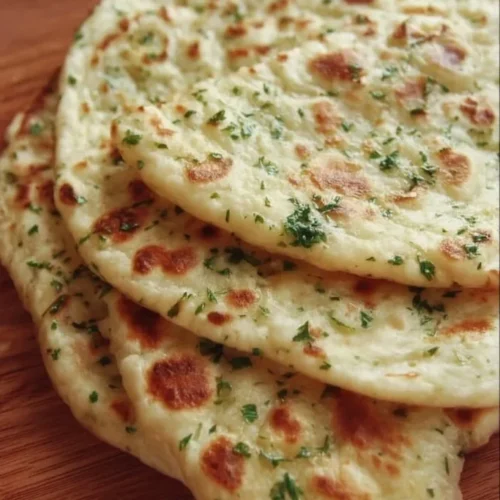
Easy Garlic Flatbread (No Yeast!)
Ingredients
For the Base
- 2 cups All-purpose flour For gluten-free, substitute with a 1:1 gluten-free baking blend.
- 1 tsp Salt
- 1 tsp Sugar Omit for a savory profile.
- 1 tsp Baking powder
- ¾ cup Warm water About 180–190 ml
- 2 Tbsp Olive oil Use light-tasting olive oil for tenderness.
For the Garlic Butter
- ¼ cup Unsalted butter, melted Substitute with vegan butter or extra olive oil for dairy-free.
- 3 cloves Garlic, minced Reduce to 2 cloves for milder flavor.
- 1 Tbsp Fresh parsley, chopped Or use 1 tsp dried parsley.
- ½ tsp Salt
- ¼ tsp Black pepper
Instructions
Combine and Knead the Dough
- In a large bowl, whisk together flour, salt, sugar, and baking powder.
- Add warm water and olive oil. Mix until a shaggy dough forms, then knead for 3–4 minutes until smooth and slightly elastic.
Rest the Dough
- Place the dough in a bowl, cover, and let it rest for 10 minutes to relax the gluten.
Prepare the Garlic Butter
- Combine melted butter, minced garlic, chopped parsley, salt, and black pepper in a bowl. Stir and set aside.
Shape the Flatbreads
- Divide the dough into 6 pieces. Roll each piece into a 6–7 inch circle or oval, about ⅛–¼ inch thick.
Cook in a Hot Skillet
- Heat a dry skillet over medium-high heat until hot. Cook each flatbread for 1–2 minutes per side until golden-brown.
Brush with Garlic Butter
- Brush each flatbread with garlic-parsley butter as they come off the skillet and keep warm.