
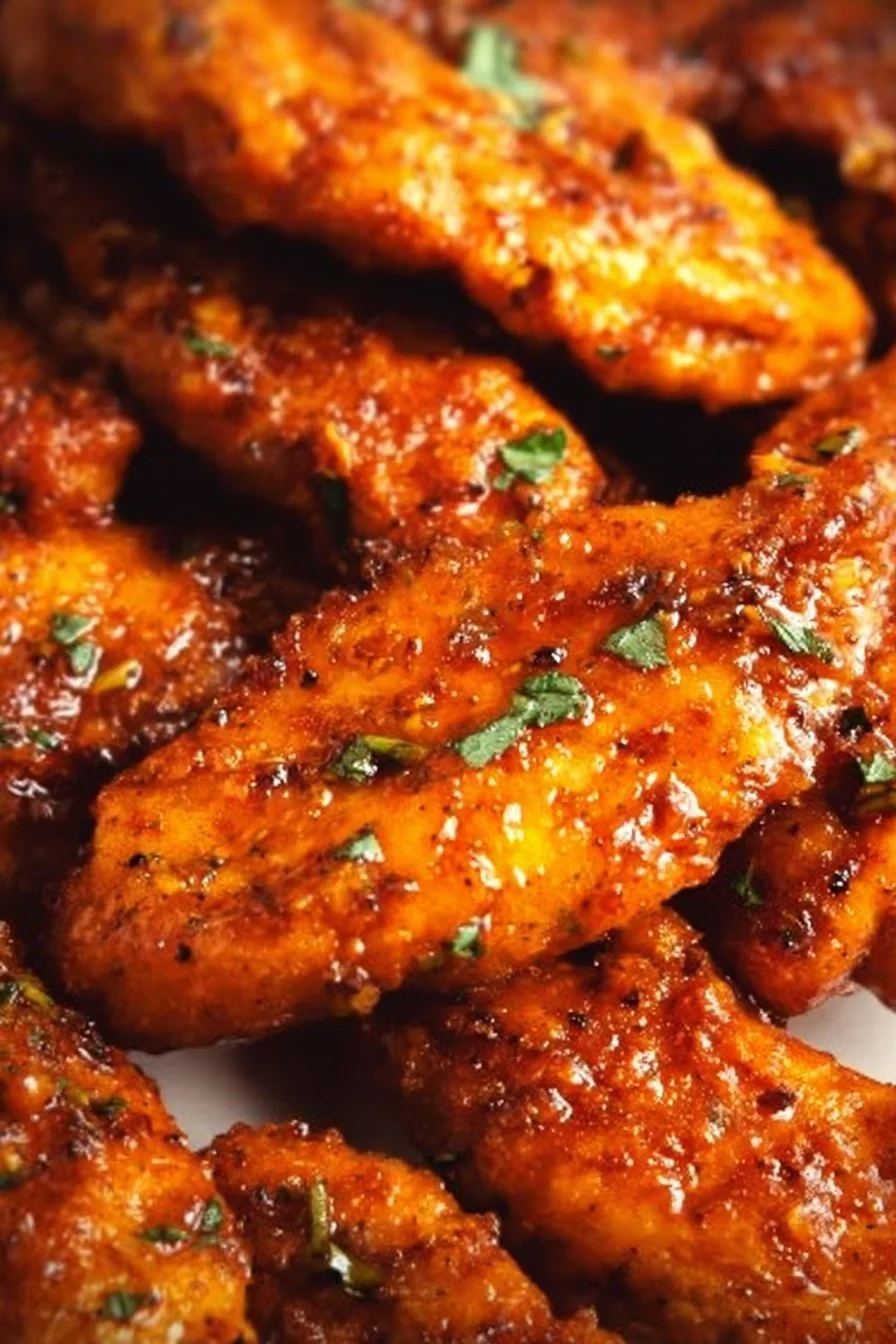
Lightly spiced, sticky-sweet, and ready in about 20 minutes, these honey garlic chicken tenders are the kind of weeknight win that disappears fast. Tenderloins get a quick sear, then a garlicky honey sauce turns them glossy and irresistible — great for busy dinners, lunchboxes, or an easy party platter. If you prefer thicker cuts, you can adapt the method for boneless chicken breasts (chicken breast recipe) with a little extra cook time.
Why you’ll love this dish
This recipe marries quick cooking with big flavors: savory coconut aminos (or low-sodium soy), bright red wine vinegar, and pure honey, rounded by a spice mix that includes paprika and a whisper of cinnamon for depth. It’s fast, forgiving, and crowd-pleasing — perfect for nights when you want something special without fuss.
“We made this on a hectic Tuesday and my kids asked for seconds. Sweet, garlicky, and perfectly caramelized — a new family favorite.”
Reasons to try it:
- Fast prep and cook time — about 20 minutes start to finish.
- Kid-approved sweet-savory profile, yet easy to tweak for adults (add chili flakes).
- Minimal equipment: one skillet and a bowl.
Step-by-step overview
Before you start, pat the tenders dry, mix the spice rub, and measure the sauce ingredients. You’ll sear the chicken in one skillet, remove it, make the honey-garlic pan sauce, then return the tenders to finish in that sauce so every piece is coated and glossy.
The whole flow:
- Season chicken with dry spices.
- Sear until golden and cooked through.
- Make garlic-honey sauce in the same skillet.
- Toss chicken in the sauce and serve.
What you’ll need
- 1 lb chicken tenders (about 8–10 pieces)
- 1 tsp salt
- ½ tsp black pepper
- ½ tsp paprika
- ¼ tsp chili powder
- ⅛ tsp cinnamon
- ½ tsp onion powder
- 3 garlic cloves, minced
- ¼ cup coconut aminos (or low-sodium soy sauce)
- 2 tbsp red wine vinegar
- ¼ cup honey
- 2 tbsp butter (or oil for dairy-free)
Substitution notes:
- Use tamari or low-sodium soy for stronger umami if you don’t have coconut aminos.
- Swap butter for neutral oil (canola, avocado) to keep it dairy-free.
- Maple syrup can replace honey in a pinch, but the flavor will be slightly different.
Step-by-step instructions
- Pat the chicken tenders dry with paper towels to encourage browning.
- In a small bowl, stir together salt, black pepper, paprika, chili powder, cinnamon, and onion powder. Sprinkle evenly over the chicken and rub to coat.
- Heat 1 tbsp butter or oil in a large skillet over medium–high heat until shimmering. Add the tenders without crowding the pan. Cook 3–4 minutes per side until golden brown and the internal temperature reads 165°F (74°C). Remove chicken to a plate and tent loosely with foil.
- Reduce heat to medium. Add the remaining 1 tbsp butter (or a splash of oil) to the same skillet. Add minced garlic and sauté about 30 seconds until fragrant — don’t let it burn.
- Stir in coconut aminos (or soy), red wine vinegar, and honey. Cook 2–3 minutes, stirring, until the sauce thickens slightly and becomes glossy. If you want a thicker glaze, simmer another minute or whisk in ¼ tsp cornstarch dissolved in 1 tsp water.
- Return the chicken to the skillet and toss to coat in the sauce. Let simmer 1–2 minutes so the tenders soak up flavor and the sauce clings to them.
- Transfer to a serving plate and optionally garnish with chopped parsley or sesame seeds. Serve hot.
How to plate and pair
These tenders shine served over:
- Steamed white rice or jasmine rice to soak up sauce.
- Sticky rice or cauliflower rice for lower carbs.
- A simple green salad or sautéed bok choy for freshness.
- Crispy potatoes or sweet potato fries for a comforting plate.
For a party platter, stack the tenders on a platter with lemon wedges and a side of pickled vegetables. Looking for a spicy contrast at your next gathering? Try pairing with buffalo-style bites like Buffalo Chicken Bombs for variety and heat.
Storage and reheating tips
- Refrigerate: Store leftovers in an airtight container for 3–4 days.
- Freeze: Freeze cooked tenders in a single layer on a baking sheet, then transfer to a freezer bag for up to 3 months. Thaw overnight in the fridge before reheating.
- Reheat: Warm gently in a skillet over medium-low heat until heated through, or microwave in short bursts, stirring halfway. Reheat to 165°F (74°C) for safety. If the sauce has thickened too much, add a splash of water to loosen it while reheating.
Pro chef tips
- Don’t overcrowd the pan: Cook in batches if needed. Crowding creates steam and prevents browning.
- Dry the meat first: Patting the tenders dry ensures a better sear.
- Control heat for the sauce: Medium heat keeps the honey from burning. Burned honey tastes bitter.
- Taste and balance: If the sauce is too sweet, add a little more red wine vinegar or a squeeze of lemon. Too salty? A touch more honey or a small pat of butter will round it out.
- Make-ahead: Cook the tenders and refrigerate the sauce separately; reheat together for best texture.
Recipe variations
- Spicy honey garlic: Add ¼–½ tsp crushed red pepper or a drizzle of sriracha to the sauce.
- Sesame-ginger twist: Replace half the garlic with 1 tsp grated fresh ginger and finish with toasted sesame oil and seeds.
- Oven-baked option: Bake tenders at 425°F (220°C) for 10–12 minutes, flip, then brush with sauce and broil 1–2 minutes to caramelize.
- Keto: Swap honey for a sugar-free honey substitute and serve over cauliflower rice.
- Appetizer version: Cut tenders into bite-size pieces and serve with toothpicks and dipping bowls of extra sauce — a fun complement to spicy party bites like Buffalo Chicken Bombs.
Common questions
Q: Can I use frozen chicken tenders?
A: Thaw completely before cooking. Frozen chicken releases extra moisture that prevents proper searing and can dilute the sauce.
Q: How long will leftovers stay good?
A: Refrigerated cooked chicken is safe for 3–4 days. Freeze for longer storage (up to 3 months).
Q: Can I make the sauce ahead of time?
A: Yes — store the sauce separately for up to 3 days in the fridge. Reheat gently and toss with freshly cooked or reheated tenders.
Q: Is coconut aminos the same as soy sauce?
A: Not exactly. Coconut aminos are soy-free, slightly sweeter, and lower in sodium. Use low-sodium soy or tamari if you want a closer umami punch.
Q: My sauce crystallized or became grainy after chilling — how to fix it?
A: Gently rewarm the sauce over low heat and whisk in a teaspoon of water or a small pat of butter to smooth it out.
If you want more quick chicken recipes or ideas for using different cuts, try the linked chicken breast guide earlier in the article.

Honey Garlic Chicken Tenders
Ingredients
For the Chicken
- 1 lb chicken tenders (about 8-10 pieces)
- 1 tsp salt
- ½ tsp black pepper
- ½ tsp paprika
- ¼ tsp chili powder
- ⅛ tsp cinnamon
- ½ tsp onion powder
- 3 cloves garlic minced
- 2 tbsp butter (or oil for dairy-free)
For the Sauce
- ¼ cup coconut aminos (or low-sodium soy sauce)
- 2 tbsp red wine vinegar
- ¼ cup honey
Instructions
Preparation
- Pat the chicken tenders dry with paper towels to encourage browning.
- In a small bowl, stir together salt, black pepper, paprika, chili powder, cinnamon, and onion powder. Sprinkle evenly over the chicken and rub to coat.
Cooking
- Heat 1 tbsp butter or oil in a large skillet over medium-high heat until shimmering. Add the tenders without crowding the pan. Cook 3–4 minutes per side until golden brown and the internal temperature reads 165°F (74°C). Remove chicken to a plate and tent loosely with foil.
- Reduce heat to medium. Add the remaining 1 tbsp butter (or a splash of oil) to the same skillet. Add minced garlic and sauté about 30 seconds until fragrant — don’t let it burn.
- Stir in coconut aminos (or soy), red wine vinegar, and honey. Cook 2–3 minutes, stirring, until the sauce thickens slightly and becomes glossy.
- Return the chicken to the skillet and toss to coat in the sauce. Let simmer 1–2 minutes so the tenders soak up flavor and the sauce clings to them.
Serving
- Transfer to a serving plate and optionally garnish with chopped parsley or sesame seeds. Serve hot.