
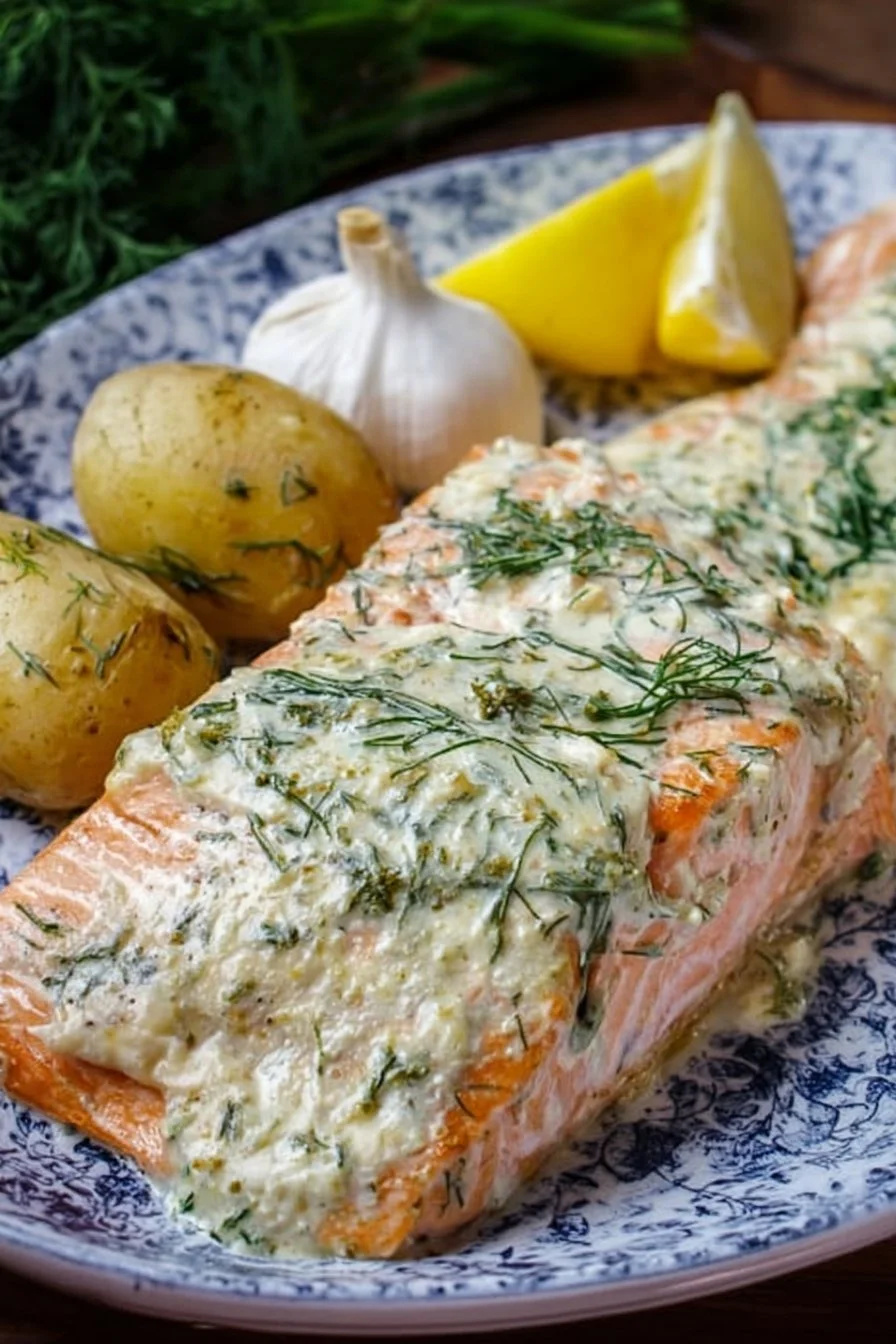
A simple, garlicky topping transforms a whole salmon fillet into something that looks like a restaurant dish but comes together in minutes. This baked salmon with garlic mayo gives you a crisp-topped, moist interior and a bright hit of fresh dill — perfect for a busy weeknight, a casual dinner with friends, or an easy holiday main when you want low fuss and big flavor. If you like combining bold flavors with minimal effort, you might also enjoy BBQ salmon tacos with mango slaw for another quick salmon idea.
Why you’ll love this dish
This recipe pairs a creamy garlic-mayo crust with fresh dill, which keeps the fish juicy while giving you a golden, flavorful top. It’s forgiving: the mayo insulates the salmon, so it won’t dry out easily, and the whole dish takes little hands-on time.
“Quick enough for a weeknight but fancy enough for guests — the garlicky mayo is addictive.” — a regular at my dinner table
Reasons to try it:
- Fast: prep in about 10 minutes; bake and rest in under 30–35 minutes total.
- Kid-friendly: creamy topping and mild dill make this approachable.
- Minimal cleanup: bake on one sheet or foil; serve directly.
- Scalable: double or halve the mayo mixture without changing technique.
Step-by-step overview
- Preheat oven and prepare a rimmed baking sheet or dish.
- Make the garlic-mayo-dill topping in one bowl.
- Pat the salmon dry, season, spread the topping, and bake.
- Rest briefly, then slice and serve.
This quick roadmap keeps the technique simple: mix, spread, bake, rest.
What you’ll need
- 2 lbs fresh salmon fillet ((skin on))
- 1/2 cup mayonnaise ((slightly heaping)) — use full-fat mayo for best texture
- 8 cloves garlic ((crushed)) — press or finely mince
- 5 oz fresh dill ((chopped)) — this is generous; adjust to taste
- 1/2 tsp salt
- 1/4 tsp black pepper
Ingredient notes and substitutions:
- Mayonnaise: plain, full-fat gives the nicest browning; Greek yogurt can be used for a tangier, lighter crust (but won’t brown the same).
- Garlic: roasted garlic gives a milder, sweeter profile if you prefer less bite.
- Dill: if unavailable, parsley plus a squeeze of lemon brightens the dish. Dried dill can substitute at a 3:1 ratio (use about 1.5 oz dried is extreme — better to use 1–2 tsp dried).
Step-by-step instructions
- Preheat your oven to 400°F (200°C). Position a rack in the middle. Line a rimmed baking sheet with foil or parchment for easy cleanup.
- In a small bowl, combine the mayonnaise, crushed garlic, chopped dill, salt, and black pepper. Stir until evenly mixed. Taste and adjust salt or dill as needed.
- Pat the salmon fillet dry with paper towels. Dry surface helps the mayo topping adhere and brown. Season the flesh lightly with a pinch more salt and pepper if desired.
- Place the salmon skin-side down on the prepared sheet. Spread the garlic-mayo mixture evenly over the top of the fillet in a thin layer (about 1/8–1/4 inch). Don’t pile it too high; a thin coating bakes more consistently.
- Bake at 400°F (200°C) for 12–18 minutes, depending on fillet thickness. For a 2 lb fillet about 1–1.25 inches thick, start checking at 12 minutes. The mayo will set and take on a pale golden edge.
- Optional: If you want a more pronounced brown crust, switch the oven to broil for 1–2 minutes at the end — watch carefully to avoid burning.
- Check doneness: the US FDA recommends cooking fish to 145°F (63°C) measured at the thickest part; many cooks prefer removing salmon at 125–130°F for medium doneness, then letting it rest to reach carryover temperature. The flesh should flake easily with a fork but remain moist.
- Let the fillet rest 3–5 minutes before slicing to allow juices to redistribute. Serve warm.
Best ways to enjoy it
Serve slices of the salmon on a bed of lemony rice, buttered new potatoes, or a simple green salad. Bright, acidic sides — like pickled cucumbers, a squeeze of lemon, or a tomato fennel salad — counter the richness of the mayo topping.
For a lighter contrast or to serve with similar herby flavors, consider pairing with garlic butter baked tilapia for a mixed-fish menu that keeps sides simple but varied.
Plating idea: lay the fillet on a long platter, garnish with extra chopped dill and lemon wedges, and drizzle a tiny amount of olive oil over the skin side for shine. Serve family-style or portion onto individual plates.
Storage and reheating tips
- Refrigeration: Cool the salmon to room temperature no longer than 2 hours after cooking, then store in an airtight container. Use within 3–4 days.
- Freezing: You can freeze cooked salmon for up to 2 months. Wrap tightly in plastic wrap and place in a freezer bag to prevent freezer burn. Note: the mayo topping may change texture after freezing and thawing.
- Reheating: Reheat gently to preserve moisture. Preheat oven to 275°F (135°C), place salmon on a baking sheet, and warm for 10–15 minutes until heated through. Avoid high heat reheating or microwaving at full power, which can dry the fish or separate the mayo topping.
- Food safety: never refreeze salmon that has been thawed unless it was cooked after thawing. Discard if left at room temperature more than 2 hours.
Pro chef tips
- Dry the skin: Patting the skin dry helps crisp it if you want to pan-sear the skin first before baking. For this mayo-baked method, dry skin reduces steam and keeps the topping intact.
- Even spread: Use an offset spatula or back of a spoon to spread the mayo in a thin, uniform layer; this ensures even cooking and browning.
- Garlic intensity: Crushing garlic releases more heat than mincing; if raw garlic is too strong for your family, mince finely and let it sit in the mayo for 10–15 minutes to mellow before applying.
- Temperature probe: Use an instant-read thermometer at the thickest point to remove guesswork — salmon is best with consistent doneness.
- Watch your broil: Broiling can quickly go from browned to burnt; stay close and keep the oven door slightly ajar if your broiler instructions recommend it.
Recipe variations
- Lemon-dill mayo: Add 1–2 tbsp lemon zest and 1 tsp Dijon mustard to the mayo for a brighter, tangier topping.
- Spicy kick: Stir in 1–2 tsp sriracha or harissa to the mayo for heat.
- Herb swap: Replace dill with chives and parsley for a different herb profile.
- Panko crust: Mix 1/3 cup panko breadcrumbs with the mayo mixture for extra texture; press lightly onto the fillet before baking.
- Dairy-free: Use an olive oil–based aioli or dairy-free mayo substitute to make the recipe dairy-free.
- Individual portions: Cut the fillet into 6 equal portions and bake slightly less time (8–12 minutes) — check doneness early.
Common questions
Q: Can I use jarred minced garlic instead of fresh?
A: You can, but fresh garlic gives brighter flavor. If using jarred (in oil), reduce quantity by half since it’s more concentrated; adjust to taste.
Q: How long will leftovers last in the fridge?
A: Stored in an airtight container and cooled promptly, cooked salmon will keep 3–4 days in the refrigerator.
Q: Is it safe to eat salmon at less than 145°F?
A: The USDA recommends 145°F for fish doneness for safety. Many culinary professionals prefer 125–130°F for moist, medium salmon; if you choose the lower temp, ensure you purchase high-quality, properly handled fish and are comfortable with the risk. Pregnant people, very young children, older adults, and immunocompromised individuals should follow the 145°F guideline.
Q: Can I make the mayo topping ahead?
A: Yes — mix the mayo, garlic, and dill up to a day ahead and refrigerate. Bring to near fridge temperature before spreading so it spreads easily. Avoid making the topping too far in advance (multiple days) as fresh dill and garlic flavor can fade.
Q: What if I only have skinless fillets?
A: Skinless works fine; just place the flesh-side up and follow the same baking times. The skin helps protect the flesh and can help with presentation, but the technique remains the same.
If you have any other questions about timing, side dishes, or technique tweaks, tell me what equipment or flavor preferences you have and I’ll tailor the advice.
Baked Salmon with Garlic Mayo
Ingredients
Salmon Fillet
- 2 lbs fresh salmon fillet (skin on)
Garlic Mayo Topping
- 1/2 cup mayonnaise (slightly heaping) Use full-fat mayo for best texture
- 8 cloves garlic (crushed) Press or finely mince
- 5 oz fresh dill (chopped) This is generous; adjust to taste
- 1/2 tsp salt
- 1/4 tsp black pepper
Instructions
Preparation
- Preheat your oven to 400°F (200°C). Position a rack in the middle. Line a rimmed baking sheet with foil or parchment for easy cleanup.
- In a small bowl, combine the mayonnaise, crushed garlic, chopped dill, salt, and black pepper. Stir until evenly mixed. Taste and adjust salt or dill as needed.
- Pat the salmon fillet dry with paper towels. Season the flesh lightly with a pinch more salt and pepper if desired.
- Place the salmon skin-side down on the prepared sheet. Spread the garlic-mayo mixture evenly over the top of the fillet in a thin layer.
Baking
- Bake at 400°F (200°C) for 12–18 minutes, depending on fillet thickness.
- Optional: For a more pronounced brown crust, switch the oven to broil for 1–2 minutes at the end. Watch carefully to avoid burning.
Serving
- Let the fillet rest 3–5 minutes before slicing to allow juices to redistribute.
- Serve warm.