
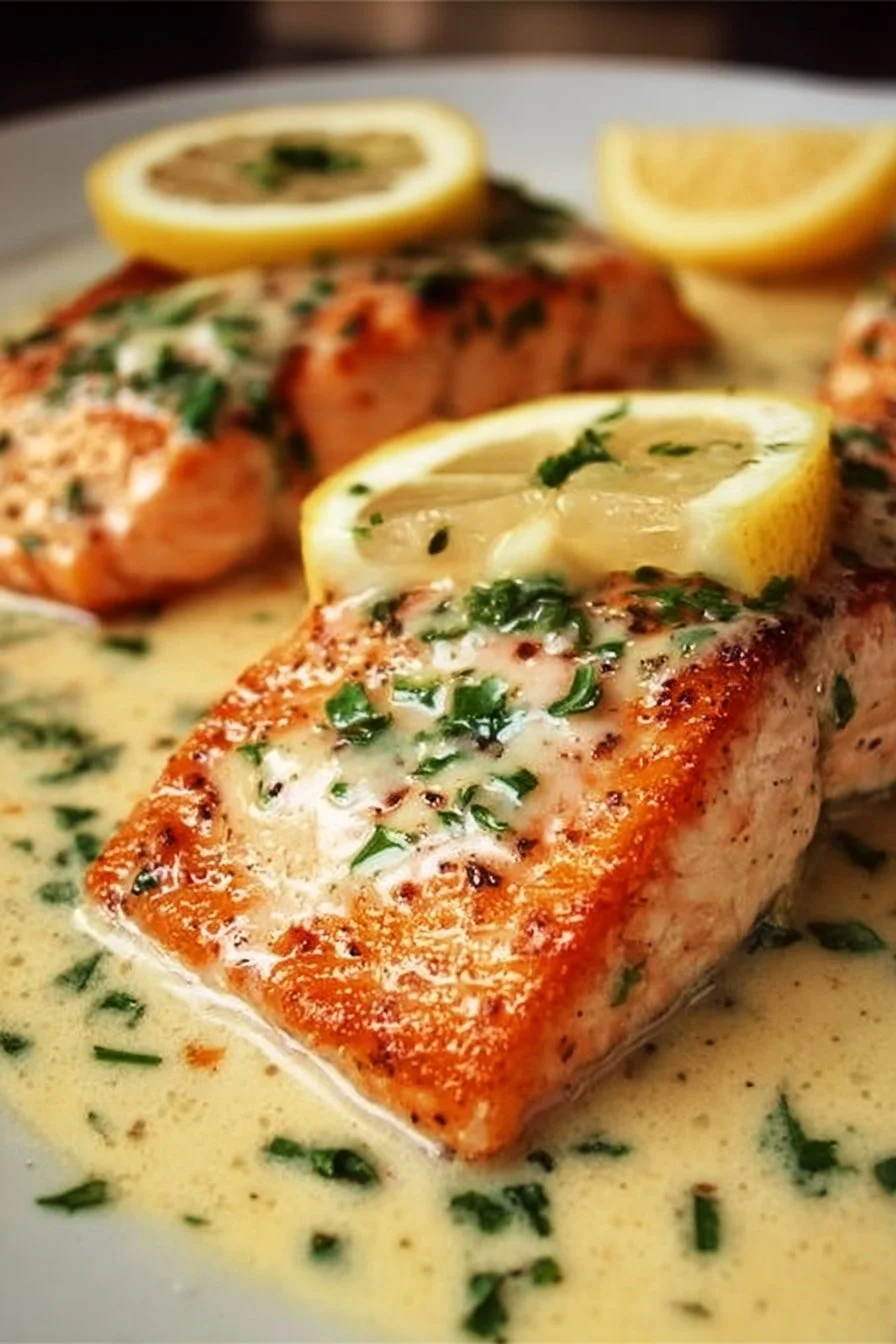
Bright, silky lemon butter cream drapes over tender baked salmon in this easy weeknight—or special-occasion—dish. The salmon stays flaky and moist thanks to a quick mustard-lemon marinade, while the sauce adds richness without being heavy. Garlic and Dijon bring a gentle savory backbone, and a squeeze more lemon at the end brightens everything up. Serve with simple steamed vegetables or a bed of rice for a dinner that feels restaurant-worthy but is doable on a busy night. If you like creamy fish sauces, you might also enjoy my take on baked salmon with garlic mayo for another easy, flavor-forward option.
Why You’ll Love This Baked Salmon with Lemon Butter Cream Sauce
- Bold citrus punch: fresh lemon juice in both the marinade and optional finishing step keeps the dish bright and lively.
- Rich, silky sauce: butter and heavy cream create a luxurious coating that elevates simple roasted salmon.
- Easy and fast: from oven to table in about 20–30 minutes—perfect for weeknights.
- Minimal ingredients: pantry-friendly staples (butter, garlic, Dijon) make this feel fancy without a grocery run.
- Versatile: pairs well with grains, greens, or roasted vegetables—adaptable to what you have on hand.
- Crowd-pleasing texture: salmon stays flaky and moist beneath a smooth, creamy sauce.
- Make-ahead friendly: components can be prepared in advance to speed up final assembly.
- Elegant enough for guests: the lemon-butter cream sauce makes it a great option for date nights or dinner parties.
What Is Baked Salmon with Lemon Butter Cream Sauce?
This dish is simply salmon fillets marinated briefly in a bright lemon-Dijon mixture, baked until just opaque, then finished with a luscious lemon butter cream sauce. The flavor balances bright acidity (lemon) with savory depth (Dijon, garlic) and rich creaminess (butter and heavy cream). The cooking method is straightforward: a quick marinade followed by roasting in a skillet or baking dish at high heat (425°F / 220°C) so the salmon cooks quickly and stays moist. People often serve this for weeknight dinners, simple entertaining, or even a slightly elevated brunch when paired with soft polenta or wilted greens. The overall vibe is comforting and refined—comfort food with a light, elegant touch.

Ingredients for Baked Salmon with Lemon Butter Cream Sauce
For the Base
- 2 tablespoons freshly squeezed lemon juice
- 1 tablespoon olive oil
- 1 minced garlic clove
- 2 tablespoons old-style Dijon mustard
- 5 skinless salmon fillets (about 5 oz each)
- 1/2 teaspoon ground black pepper
- salt (to taste)
For the Sauce
- 1/4 cup unsalted butter (1/2 stick)
- 1 1/2 tablespoons minced garlic cloves
- 1/2 cup heavy cream
- 1–2 tablespoons freshly squeezed lemon juice (optional)
For Serving
- 1 tablespoon parsley (finely chopped)
- lemon slices for serving
Ingredient Notes (Substitutions, Healthy Swaps)
- Heavy cream swap (optional): Use half-and-half for a lighter finish—sauce will be slightly thinner but still plenty creamy.
- Butter alternatives: For a lighter fat profile, use a reduced amount of butter and finish with a splash of heavy cream; or try a plant-based butter substitute if dairy-free, but note flavor and texture will vary.
- Garlic: You can reduce garlic to taste if you prefer a milder sauce.
- Dijon mustard: Old-style Dijon provides texture and tang; smooth Dijon can be used if that’s what you have.
- Salmon type: Any skinless salmon fillets work—Atlantic, sockeye, or coho will all be delicious; adjust cooking time slightly for thicker fillets.
- Salt awareness: The recipe lists salt to taste—season before baking lightly and adjust after tasting with the sauce.
- Gluten-free: This recipe is naturally gluten-free as written.
Step-by-Step Instructions
Step 1 – Marinate the Salmon
- Preheat your oven to 425°F (220°C).
- In a bowl, whisk together 2 tablespoons lemon juice, 1 tablespoon olive oil, 1 minced garlic clove, and 2 tablespoons old-style Dijon mustard.
- Coat the 5 salmon fillets in the marinade and season with 1/2 teaspoon ground black pepper and salt to taste.
Visual cue: The salmon should be glossy and evenly coated, with the mustard mixture clinging to the flesh.
Pro cue: Let the salmon sit in the marinade for 10–15 minutes at room temperature if time allows—this helps the flavors penetrate without cooking the fish.
Step 2 – Bake the Salmon
- Arrange the marinated fillets in a single layer in a skillet or baking dish.
- Bake in the preheated oven for about 10–15 minutes, depending on thickness, until the salmon is just opaque and flakes easily with a fork.
Visual cue: Look for a slightly firm top and flaky texture; a thermometer should read about 125–130°F for medium-rare to medium doneness.
Pro cue: Avoid overcooking—salmon continues to cook a bit while resting, so pull it from the oven when it still has a touch of translucence in the center.
Step 3 – Start the Lemon Butter Cream Sauce
- While the salmon bakes, melt 1/4 cup unsalted butter in a small saucepan over low–medium heat.
- Add 1 1/2 tablespoons minced garlic and sauté briefly until fragrant (about 30–45 seconds).
Visual cue: Garlic should become fragrant and slightly softened but not browned.
Pro cue: Low heat prevents butter from browning and preserves a smooth, pale sauce.
Step 4 – Finish the Sauce
- Stir in 1/2 cup heavy cream and bring to a gentle boil, then reduce heat and simmer until the sauce thickens slightly (1–2 minutes).
- Taste and add 1–2 tablespoons freshly squeezed lemon juice if you want extra brightness.
Visual cue: Sauce should coat the back of a spoon and have a silky sheen.
Pro cue: If the sauce gets too thick, loosen with a splash of warm water or reserved cream.
Step 5 – Plate and Rest
- Once the salmon is cooked, pour the lemon butter cream sauce over the fillets.
- Let the plated salmon rest for 5–10 minutes so the flavors settle and the sauce melds with the fish.
- Sprinkle with 1 tablespoon finely chopped parsley and serve with lemon slices.
Visual cue: Salmon should glisten under the sauce and be easy to flake with a fork.
Pro cue: A brief rest improves texture and keeps juices from running out when you slice or serve.
Pro Tips for Success
- Use a thermometer: pull salmon at 125–130°F for flaky, moist fillets; residual heat will finish cooking.
- Even thickness: choose fillets of similar size so they cook uniformly; thicker pieces may need a couple extra minutes.
- Gentle garlic cooking: keep butter and garlic on low heat to avoid bitter burnt garlic.
- Salt in stages: season the salmon lightly before baking and taste after the sauce—you can always add a pinch more salt before serving.
- Hot oven method: 425°F gives a nice roasted exterior quickly while keeping the interior tender.
- Sauce timing: make the sauce while the salmon bakes to keep everything hot and streamline prep.
- Resting matters: let the finished dish rest 5–10 minutes to allow sauce absorption and better texture.
Flavor Variations (OPTIONAL)
- Spicy kick (optional): add a pinch of red pepper flakes to the sauce for gentle heat.
- Herb-forward (optional): stir in chopped fresh dill or chives with the parsley when serving.
- Lemon-forward (optional): increase the finishing lemon juice to 2 tablespoons for extra brightness.
- Garlic-forward (optional): add a bit more minced garlic to the sauce for deeper garlic flavor.
- Lighter cream (optional): swap heavy cream for half-and-half for a lighter sauce consistency—expect a thinner finish.
- Crunch topping (optional): sprinkle toasted breadcrumbs or chopped toasted nuts over the sauce for texture.
Serving Suggestions
- Simple sides: steam asparagus, green beans, or broccoli to complement the rich sauce.
- Grain pairings: serve over rice, quinoa, or farro to soak up the lemon butter cream.
- Potatoes: roasted potatoes or creamy mashed potatoes make a comforting base.
- Greens: a crisp mixed green salad with a lemon vinaigrette keeps the plate bright.
- Brunch twist: serve alongside soft polenta or buttered English muffins for a brunch spread.
- Try a hearty side like a baked pasta casserole for a cozy meal—this salmon pairs nicely with a rich pasta bake such as baked cream cheese spaghetti casserole for a full, indulgent feast.
Make-Ahead, Storage & Reheating
- Make-ahead: You can mix the marinade up to 24 hours ahead and store it in the fridge; marinate salmon no more than 30 minutes to avoid changing the fish’s texture from the acid.
- Sauce prep: The lemon butter cream sauce can be prepared up to a day ahead and gently reheated on low, thinning with a splash of cream or water if needed.
- Refrigerator storage: Store cooked salmon and sauce together in an airtight container for up to 3 days.
- Reheating: Reheat gently in a 300°F oven for 8–12 minutes or in a covered skillet over low heat until warmed through. Avoid microwaving at high power which can dry the fish and separate the sauce.
- Texture changes: Cream-based sauces can thicken or separate slightly after refrigeration; reheat slowly and whisk to reincorporate.
Storage and Freezing Instructions
- Freezing cooked salmon with cream sauce is not recommended—the heavy cream can separate and become grainy once thawed and reheated.
- If you must freeze: freeze cooked salmon without sauce in an airtight container or vacuum-sealed bag for up to 2 months. Thaw overnight in the fridge and reheat gently, then make a fresh lemon butter cream sauce to pour over.
- Better approach: freeze raw marinated salmon (without cream sauce) for up to 1 month. Thaw before baking and prepare the sauce fresh after cooking for best texture and flavor.
Nutrition Facts (Per Serving)
| Calories | Protein | Carbs | Fat | Fiber | Sodium |
|———|——–|——|—–|——|——-|
| 520 kcal | 38 g | 3 g | 38 g | 0.5 g | 420 mg |
Nutrition values are estimates and may vary depending on ingredients and portion sizes.
FAQ About Baked Salmon with Lemon Butter Cream Sauce
Q: My salmon turned out dry—what went wrong?
A: It was likely overcooked. Pull the salmon from the oven when it’s just slightly opaque and flakes with a fork; residual heat will finish it.
Q: Can I skip the Dijon mustard in the marinade?
A: You can omit it, but Dijon adds tang and depth; if skipping, consider a slightly higher lemon ratio to maintain brightness.
Q: How can I make the sauce thinner or thicker?
A: To thin, whisk in a splash of warm water or cream. To thicken, simmer gently a bit longer until it reduces and coats the back of a spoon.
Q: Can I prepare the sauce in advance?
A: Yes—make it up to a day ahead, store refrigerated, and reheat gently. Whisk in a little warm cream if it tightens up.
Q: Is it safe to leave salmon at room temperature during marination?
A: Short marinations (10–15 minutes) at room temp are fine. For longer marinating, refrigerate to keep the fish safe.
Q: What internal temperature should salmon reach?
A: Aim for 125–130°F for moist, tender salmon. If you prefer fully done, 145°F is the USDA recommendation, but texture will be firmer.
Notes
- Plate with intention: spoon extra sauce over the fillets and finish with a parsley sprinkle and lemon slice for a restaurant-style presentation.
- Small lemon upgrade: a quick zest of lemon over the finished dish adds aromatic brightness without extra acidity.
- Season gradually: taste before adding final salt; the sauce can amplify salt perception.
- Timing tip: stagger sauce and salmon so the sauce is hot when the salmon comes out—this keeps everything glossy and warm.
- Presentation: serve on a warmed plate to maintain heat and make the sauce shine.
Baked Salmon with Lemon Butter Cream Sauce
Ingredients
For the Base
- 2 tablespoons freshly squeezed lemon juice
- 1 tablespoon olive oil
- 1 clove minced garlic
- 2 tablespoons old-style Dijon mustard
- 5 pieces skinless salmon fillets (about 5 oz each)
- 1/2 teaspoon ground black pepper
- salt (to taste)
For the Sauce
- 1/4 cup unsalted butter (1/2 stick)
- 1 1/2 tablespoons minced garlic cloves
- 1/2 cup heavy cream
- 1–2 tablespoons freshly squeezed lemon juice (optional)
For Serving
- 1 tablespoon parsley (finely chopped)
- lemon slices for serving
Instructions
Marinate the Salmon
- Preheat your oven to 425°F (220°C).
- In a bowl, whisk together lemon juice, olive oil, minced garlic, and Dijon mustard.
- Coat the salmon fillets in the marinade and season with ground black pepper and salt to taste.
- Let the salmon sit in the marinade for 10–15 minutes at room temperature if time allows.
Bake the Salmon
- Arrange the marinated fillets in a single layer in a skillet or baking dish.
- Bake in the preheated oven for about 10–15 minutes, depending on thickness, until the salmon is just opaque and flakes easily with a fork.
Start the Lemon Butter Cream Sauce
- While the salmon bakes, melt butter in a small saucepan over low–medium heat.
- Add minced garlic and sauté briefly until fragrant (about 30–45 seconds).
Finish the Sauce
- Stir in heavy cream and bring to a gentle boil, then reduce heat and simmer until the sauce thickens slightly (1–2 minutes).
- Taste and add lemon juice if you want extra brightness.
Plate and Rest
- Once the salmon is cooked, pour the lemon butter cream sauce over the fillets.
- Let the plated salmon rest for 5–10 minutes before serving.
- Sprinkle with chopped parsley and serve with lemon slices.