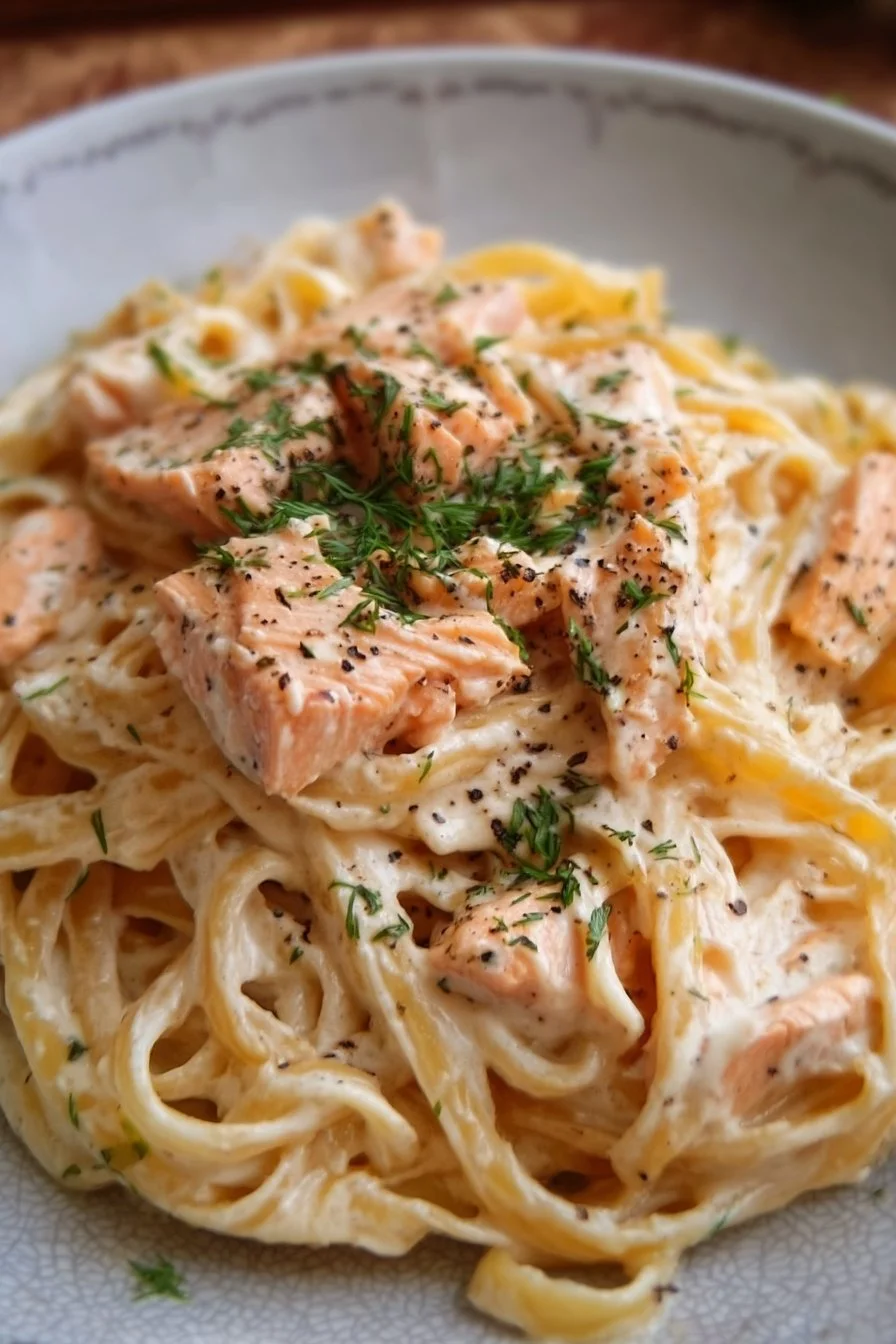
There’s something instantly comforting about a glossy, cheesy cream sauce clinging to ribbons of pasta and studded with tender flakes of salmon. This Creamy Salmon Pasta is rich without being fussy — velvety heavy cream, nutty Parmesan, garlic, and seared salmon come together in about the time it takes to boil pasta. It’s a perfect weeknight dinner that still feels special enough for guests, and it pairs beautifully with a crisp green salad or simple roasted veggies. If you love indulgent, approachable weeknight pastas, try this one — and if you enjoy other creamy pasta ideas, you might also like creamy ricotta chicken pasta for a different protein twist.
Why You’ll Love This Creamy Salmon Pasta
- Rich, velvety sauce from heavy cream and Parmesan that coats every bite.
- Tender, flaky salmon adds a luxurious protein boost without heavy prep.
- FAST: Most of the work happens while the pasta cooks — ready in about 30 minutes.
- Minimal ingredients and pantry-friendly — simple garlic, olive oil, cream, and cheese.
- Versatile: swap pasta shapes or turn it into leftovers for a hearty lunch.
- Comforting yet elegant — weeknight-friendly but pretty enough for company.
- Easy to scale up or down for two or four servings without changing method.
What Is Creamy Salmon Pasta?
Creamy Salmon Pasta is a one-skillet (mostly) pasta dish where cooked pasta is tossed with seared salmon and a rich cream-and-Parmesan sauce. The flavor is savory and slightly nutty from the Parmesan, mellow and silky from the heavy cream, and brightened by simple garlic and seasoning. Cooking is straightforward: pasta is boiled, salmon is pan-seared, and everything comes together in the same skillet with the cream reduced slightly. People often serve this as a cozy weeknight main or an easy dinner party dish — it has that comforting, slightly decadent vibe that makes you feel taken care of without hours in the kitchen.
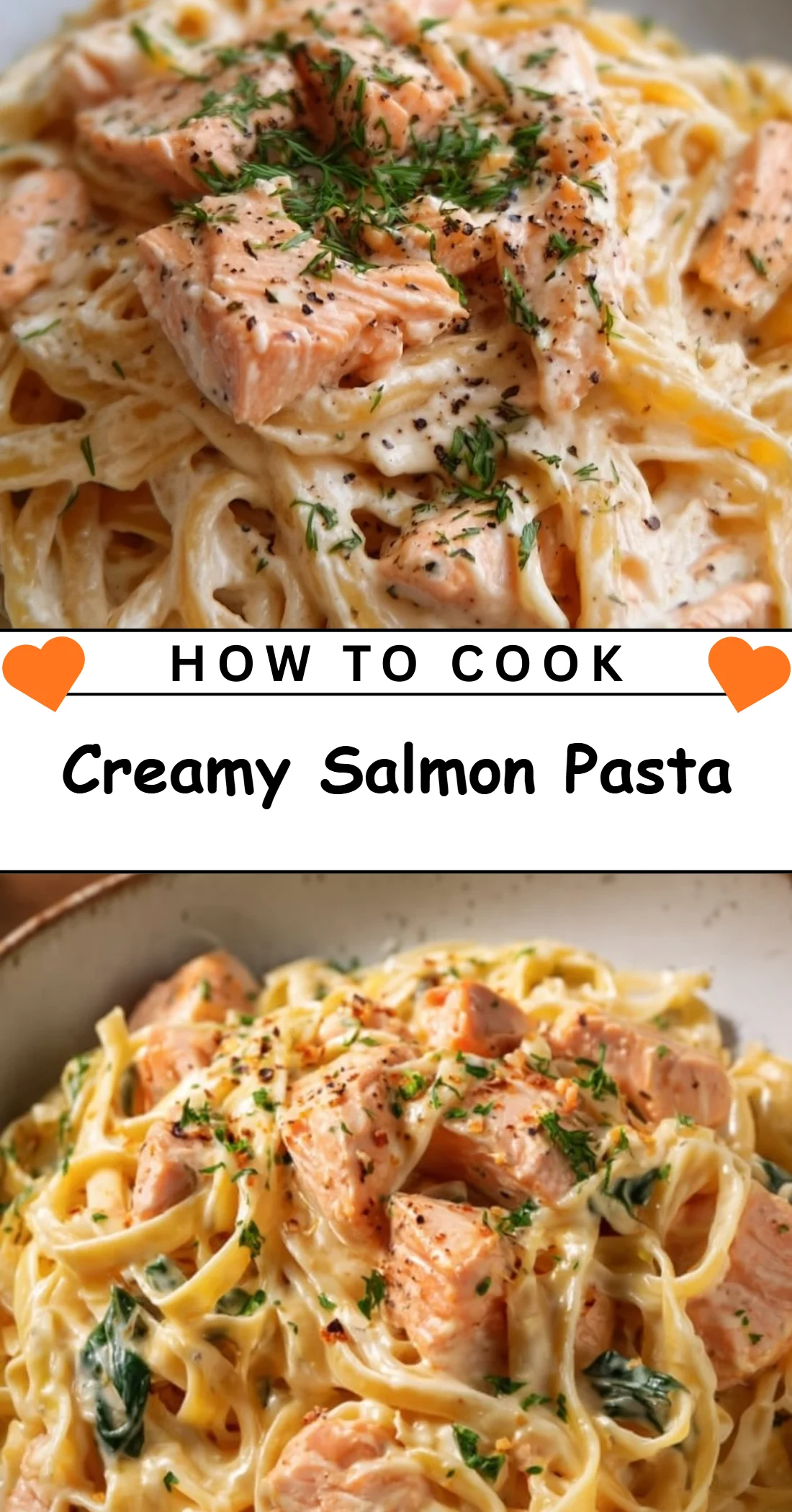
Ingredients for Creamy Salmon Pasta
For the Base
- 8 oz pasta (e.g., fettuccine or penne)
For the Salmon & Sear
- 2 salmon fillets
- Salt and pepper to taste
- 2 tablespoons olive oil
For the Sauce
- 1 cup heavy cream
- 1/2 cup grated Parmesan cheese
- 2 cloves garlic, minced
For Serving
- Fresh parsley for garnish
Ingredient Notes (Substitutions, Healthy Swaps)
- Dairy alternatives: For a lighter sauce, use 3/4 cup half-and-half plus 1/4 cup milk (sauce will be a bit lighter). If dairy-free is needed, use a full-fat canned coconut milk as an experiment, but note the flavor will change and Parmesan can’t be substituted directly.
- Cheese swap: If you don’t have Parmesan, a hard, salty cheese like Pecorino Romano works, but keep the same amount and taste as you go — Pecorino is saltier.
- Gluten-free option: Use 8 oz gluten-free pasta from the same package; cook according to package instructions.
- Lower-fat swap (optional): Reduce cream to 1/2 cup and add 1/2 cup reserved pasta water to maintain texture, though the sauce will be lighter.
- Salmon size: The recipe assumes two fillets (typical 5–8 oz each). If fillets are unusually large, adjust cooking time slightly.
Step-by-Step Instructions
Step 1 – Cook the pasta
Cook the pasta according to package instructions in salted water. Reserve 1 cup of pasta water, then drain.
Visual cue: Pasta should be al dente — tender but with a slight bite.
Pro cue: Reserve the pasta water before draining; the starchy water is the secret to loosening and binding the sauce.Step 2 – Sauté the garlic
In a large skillet, heat the olive oil over medium heat. Add the minced garlic and sauté for about 1 minute until fragrant.
Visual cue: Garlic should become slightly translucent and very fragrant, not browned.
Pro cue: Keep the heat moderate — garlic burns quickly and will taste bitter.Step 3 – Season and cook the salmon
Season the salmon fillets with salt and pepper. Add them to the skillet and cook for about 4–5 minutes per side, until cooked through. Remove the salmon and flake it into pieces.
Visual cue: Salmon should have a golden sear on the outside and flake easily with a fork.
Pro cue: Don’t overcrowd the pan. If your skillet is crowded, cook salmon in batches to maintain a good sear.Step 4 – Make the cream sauce
In the same skillet, pour in the heavy cream and bring it to a gentle simmer. Stir in the grated Parmesan cheese until melted and combined.
Visual cue: Sauce should be glossy and slightly thickened, coating the back of a spoon.
Pro cue: Keep the simmer gentle — too vigorous and the cream can separate or reduce too far.Step 5 – Combine pasta and salmon
Add the cooked pasta and flaked salmon back to the skillet. Toss everything together, adding reserved pasta water as needed to reach your desired creaminess.
Visual cue: Sauce should cling to the pasta strands or shapes; salmon pieces should be evenly distributed.
Pro cue: Add pasta water a little at a time — it helps emulsify the sauce without making it watery.Step 6 – Finish and serve
Garnish with chopped fresh parsley and serve immediately.
Visual cue: A sprinkle of green parsley adds a fresh contrast to the creamy sauce.
Pro cue: Serve right away; cream sauces taste best hot and freshly tossed.
Pro Tips for Success
- Use a heavy skillet: A wide, heavy-bottomed pan gives even heat for searing salmon.
- Don’t overcook salmon: 4–5 minutes per side is usually enough for 1-inch fillets; remove when it flakes easily.
- Adjust seasoning at the end: Parmesan adds saltiness, so taste the sauce after the cheese melts before adding more salt.
- Control sauce thickness: Add reserved pasta water gradually to loosen the sauce; simmer briefly to thicken if too thin.
- Keep garlic gentle: Golden, not brown — browned garlic tastes bitter.
- Room for carryover cooking: Salmon will continue to cook after you remove it from the pan, so pull it just before it’s fully opaque if you prefer slightly moist fillets.
- Rest time: Let seared salmon rest on a plate for a minute before flaking to keep juices in.
Flavor Variations
(OPTIONAL — these keep the base recipe intact)
- Spicy kick: Add 1/4–1/2 teaspoon crushed red pepper flakes to the garlic step for a gentle heat.
- Lemon brightness: Stir in a teaspoon or two of lemon zest off the heat for freshness (optional, not in base recipe).
- Herby twist: Fold in chopped fresh dill or basil at the end for a different aromatic profile.
- Extra cheesy: Stir in an additional 1/4 cup Parmesan for a richer, cheesier sauce.
- Veggie boost: Toss in baby spinach or peas in the last minute of tossing to warm through without changing the sauce base.
- Protein swap (optional): Keep the method but swap salmon for cooked chicken breasts — similar technique, different protein.
Note: The suggestions above are optional tweaks; they do not change the primary ingredients or cooking method.
Serving Suggestions
- Simple greens: A crisp Caesar or mixed green salad balances the richness.
- Roasted vegetables: Oven-roasted asparagus, broccoli, or Brussels sprouts add texture and color.
- Crusty bread: A warm baguette or garlic bread is perfect for sopping up extra sauce.
- Light wine pairing: A simple sparkling water or white wine works well if desired.
- Elegant plating: Twirl fettuccine around a fork into nests for a restaurant-style presentation.
- Occasion ideas: Weeknight comfort, date-night dinner, or a weekend brunch addition when you want something hearty.
You can also explore a different creamy, herby chicken version with a similar comforting feel, such as creamy pesto chicken pasta, for variety on another night.
Make-Ahead, Storage & Reheating
- Make-ahead: You can cook the pasta and salmon separately and store them in the refrigerator for up to 24 hours. Reheat gently with a splash of cream or reserved pasta water to bring the sauce back together.
- Refrigerator storage: Store the assembled dish in an airtight container for up to 3 days.
- Reheating stovetop: Reheat gently over low heat with 1–2 tablespoons of heavy cream or pasta water, stirring frequently until warmed through.
- Reheating microwave: Use short intervals (30–45 seconds), stirring between bursts and adding a teaspoon of liquid as needed to prevent drying.
- Texture change: Cream-based sauces may thicken in the fridge; loosening with reserved pasta water or a splash of cream will restore the texture.
Storage and Freezing Instructions
- Freezing assembled pasta is not recommended because the cream sauce can separate and become grainy after freezing and thawing.
- If you must freeze: store components separately. Freeze cooked salmon fillets wrapped tightly for up to 2 months, and freeze dry pasta (not recommended) only if al dente and tossed lightly with oil to prevent sticking.
- Best approach: Freeze the salmon (if raw or cooked) separately and prepare the sauce fresh. Thaw salmon overnight in the refrigerator and reheat gently when ready to use.
Nutrition Facts (Per Serving)
| Calories | Protein | Carbs | Fat | Fiber | Sodium |
|———|——–|——|—–|——|——-|
| 1,880 kcal | 60 g | 83 g | 80 g | 3 g | 750 mg |
Nutrition values are estimates and may vary depending on ingredients and portion sizes.
FAQ About Creamy Salmon Pasta
Q: My sauce looks thin — how do I thicken it?
A: Simmer gently to reduce, or toss in a little more grated Parmesan. Alternatively, stir in reserved pasta water and simmer until it reaches the desired thickness.Q: How can I tell when the salmon is cooked?
A: The salmon should flake easily with a fork and be opaque throughout. Avoid cooking until dry; remove just as it starts to flake.Q: Can I use frozen salmon fillets?
A: Yes — thaw fully before cooking for even searing. Pat dry to remove excess moisture for a better sear.Q: The cream separated after reheating — what went wrong?
A: High heat can make dairy separate. Reheat slowly over low heat and add a splash of reserved pasta water or cream to re-emulsify the sauce.Q: Is this safe for meal prep lunches?
A: Yes, store in an airtight container in the fridge for up to 3 days. Reheat gently and add a touch of cream or water to restore sauciness.Q: Can I make this with a different cheese?
A: Yes — Pecorino Romano works, but watch the salt level since it’s saltier than Parmesan.
Notes
- Plate with care: Twirl pasta into nests for a tidy, restaurant-style presentation and top with flaked salmon.
- Fresh herbs finish: A little chopped parsley scattered right before serving brightens the creamy sauce.
- Season at the end: Parmesan adds saltiness — taste the sauce after adding cheese before adding extra salt.
- Textural contrast: Add a squeeze of texture with toasted breadcrumbs or a side of roasted vegetables for balance.
- Keep it hot: Cream sauces are best served immediately — plan timing so hot pasta meets warm sauce for the best mouthfeel.
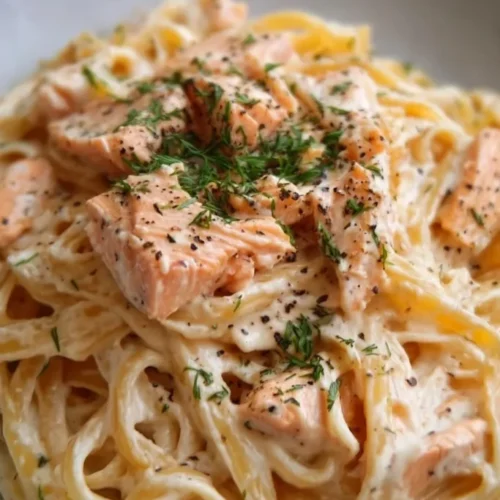
Creamy Salmon Pasta
Ingredients
For the Base
- 8 oz pasta (e.g., fettuccine or penne) Choose your favorite pasta shape.
For the Salmon & Sear
- 2 fillets salmon Approximately 5–8 oz each.
- Salt and pepper To taste.
- 2 tablespoons olive oil For sautéing the garlic and salmon.
For the Sauce
- 1 cup heavy cream Can be substituted with half-and-half for a lighter version.
- 1/2 cup grated Parmesan cheese Pecorino Romano can be used as a substitute.
- 2 cloves garlic, minced Adds flavor to the sauce.
For Serving
- Fresh parsley For garnish.
Instructions
Cooking Pasta
- Cook the pasta according to package instructions in salted water. Reserve 1 cup of pasta water, then drain.
Sauté Garlic
- In a large skillet, heat the olive oil over medium heat. Add the minced garlic and sauté for about 1 minute until fragrant.
Cook Salmon
- Season the salmon fillets with salt and pepper. Add them to the skillet and cook for about 4–5 minutes per side until cooked through. Remove the salmon and flake it into pieces.
Make Cream Sauce
- In the same skillet, pour in the heavy cream and bring it to a gentle simmer. Stir in the grated Parmesan cheese until melted and combined.
Combine Ingredients
- Add the cooked pasta and flaked salmon back to the skillet. Toss everything together, adding reserved pasta water as needed to reach your desired creaminess.
Finish and Serve
- Garnish with chopped fresh parsley and serve immediately.