
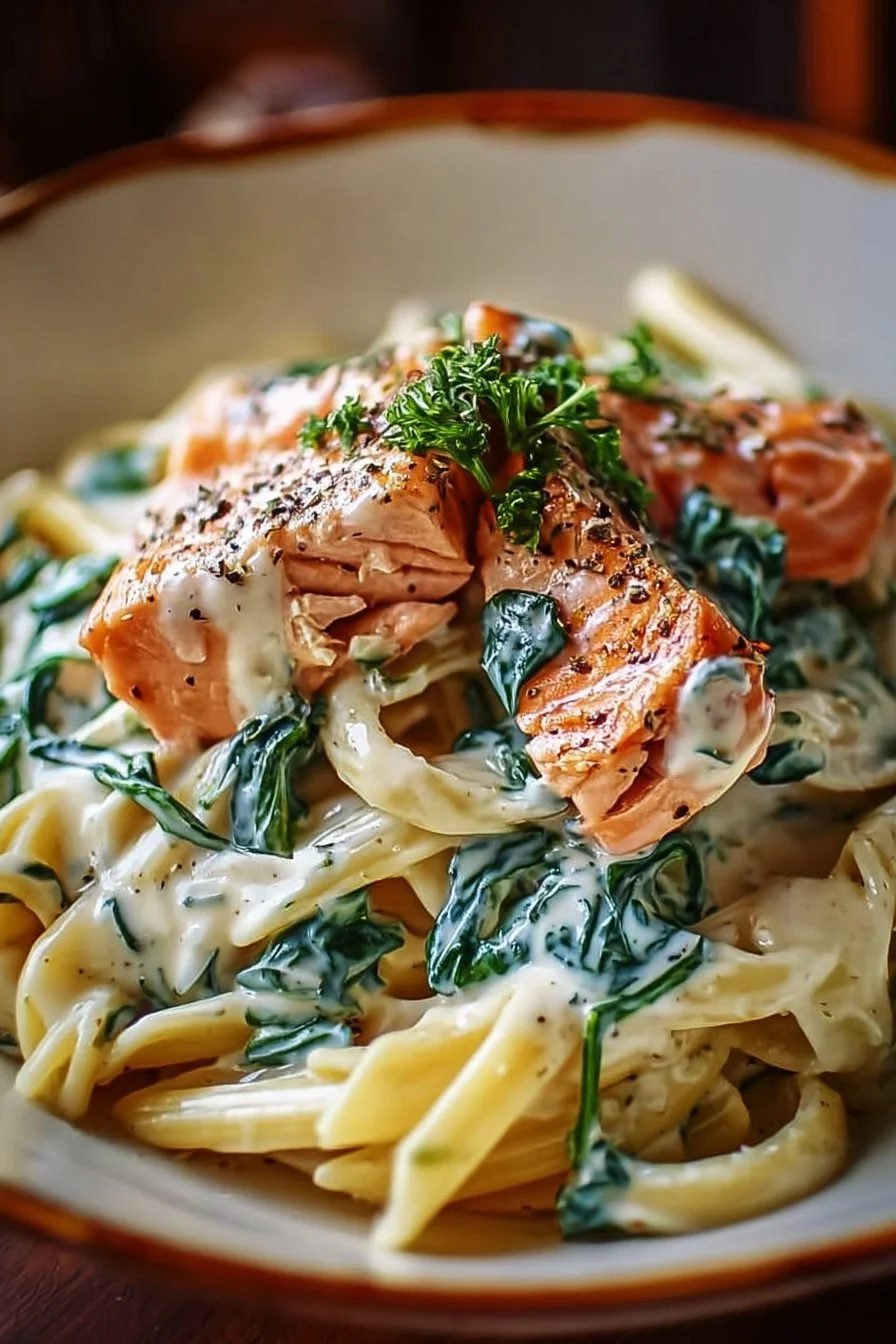
This Creamy Salmon Spinach Pasta is the kind of dish that wraps you up in silky, comforting flavors without feeling fussy. The sauce is rich and velvety from the heavy cream and Parmesan, while the flaked salmon adds tender, flaky bites that balance beautifully with the bright pop of lemon. Fresh spinach wilts into the sauce, giving the dish a fresh color and a mild, leafy note that keeps each forkful lively. It’s a weeknight winner—simple enough for a quick dinner but elegant enough to serve to guests with a green salad on the side. If you love rich, silky sauces with greens, you might also enjoy Creamy Gnocchi with Spinach and Feta as another comforting option.
Why You’ll Love This Creamy Salmon Spinach Pasta
- Silky, comforting sauce: heavy cream and Parmesan create a smooth, indulgent coating for every noodle.
- Flaky, flavorful salmon: seared fillets provide meaty texture and rich protein.
- Bright balance: lemon wedges cut through the creaminess, keeping each bite fresh.
- Quick and approachable: straightforward skillet method; perfect for busy weeknights.
- Versatile pasta choices: works with fettuccine or penne depending on your preference.
- Greens included: fresh spinach adds a healthy, vibrant touch without extra effort.
- Minimal ingredients: pantry-friendly list keeps this recipe stress-free and fast.
- Appealing leftovers: flavors hold up well for next-day lunches (with proper reheating).
What Is Creamy Salmon Spinach Pasta?
This dish marries tender pasta with flaked salmon in a simple cream-based sauce studded with wilted spinach and Parmesan. The taste is rich and savory from the cream and cheese, with succulent pockets of salmon flavor and a gentle garlic background. The cooking method is stovetop-focused: pasta boiled until al dente and a one-skillet sauce made from searing salmon, sautéing garlic, simmering cream, and folding in spinach and cheese. It’s typically served as a comforting weeknight dinner or an easy date-night meal, and its overall vibe is cozy, slightly luxurious, and reliably satisfying.
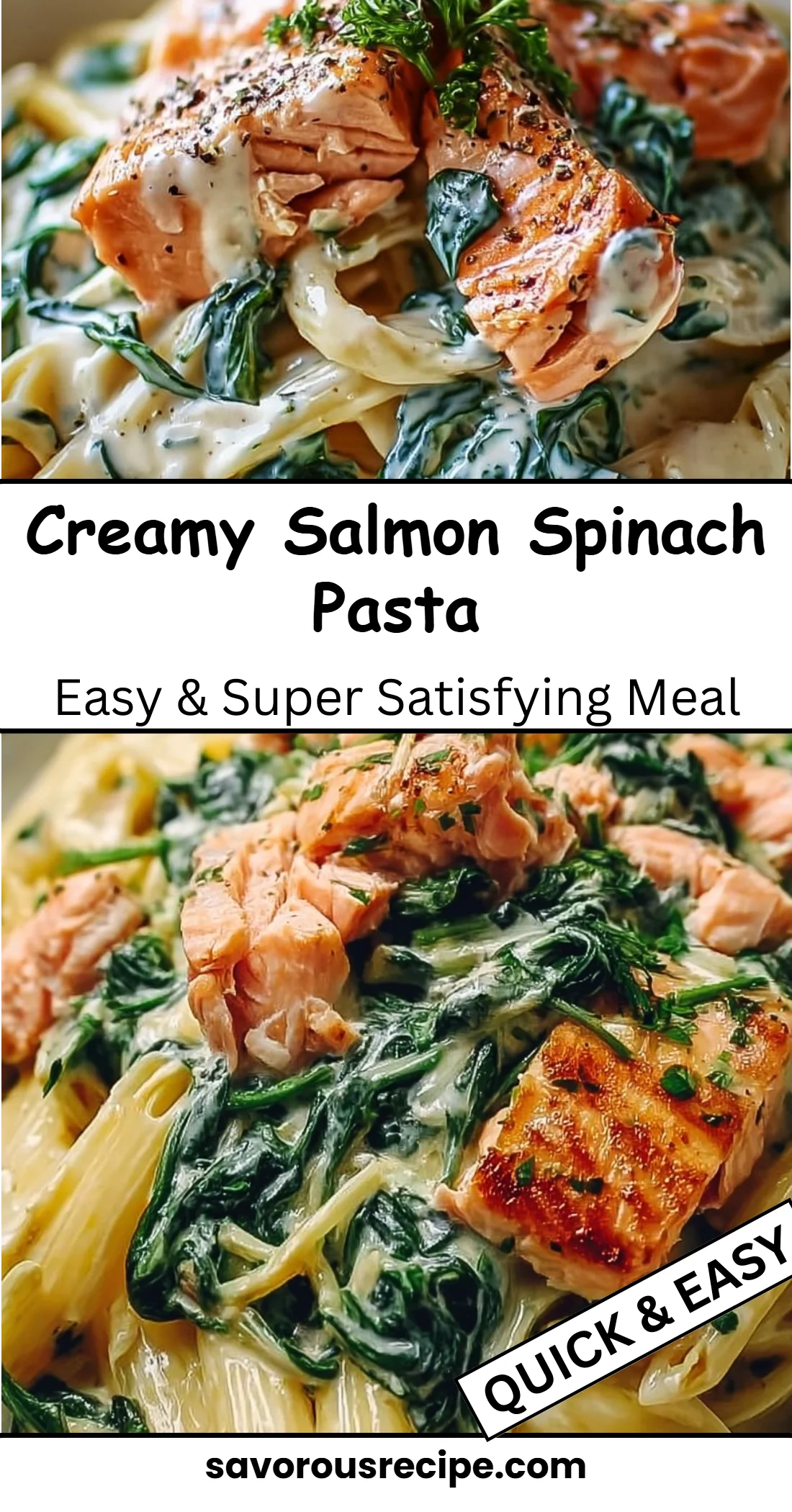
Ingredients for Creamy Salmon Spinach Pasta
For the Base
- 8 oz pasta (fettuccine or penne)
For the Protein & Cooking
- 2 tablespoons olive oil
- 2 salmon fillets
- Salt and pepper to taste
For the Sauce
- 2 cloves garlic, minced
- 1 cup heavy cream
- 1/2 cup grated Parmesan cheese
- 2 cups fresh spinach
For Serving
- Lemon wedges for serving
Ingredient Notes (Substitutions, Healthy Swaps)
- Salmon: Use whatever freshness you can find—farmed or wild both work. If you want a leaner option, you can use a slightly smaller salmon portion (but this will reduce overall richness).
- Heavy cream: For a lighter version, try half-and-half (will be thinner) or a lower-fat cream alternative labeled for cooking; expect a less silky sauce.
- Parmesan: Pre-grated works in a pinch, but freshly grated melts more smoothly. For a dairy-free swap (optional), a plant-based Parmesan-style sprinkle can work, though texture will differ.
- Pasta: Gluten-free fettuccine or penne can substitute 1:1; cook to package directions to avoid mushiness.
- Olive oil: Keeps pan-searing simple. If you prefer a neutral oil, a light-tasting vegetable oil is acceptable.
- Spinach: Baby spinach or regular spinach both work; measure loosely packed leaves. For a heartier green, use chopped kale (optional) but sauté a bit longer to soften.
Step-by-Step Instructions
Step 1 – Cook the pasta
- Bring a large pot of salted water to a boil and cook the pasta according to package instructions until al dente. Drain and set aside.
Visual cue: The pasta should be tender but still have a slight bite; not mushy.
Step 2 – Sear the salmon
- In a large skillet, heat the olive oil over medium heat. Season the salmon fillets with salt and pepper.
- Add the fillets to the skillet and cook about 4–5 minutes per side, or until cooked through. Remove from the skillet and flake into pieces.
Visual cue: The exterior should be lightly golden and the interior opaque and easy to flake.
Pro cue: Don’t overcook—salmon will finish a bit in the pan juices; aim for just opaque.
Step 3 – Sauté the garlic
- In the same skillet (use leftover oil and fond), add the minced garlic and sauté about 30 seconds until fragrant.
Visual cue: Garlic should be fragrant and just starting to sizzle, not browned.
Pro cue: Keep the heat moderate—garlic burns quickly and becomes bitter.
Step 4 – Build the sauce
- Pour in the heavy cream and bring it to a gentle simmer. Stir in the grated Parmesan until melted and smooth.
Visual cue: Sauce should thicken slightly and look glossy as the cheese melts.
Pro cue: If the sauce seems too thick, add a splash of pasta cooking water to loosen it without diluting flavor.
Step 5 – Wilt the spinach
- Add the fresh spinach and cook until just wilted, folding it into the sauce.
Visual cue: Leaves should be bright green and reduced in volume significantly.
Pro cue: Work in batches if your skillet is small to ensure even wilting.
Step 6 – Combine pasta and salmon
- Add the cooked pasta and flaked salmon to the skillet, tossing everything together until well combined and heated through. Season with additional salt and pepper to taste.
Visual cue: Pasta should be fully coated in the creamy sauce, with salmon distributed evenly.
Pro cue: Toss gently so the salmon stays in nice flakes rather than turning to mush.
Step 7 – Serve
- Plate the pasta and offer lemon wedges on the side for bright finishing acidity.
Visual cue: A squeeze of lemon will cut through richness and add a glossy finish.
Pro Tips for Success
- Heat control: Keep the skillet at medium for searing and reduce to low when simmering the cream to prevent curdling.
- Salt early: Salt the pasta water well—properly seasoned pasta is the backbone of the dish.
- Cheese quality: Freshly grated Parmesan melts more smoothly than pre-shredded varieties.
- Texture control: Do not overcook the pasta; finish cooking in the sauce only if you need to marry flavors.
- Flake gently: Use a fork to flake salmon into large pieces to maintain texture in the final dish.
- Acid at the end: Add lemon right before serving to keep bright notes from dissipating.
- Rescue tip: If sauce splits, whisk in a little warm pasta water off the heat to bring it back together.
Flavor Variations (OPTIONAL)
- Spicy version (OPTIONAL): Add a pinch of red pepper flakes to the garlic step for a gentle heat lift—keep all base ingredients the same.
- Extra cheesy (OPTIONAL): Stir in an additional tablespoon of Parmesan at the end for a cheesier finish while keeping the same base.
- Lighter version (OPTIONAL): Substitute half-and-half for heavy cream and skip extra cheese to reduce richness.
- Protein swap (OPTIONAL): If you prefer another protein, grilled chicken can be used in place of salmon, following the same cook-and-flake approach. For a different but complementary creamy-herb profile, see Creamy Pesto Chicken Pasta.
- Citrus-forward (OPTIONAL): Stir in a teaspoon of lemon zest at the end for a brighter aroma without changing core ingredients.
Serving Suggestions
- Simple green salad: A crisp mixed greens salad with a light vinaigrette complements the richness.
- Steamed vegetables: Serve alongside lightly steamed asparagus or broccoli for color and crunch.
- Crusty bread: A slice of crusty bread is great for mopping up any leftover sauce.
- Wine pairings: For those who enjoy wine with dinner, a crisp white like Sauvignon Blanc or Pinot Grigio pairs nicely with creamy salmon (optional).
- Plating idea: Twirl fettuccine into a nest on the plate, top with salmon flakes, and place a lemon wedge for a restaurant-style finish.
- Occasion ideas: Works for family dinners, casual date nights, or a cozy weekend lunch.
Make-Ahead, Storage & Reheating
- Make-ahead: You can cook the pasta and salmon separately and store them in the refrigerator for up to one day; reheat and finish the sauce just before serving.
- Refrigerator storage time: Store leftovers in an airtight container for 2–3 days.
- Reheating methods: Reheat gently on the stove over low heat, adding a splash of water or cream to restore sauce consistency; microwave in short bursts, stirring between intervals to avoid hotspots.
- Texture changes: Cream-based sauces can thicken or separate slightly after refrigeration; gentle reheating with a small splash of liquid will bring it back together.
Storage and Freezing Instructions
- Freezing not recommended: Cream-based sauces tend to separate when frozen and thawed, creating a grainy texture. The salmon may also change texture after freezing.
- Alternative freezing approach: If you want to freeze, separate components—freeze cooked pasta or salmon alone (not the cream sauce). Thaw and briefly refresh in a warm skillet with fresh cream and Parmesan before serving.
- Thawing tip: Thaw frozen components in the refrigerator overnight and reheat gently to maintain texture.
Nutrition Facts (Per Serving)
| Calories | Protein | Carbs | Fat | Fiber | Sodium |
|———|——–|——|—–|——|——-|
| 830 kcal | 41 g | 56 g | 58 g | 3.5 g | 700 mg |
Nutrition values are estimates and may vary depending on ingredients and portion sizes.
FAQ About Creamy Salmon Spinach Pasta
- How do I know the salmon is cooked through?
- Salmon should flake easily with a fork and be opaque throughout. A center temperature of 145°F (63°C) is considered fully cooked.
- My sauce looks thin—how can I thicken it?
- Simmer gently to reduce it for a few minutes, or stir in a small amount of Parmesan to help thicken and emulsify the sauce.
- Can I use frozen spinach instead of fresh?
- Fresh spinach is recommended for texture and color; if using frozen, thaw and squeeze out excess water first and add it in at Step 5.
- The sauce split after reheating—what went wrong?
- High heat can cause cream to separate. Reheat gently over low heat and whisk in a splash of warm pasta water or cream to bring it back together.
- How long will leftovers last in the fridge?
- Keep leftovers in an airtight container for 2–3 days for best quality and safety.
- Can I make this dairy-free?
- The base recipe relies on heavy cream and Parmesan; for a dairy-free version, try plant-based cream and a dairy-free Parmesan alternative, though the texture and flavor will change.
Notes
- Plate with intent: Twirl the pasta into nests for an attractive presentation and scatter salmon flakes on top.
- Lemon finishing: A small squeeze of lemon at the table brightens each portion without overpowering the cream.
- Season to taste: Taste before serving—cream mutes salt, so you may need a final pinch.
- Keep it gentle: High heat at the cheese-melting stage can cause graininess; melt slowly for the smoothest sauce.
- Serving size: Consider serving this with a substantial side salad if feeding more than two people; the dish is rich and satisfying.
Creamy Salmon Spinach Pasta
Ingredients
For the Base
- 8 oz pasta (fettuccine or penne)
For the Protein & Cooking
- 2 tablespoons olive oil
- 2 fillets salmon
- to taste salt and pepper
For the Sauce
- 2 cloves garlic, minced
- 1 cup heavy cream Use half-and-half for a lighter version.
- 1/2 cup grated Parmesan cheese Freshly grated melts more smoothly.
- 2 cups fresh spinach Baby spinach or regular both work.
For Serving
- As needed Lemon wedges for serving Provides bright finishing acidity.
Instructions
Cooking the Pasta
- Bring a large pot of salted water to a boil and cook the pasta according to package instructions until al dente. Drain and set aside.
Searing the Salmon
- In a large skillet, heat the olive oil over medium heat. Season the salmon fillets with salt and pepper.
- Add the fillets to the skillet and cook about 4–5 minutes per side, or until cooked through. Remove from the skillet and flake into pieces.
Sautéing Garlic
- In the same skillet, add the minced garlic and sauté for about 30 seconds until fragrant.
Building the Sauce
- Pour in the heavy cream and bring it to a gentle simmer. Stir in the grated Parmesan until melted and smooth.
Wilting the Spinach
- Add the fresh spinach and cook until just wilted, folding it into the sauce.
Combining Pasta and Salmon
- Add the cooked pasta and flaked salmon to the skillet, tossing everything together until well combined and heated through.
Serving
- Plate the pasta and offer lemon wedges on the side.