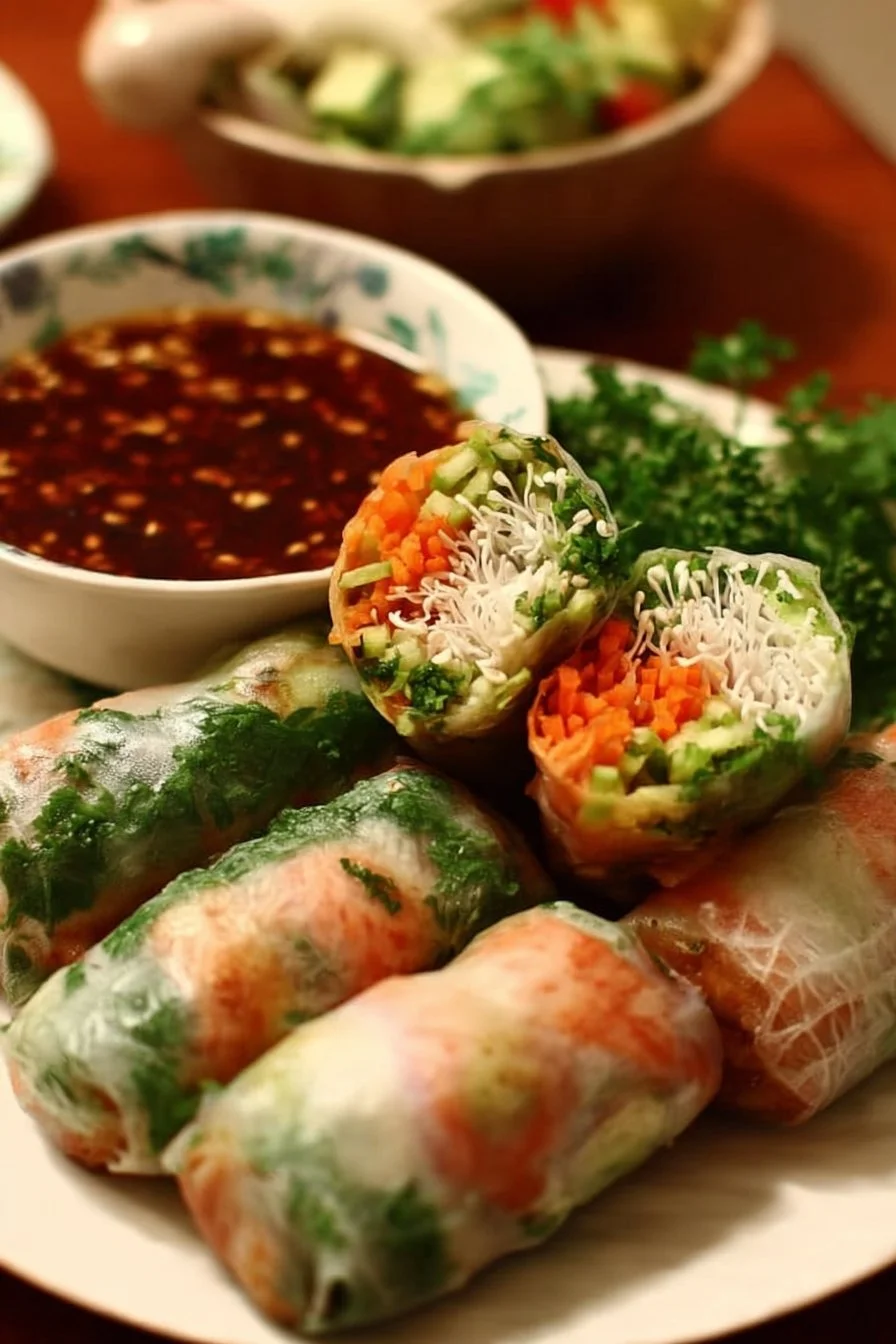
Bright, fresh, and full of texture, these Delicious Thai Spring Rolls are a celebration of crisp vegetables, tender shrimp, and a creamy, tangy peanut sauce. Each roll offers a contrast between the slightly chewy rice paper, the snap of carrots and bell pepper, and the herbaceous lift of mint and cilantro. They’re deceptively simple to make, come together quickly, and feel special enough for weekend entertaining or light enough for a weeknight dinner. If you love exploring spring roll variations, you might also enjoy a crispier take like crispy Thai veggie spring rolls for a different texture contrast.
Why You’ll Love This Delicious Thai Spring Rolls
- Bright, layered flavors: sweet honey, tangy lime, savory soy, and nutty peanut butter combine beautifully in the dipping sauce.
- Fresh, crunchy texture: shredded carrots and thinly sliced red bell pepper give every bite a satisfying snap.
- Light but filling: rice vermicelli and shrimp add substance without heaviness.
- Fast to assemble: once ingredients are prepped, rolling goes quickly—perfect for entertaining.
- Versatile and adaptable: easy to swap proteins, add veggies, or make them vegetarian.
- No cooking required for most components: uses cooked shrimp and cooked vermicelli, keeping active time short.
- Great for parties: make a bunch ahead and assemble just before serving for a polished appetizer.
- Healthy-ish indulgence: fresh herbs and veggies shine while the peanut sauce adds indulgence in moderation.
What Is Delicious Thai Spring Rolls?
Delicious Thai Spring Rolls are fresh, unfried rolls wrapped in translucent rice paper and filled with a mix of vegetables, herbs, vermicelli noodles, and shrimp. They taste bright and herb-forward, with crunchy vegetables and a creamy peanut dipping sauce that’s sweet, salty, and slightly tangy. The cooking method is assembly-based—no frying—so these are often served chilled or at room temperature. People typically enjoy them as an appetizer, light lunch, or part of a shared meal. The overall vibe is fresh, casual, and perfect for warm-weather meals or any time you want something light but satisfying.
Ingredients for Delicious Thai Spring Rolls
For the Base
- 12 pieces Rice paper wrappers
- 1.5 cups Shredded carrots
- 1 cup Thinly sliced red bell pepper
- 0.5 cup Fresh mint leaves (Chopped)
- 0.5 cup Fresh cilantro (Chopped)
- 1 cup Cooked shrimp (Sliced in half lengthwise)
- 0.75 cup Rice vermicelli noodles (Cooked according to package instructions)
For the Sauce
- 0.5 cup Peanut butter (Smooth)
- 2 tablespoons Soy sauce
- 1 tablespoon Lime juice (Freshly squeezed)
- 1 tablespoon Honey
- 1 clove Garlic (Minced)
- 0.25 teaspoon Crushed red pepper flakes (Optional)
- 2 tablespoons Warm water (To thin sauce)
For Serving
- Extra lime wedges or extra herbs (optional, not required by core recipe)
Ingredient Notes (Substitutions, Healthy Swaps)
- Peanut butter: For a lighter option, use natural peanut butter with no added sugar—expect a thinner sauce and adjust water. For a nut-free version, sunflower seed butter works, but flavor changes slightly (optional).
- Soy sauce: Use low-sodium soy sauce to reduce sodium content. For a gluten-free option, choose tamari.
- Rice vermicelli: Swap for spiralized cucumber or zucchini for a lower-carb variation; the overall identity remains but texture will be different (optional).
- Shrimp: Keep as-is to preserve this recipe’s profile; for a vegetarian swap, replace with extra vermicelli and marinated tofu (optional).
- Honey: Use maple syrup if you prefer a vegan sweetener (optional).
- Rice paper wrappers: If gluten is a concern, these are already typically gluten-free—just verify your brand.
Step-by-Step Instructions
Step 1 – Prep everything first
Lay out all ingredients and chop as needed. Cook rice vermicelli according to package instructions and drain well. Slice cooked shrimp in half lengthwise.
Visual cue: Noodles should be separate and not clumped; shrimp halves should be ready to lay flat inside the roll.
Pro cue: Keep a damp towel over prepped veggies to prevent wilting while you work.
Step 2 – Make the peanut dipping sauce
In a small bowl, whisk together peanut butter, soy sauce, lime juice, honey, minced garlic, and crushed red pepper flakes if using. Add warm water 1 tablespoon at a time until sauce reaches a smooth, dippable consistency (about 2 tablespoons total).
Visual cue: Sauce should be glossy and smooth—thin enough to drizzle but thick enough to coat a roll.
Pro cue: Warm water helps emulsify the peanut butter; if the sauce is too thick, add a splash more.
Step 3 – Soften rice paper
Fill a shallow, wide bowl with warm water. Dip one rice paper wrapper into the water for 5–8 seconds until edges just soften—don’t oversoak or it becomes floppy.
Visual cue: Wrapper should be pliable, still slightly opaque but not breaking apart.
Pro cue: Work on a damp kitchen towel or non-stick surface to keep the wrapper from sticking.
Step 4 – Layer the filling
Place the softened wrapper flat, about a third of the way up from the bottom, add a small handful of shredded carrots, a few slices of red bell pepper, a few sprigs of mint and cilantro, a small portion of rice vermicelli, and 1–2 shrimp halves near the center.
Visual cue: Filling should be compact and centered, leaving clear edges for folding.
Pro cue: Don’t overstuff—easier to roll tightly and neatly if fillings are modest.
Step 5 – Roll and seal
Fold the bottom edge of the wrapper up over the filling, tuck the sides in, then roll away from you to close. The residual moisture on the wrapper seals it shut.
Visual cue: Rolls should be snug and slightly translucent so you can see colors through the rice paper.
Pro cue: If the wrapper won’t seal, brush the edge with a little warm water to tack it down.
Step 6 – Serve with sauce
Arrange rolls on a platter and serve with the peanut sauce on the side.
Visual cue: Rolls lined up or fanned out make an attractive presentation; herbs peeking out add color.
Pro cue: Keep rolls covered with a damp towel if not serving immediately to prevent drying.
Pro Tips for Success
- Work assembly-line style: set wrappers, fillings, and sauce in a row so rolling is efficient.
- Avoid soggy rolls: drain noodles thoroughly and avoid adding excess sauce inside the roll.
- Control moisture: pat any watery vegetables dry with paper towel before filling.
- Make clean slices of shrimp: slicing shrimp lengthwise helps them lie flat and show through the rice paper.
- Don’t overfill: rolls are easier to seal and look neater when contents are restrained.
- Keep remaining wrappers covered: dry wrappers can crack—use a damp towel over unused packets.
- Chill the sauce slightly if your peanut butter is very runny—the flavor holds better when not too warm.
- Taste and adjust: if the sauce is too salty, add a bit more honey or lime; if too thick, thin with warm water.
Flavor Variations
(OPTIONAL)
- Spicy version: Add extra crushed red pepper flakes to the sauce or a thin smear of sriracha inside each roll.
- Extra herbs: Add Thai basil in place of or alongside mint for a more aromatic roll.
- Lighter version: Replace half the peanut butter with plain Greek yogurt (note: this introduces dairy and alters identity).
- Protein swap (optional): Substitute cooked, shredded chicken or marinated tofu for shrimp while keeping other components the same.
- Crunch upgrade: Add a small handful of chopped roasted peanuts inside each roll for additional texture.
- Citrus boost: Add grated lime zest to the sauce for an extra bright kick.
Serving Suggestions
- Serve as an appetizer: Arrange on a large platter with the peanut sauce in a small bowl for dipping.
- Light lunch: Pair rolls with a simple mixed green salad and remaining peanut sauce on the side.
- Party platter: Make a variety (some with extra herbs, some spicier) so guests can choose their favorite.
- Picnic or potluck: Pack rolls in a shallow container lined with damp paper towel; sauce goes in a sealed jar.
- Pair with a light soup: A clear broth or miso-style soup complements the fresh rolls.
- For more ideas on presentation and slight technique tweaks, check out this Delicious Thai Spring Rolls recipe page for inspiration.
- Occasions: great for brunch, casual dinner parties, or as finger food during summer gatherings.
Make-Ahead, Storage & Reheating
- Make-ahead: Prep all fillings and the sauce up to 1 day in advance. Keep vegetables and herbs refrigerated in airtight containers.
- Rolling ahead: You can roll spring rolls a few hours ahead, but place them in a single layer on a tray and cover loosely with damp paper towel and plastic wrap. They stay best for up to 4–6 hours.
- Refrigerator storage time: Store assembled spring rolls in an airtight container with a damp paper towel on top for up to 24 hours; texture will become softer over time.
- Reheating: These spring rolls are best served cold or at room temperature. If you prefer a warm filling, briefly microwave the sauce (not the roll) and dip the roll to impart warmth—avoid microwaving rice paper as it becomes chewy.
Storage and Freezing Instructions
- Freezing not recommended: Rice paper becomes brittle when frozen and soggy when thawed—this ruins the texture.
- Alternative: Freeze only the peanut sauce in a small airtight container for up to 1 month, then thaw and whisk before serving. Keep the fresh ingredients refrigerated and assemble after thawing the sauce.
- Short-term storage: For leftover components, keep noodles and shrimp stored separately from the vegetables for up to 2 days to preserve texture.
Nutrition Facts (Per Serving)
| Calories | Protein | Carbs | Fat | Fiber | Sodium |
|———|——–|——|—–|——|——-|
| 155 kcal | 5 g | 18 g | 7 g | 2 g | 320 mg |
Nutrition values are estimates and may vary depending on ingredients and portion sizes.
FAQ About Delicious Thai Spring Rolls
Q: Why are my rice paper wrappers tearing?
A: Wrappers tear if over-soaked or handled roughly. Dip briefly until pliable and avoid stretching. Work on a flat, damp surface.
Q: How do I prevent soggy rolls?
A: Drain noodles well and pat vegetables dry. Use modest amounts of sauce; keep rolls chilled until serving.
Q: Can I use cold shrimp straight from the fridge?
A: Yes—use cooked, chilled shrimp sliced lengthwise so they lie flat inside the roll.
Q: How long do assembled rolls keep in the fridge?
A: Best eaten within 24 hours; they’ll become softer and less crisp after that.
Q: Can I make the sauce thicker or thinner?
A: Yes—add more peanut butter for thickness; add warm water a teaspoon at a time to thin until desired consistency.
Q: What if my sauce is too salty from the soy sauce?
A: Balance with a touch more honey or lime juice, or dilute slightly with warm water.
Notes
- Plating idea: Fan rolls in alternating directions on a long platter with a small bowl of sauce in the center for a restaurant-style look.
- Small flavor upgrade: Add a tiny pinch of lime zest to the peanut sauce for an aromatic lift.
- Seasoning adjustment: Taste the sauce before serving and adjust lime, honey, or soy to balance sweet, salty, and tangy elements.
- Presentation tip: Slice rolls in half on the bias to show colorful cross-sections—this is especially pretty for entertaining.
- Herb tip: Add a few whole mint leaves peeking from the wrapper for an attractive visual and a fresh aroma.
Delicious Thai Spring Rolls
Ingredients
For the Base
- 12 pieces Rice paper wrappers
- 1.5 cups Shredded carrots
- 1 cup Thinly sliced red bell pepper
- 0.5 cup Fresh mint leaves (Chopped)
- 0.5 cup Fresh cilantro (Chopped)
- 1 cup Cooked shrimp (Sliced in half lengthwise)
- 0.75 cup Rice vermicelli noodles (Cooked according to package instructions)
For the Sauce
- 0.5 cup Peanut butter (Smooth) For a lighter option, use natural peanut butter.
- 2 tablespoons Soy sauce For lower sodium, use low-sodium soy sauce.
- 1 tablespoon Lime juice (Freshly squeezed)
- 1 tablespoon Honey Maple syrup can be used for a vegan option.
- 1 clove Garlic (Minced)
- 0.25 teaspoon Crushed red pepper flakes (Optional)
- 2 tablespoons Warm water (To thin sauce)
For Serving
- Extra lime wedges or extra herbs (optional, not required by core recipe)
Instructions
Preparation
- Lay out all ingredients and chop as needed. Cook rice vermicelli according to package instructions and drain well.
- Slice cooked shrimp in half lengthwise.
- Keep a damp towel over prepped veggies to prevent wilting while you work.
Make the peanut dipping sauce
- In a small bowl, whisk together peanut butter, soy sauce, lime juice, honey, minced garlic, and crushed red pepper flakes if using.
- Add warm water 1 tablespoon at a time until sauce reaches a smooth, dippable consistency.
Soften rice paper
- Fill a shallow, wide bowl with warm water. Dip one rice paper wrapper into the water for 5–8 seconds until edges just soften.
- Work on a damp kitchen towel or non-stick surface to keep the wrapper from sticking.
Layer the filling
- Place the softened wrapper flat, about a third of the way up from the bottom, and add a small handful of shredded carrots, red bell pepper, mint, cilantro, rice vermicelli, and 1–2 shrimp halves.
Roll and seal
- Fold the bottom edge of the wrapper up over the filling, tuck the sides in, then roll away from you to close.
Serve with sauce
- Arrange rolls on a platter and serve with the peanut sauce on the side.