
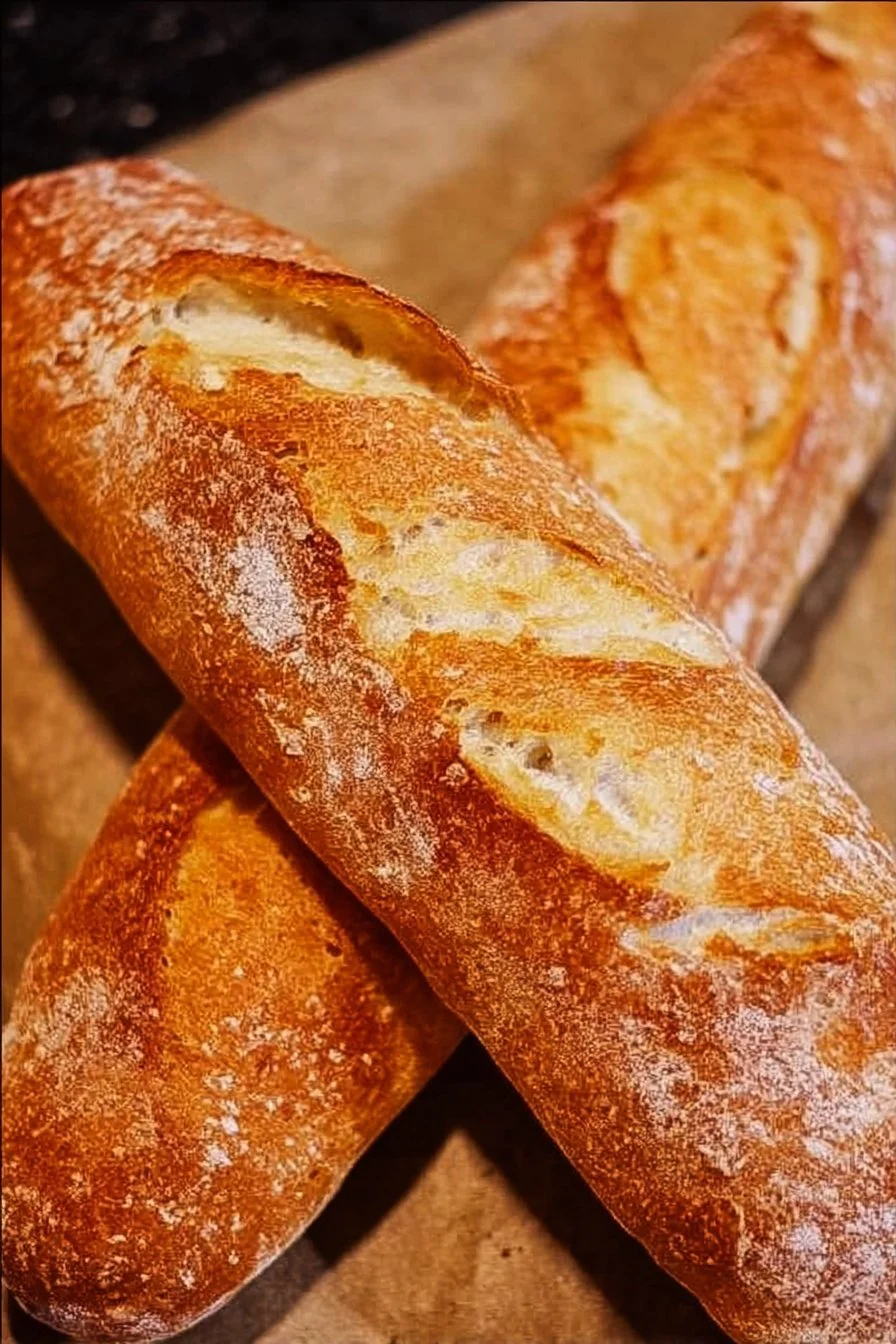
There’s something addictive about a hot, crusty baguette straight from the oven — the crackle when you tear it open, the tender, chewy crumb inside, and that simple wheaty flavor that makes butter taste like a revelation. This Easy Baguette recipe delivers all of that with minimal fuss: just flour, warm water, salt, and instant yeast. No fancy equipment, no long ingredient list — just a few sensible steps that yield a loaf perfect for sandwiches, soup dipping, or a lazy weekend breakfast. If you want smaller loaves or a quicker bake, you might also enjoy trying easy crusty mini baguettes for snack-sized delights.
Why You’ll Love This Easy Baguette
- Classic baguette taste with a crisp, golden crust and a soft, open crumb.
- Only four pantry-staple ingredients — simple and budget-friendly.
- No special tools required: no mixer, no fancy pans, just a baking sheet or stone.
- Quick to make compared to artisan loaves that demand long fermentation.
- Versatile: great for sandwiches, bruschetta, or serving with soups and salads.
- Comforting and rustic, ideal for weekday dinners or relaxed weekend baking.
- Hands-on enough to feel rewarding, but forgiving for home bakers of any level.
- Easy to scale up or down depending on how many loaves you want to bake.
What Is Easy Baguette?
An Easy Baguette is a simplified version of the classic French bread — long, narrow loaves with a thin, crisp crust and an airy interior. The flavor is straightforward: wheaty and slightly sweet from the flour, with a subtle savory note from the salt. The cooking method uses standard yeast fermentation followed by high-heat baking to produce that signature crust. People typically serve baguettes alongside meals (think soups, stews, and cheese boards), use them for sandwiches, or slice and toast them for breakfast. The overall vibe is rustic comfort food — impressive to serve, but perfectly suited to an easy weeknight bake. For a step-by-step anchor to the basic loaf, this recipe follows the traditional approach while keeping things approachable and fast, similar in spirit to the Easy Baguette technique that home bakers love.
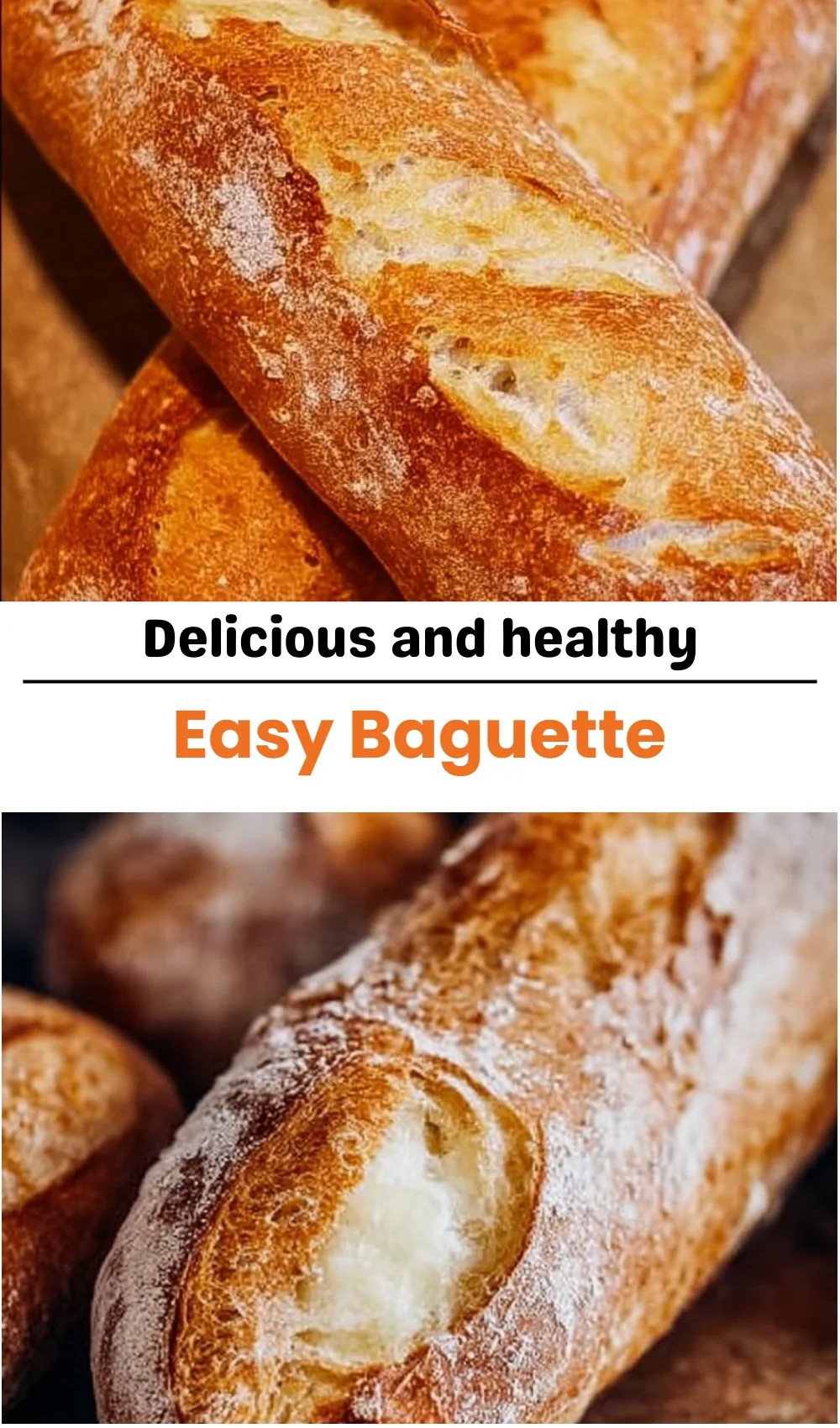
Ingredients for Easy Baguette
For the Base
- 4 cups all-purpose flour (about 480 g)
- 1.5 cups warm water (about 360 ml; around 100–110°F / 38–43°C)
- 2 teaspoons salt
- 1 packet instant yeast (about 2 1/4 teaspoons)
Ingredient Notes (Substitutions, Healthy Swaps)
- Flour: All-purpose flour gives a tender crumb and good structure. For a stronger chew, substitute part of the flour with bread flour (optional). If using bread flour, you may see a slightly chewier interior.
- Yeast: Instant yeast is used here for convenience because it mixes directly into the flour without proofing. If you only have active dry yeast, dissolve it in a bit of the warm water first and wait 5–10 minutes until foamy, then proceed.
- Salt: You can reduce salt slightly for a lower-sodium loaf, but know that salt helps control fermentation and brings out flavor. For a notable drop in sodium, reduce to 1 1/2 teaspoons.
- Gluten-free: A true gluten-free baguette requires a different flour blend and binders, so it’s not a like-for-like swap here. If you need gluten-free bread, use a tested gluten-free baguette recipe instead.
- Lower-carb/healthier swaps: Reducing flour or substituting with alternative flours will change texture and rise. Keep the base measurements if you want the classic result.
Step-by-Step Instructions
Step 1 – Mix the Dough (Preparation)
Combine the flour, salt, and instant yeast in a large bowl. Add the warm water and stir until a shaggy dough forms. The dough should be sticky but cohesive; if it feels very dry, add a tablespoon of water at a time.
Visual cue: The dough looks rough and slightly wet, with no obvious dry flour pockets.Step 2 – Short Rest and Fold (Preparation)
Cover the bowl with a damp towel or plastic wrap and let the dough rest for 20–30 minutes. After the rest, perform a series of gentle folds in the bowl: reach under the dough, lift and fold it over itself 4–6 times, rotating the bowl as you go. Repeat this fold once more after another 20–30 minutes if you have time. Then leave the dough to rise until roughly doubled, about 60–90 minutes depending on room temperature.
Visual cue: The dough becomes smoother, more elastic, and noticeably larger.Step 3 – Shape the Baguettes (Preparation)
Turn the dough onto a lightly floured surface. Divide it into 2–3 equal portions (depending on desired loaf size). Gently flatten each portion into a rectangle, then roll them tightly from one long edge to form long, tapered loaves. Seal seams by pinching gently. Place the shaped loaves seam-side down on a lightly floured baking sheet or a baguette pan. Cover and let them proof for 30–45 minutes until puffy.
Pro cue: Don’t overwork the dough; gentle shaping preserves the air pockets that give the baguette its open crumb.Step 4 – Prepare the Oven (Baking)
Preheat the oven to 450°F (230°C). If you have a baking stone, place it on the middle rack; otherwise, use a baking sheet. For a crisp crust, place an empty metal pan on the bottom rack — you’ll add hot water to it to create steam just before baking. Score each loaf with a sharp knife or lame, making 3–5 diagonal slashes about 1/4–1/2 inch deep.
Visual cue: The loaves should hold their shape, look puffy, and show clear, shallow scores.Step 5 – Bake with Steam (Baking)
Place the loaves on the preheated stone or baking sheet. Carefully pour about 1 cup of hot water into the empty pan on the bottom rack to create steam, then quickly close the oven. Bake for 18–25 minutes, rotating halfway, until the crust is deep golden brown and the loaves sound hollow when tapped on the bottom. Remove from the oven and cool on a rack before slicing.
Pro cue: Steam in the first 10 minutes encourages an airy crumb and crisp crust — don’t skip this step.
Pro Tips for Success
- Use warm (not hot) water: 100–110°F (38–43°C) is ideal to activate yeast without killing it.
- Measure flour properly: spoon flour into the cup and level it — don’t pack it, or the dough will be dry.
- Hydration matters: this recipe yields a slightly sticky dough which produces a better crumb. Embrace a bit of stickiness.
- Create steam for crust: a pan with hot water or spritzing the oven window with water creates a beautiful crust.
- Scoring technique: use quick, confident slashes at a shallow angle to encourage proper oven spring.
- Listen for the hollow sound when tapping the bottom of the loaf — it’s the best doneness check.
- Cooling time: let the baguette cool at least 15–20 minutes before slicing to finish its internal setting.
- Room temperature affects rise: cooler kitchens will need longer rises; be patient.
Flavor Variations
(OPTIONAL — keep the base recipe intact)
- Herb-Infused Baguette: Lightly brush the shaped loaves with water and sprinkle with dried herbs (rosemary, thyme, or oregano) before baking.
- Garlic Butter Finish: After baking, brush the top lightly with melted butter and a touch of minced garlic for a savory finish.
- Seeded Top: Before proofing, brush the loaves with water and sprinkle sesame or poppy seeds to add texture and flavor.
- Cheesy Crust (Optional): Fold a few tablespoons of grated hard cheese into the dough at the folding stage, or sprinkle on top right after scoring.
- Spicy Kick: Add a pinch of red pepper flakes to the dough for subtle heat.
Serving Suggestions
- Slice and serve with softened butter and a sprinkle of sea salt for a simple treat.
- Enjoy as sandwich bread with thinly sliced roasted vegetables or deli meats.
- Serve alongside a bowl of tomato soup or creamy bisque for a classic pairing.
- Use thick slices for bruschetta topped with tomato, basil, and olive oil.
- Make crostini: thinly slice, toast, and top with goat cheese and honey.
- Bring to picnics — baguettes are great for sharing and easy to transport.
Make-Ahead, Storage & Reheating
- Make-ahead: You can mix and shape the dough, then refrigerate it overnight (covered) to develop flavor; bring it back to room temperature before the final proof. This slightly lengthens baking time.
- Refrigerator storage: Baked baguette keeps at room temperature in a paper bag for about 1-2 days. Storing in plastic will preserve softness but soften the crust.
- Reheating: To refresh a stale baguette, sprinkle lightly with water and bake at 350°F (175°C) for 5–10 minutes. For a quick crisp-up, use a toaster oven or broiler for a minute or two, watching closely.
- Texture changes: The crust will soften when stored; re-crisping in the oven restores some of the original texture.
Storage and Freezing Instructions
- Freezing: Baguettes freeze well. Cool completely, then wrap tightly in plastic wrap and aluminum foil or place in a freezer bag. Freeze for up to 2–3 months.
- To reheat from frozen: Thaw at room temperature, then bake in a 350°F (175°C) oven for 10–15 minutes, or until heated through and crusty.
- If you don’t want to freeze: slice and freeze only what you won’t use immediately for easy single-serving toasts.
- If freezing is not recommended: Not an issue here — this baguette freezes and reheats nicely with minimal loss of quality.
Nutrition Facts (Per Serving)
| Calories | Protein | Carbs | Fat | Fiber | Sodium |
|———|——–|——|—–|——|——-|
| 182 kcal | 5 g | 38 g | 0.5 g | 1.4 g | 460 mg |
Nutrition values are estimates and may vary depending on ingredients and portion sizes.
FAQ About Easy Baguette
Q: My baguette didn’t rise much. What went wrong?
A: Likely the water was too cool (yeast dormant) or too hot (yeast killed). Use warm water (100–110°F). Also check yeast freshness.Q: The crust is soft, not crisp. How can I fix that?
A: Ensure you bake with steam for the first 10 minutes and finish without steam. Re-crisp by baking briefly at 350°F after slicing.Q: Why is my crumb dense instead of airy?
A: Underproofing or overworking the dough can reduce air pockets. Allow adequate rise and handle gently during shaping.Q: Can I make this dough in a stand mixer?
A: Yes — mix on low to combine and knead briefly until smooth. But hand folding works fine and keeps the dough light.Q: How do I know when the baguette is done?
A: The crust should be deep golden brown and the loaf will sound hollow when tapped on the bottom.Q: Can I halve the recipe easily?
A: Yes — halve all ingredient amounts and adjust baking time slightly for smaller loaves (watch closely).
Notes
- Lightly score diagonally for that classic baguette look and better oven spring.
- For a glossier crust, brush briefly with water before placing in the oven — don’t overdo it.
- Slightly underbaking is better than overbaking; you can always return the loaf to the oven for a few minutes if needed.
- Present on a wooden board with a serrated knife for the best tearing and serving experience.
- A few finishing herbs or a sprinkle of flaky sea salt right after baking can elevate the flavor without much effort.
Easy Baguette
Ingredients
For the Base
- 4 cups all-purpose flour For a stronger chew, substitute part of the flour with bread flour.
- 1.5 cups warm water Ideal temperature is around 100–110°F (38–43°C).
- 2 teaspoons salt Reducing salt will lower sodium but may affect flavor.
- 1 packet instant yeast About 2 1/4 teaspoons; for active dry yeast, proof in warm water first.
Instructions
Preparation
- Combine the flour, salt, and instant yeast in a large bowl. Add the warm water and stir until a shaggy dough forms.
- Cover the bowl with a damp towel or plastic wrap and let the dough rest for 20–30 minutes.
- Perform gentle folds in the bowl: reach under the dough, lift and fold it over itself 4–6 times. Repeat this fold once more after another 20–30 minutes, then leave the dough to rise for 60–90 minutes until doubled.
- Turn the dough onto a floured surface. Divide into 2–3 portions and shape each into long, tapered loaves. Place on a floured baking sheet, cover, and let proof for 30–45 minutes.
Baking
- Preheat the oven to 450°F (230°C). Place a baking stone in the oven if using, or prepare a baking sheet.
- Score each loaf with a sharp knife, making 3–5 diagonal slashes.
- Pour about 1 cup of hot water into an empty pan on the bottom rack for steam just before closing the oven. Bake for 18–25 minutes until golden brown and hollow-sounding when tapped.