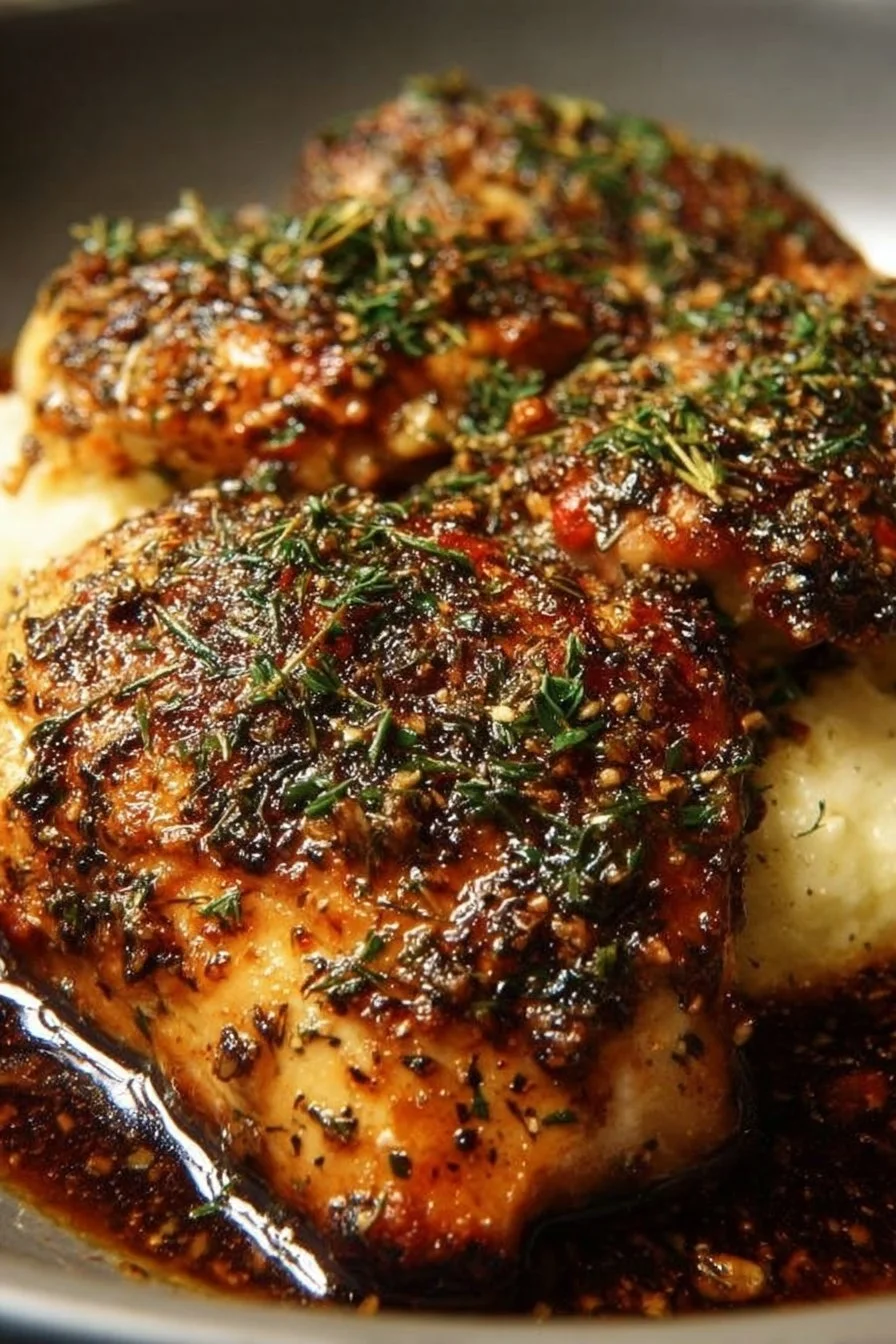
This garlic-and-herb pan-seared chicken is a weeknight winner: crisp golden crust, an aromatic herb rub, and a sticky balsamic-brown-sugar pan sauce spooned over pillowy mashed potatoes. It’s simple enough for a busy evening but elegant enough to serve when guests stop by. If you want a complementary bready side for soaking up every last drop of sauce, try a recipe for garlic herb Dutch oven bread.
Why you’ll love this dish
This Garlic Herb Chicken balances bright fresh herbs, deeply caramelized sear flavors, and a glossy, slightly sweet pan sauce that clings to the meat. It’s a great weeknight main because the technique is straightforward — rub, sear, deglaze, and reduce — yet the result feels restaurant-quality. It’s also flexible: double the sauce, swap potatoes for cauliflower mash, or make the breasts thinner for faster cooking.
“Juicy inside, golden outside — the balsamic glaze is the small change that turns simple chicken into something memorable.”
Perfect occasions:
- Weeknight family dinners when you want comfort without fuss.
- Casual dinner parties — the sauce looks elegant on the plate.
- Meal-prep dinners (cook extra sauce and mash for quick reheats).
The cooking process explained
Before you begin: pat the chicken dry and season well. You’ll sear the breasts in hot olive oil to build a crust, finish with butter to add richness, then use the same pan to make a quick caramelized balsamic reduction using brown sugar and chicken broth. While the chicken rests, you’ll make creamy mashed potatoes to serve as the base. The whole process is roughly 35–45 minutes from start to finish, depending on potato cook time.
What you’ll need
- 4 boneless, skinless chicken breasts (about 1.25–1.5 lb total)
- 3 tablespoons olive oil
- 4 cloves garlic, minced
- 2 tablespoons fresh parsley, chopped
- 1 tablespoon fresh thyme leaves
- 2 tablespoons butter (plus extra for potatoes)
- 1 cup chicken broth
- 2 pounds russet potatoes
- 1/2 cup heavy cream
- 2 tablespoons brown sugar
- 1 tablespoon balsamic vinegar
- Salt and freshly ground black pepper
Notes and substitutions:
- Use half-and-half in place of heavy cream for a lighter mash, though cream gives a silkier mouthfeel.
- If you don’t have fresh thyme or parsley, 1 teaspoon dried thyme and 1 tablespoon dried parsley will work — reduce dried herbs by about one-third because they’re more concentrated.
- For lower sodium, use low-sodium chicken broth and adjust salt at the end.
Step-by-step instructions
- Prep and season: Pat chicken dry with paper towels. Season both sides generously with salt and pepper. In a small bowl combine minced garlic, chopped parsley, and thyme; rub over the breasts and press it in. Let rest at room temperature for 10 minutes.
- Sear the chicken: Heat 3 tablespoons olive oil in a large skillet over medium-high heat until shimmering. Add the chicken and leave undisturbed for 5–6 minutes to form a deep golden crust. Flip and cook another 5–6 minutes.
- Finish with butter: Add 2 tablespoons butter to the pan and tilt the pan to pool the fat; spoon the melted butter and pan juices over the breasts (basting) for 1–2 minutes. Check internal temperature — remove when breasts reach 165°F (74°C). Transfer to a plate and tent with foil to rest; carryover heat evens the juices.
- Make the pan sauce: Reduce heat to medium. Add 2 tablespoons brown sugar and 1 tablespoon balsamic vinegar to the skillet; stir constantly for about 2 minutes until sugar dissolves and begins to caramelize. Pour in 1 cup chicken broth and scrape up browned bits (fond) from the bottom with a wooden spoon. Simmer 5–7 minutes until the sauce reduces by about half and becomes slightly syrupy. Taste and season with salt and pepper.
- Make the mashed potatoes: While chicken cooks, peel and cut 2 pounds russet potatoes into evenly sized chunks. Place in a pot and cover with cold, salted water. Bring to a boil, reduce to a simmer and cook 15–20 minutes until fork-tender. Drain well and return to the pot. Add butter and 1/2 cup heavy cream and mash until smooth and creamy. Season with salt and pepper.
- Plate and serve: Spoon a generous mound of mashed potatoes onto each plate, top with a chicken breast, and drizzle the reduced pan sauce over and around the chicken. Garnish with extra parsley or thyme if desired. Serve immediately.
Timing tip: Start boiling potatoes first since they take the longest; while they cook, prepare and sear the chicken so everything finishes around the same time.
Best ways to enjoy it
- Plating: Create a shallow well in the mashed potatoes for the chicken to sit in so the sauce pools around it. A little extra drizzle of sauce on the potatoes makes each bite balanced.
- Side dish ideas: Steamed green beans with lemon zest, roasted asparagus, or a crisp mixed salad cut through the richness. For a heartier combo, pair with a rice dish—try the high-protein crispy garlic chicken fried rice on a separate night for flavorful variety.
- Wine pairing: A medium-bodied Chardonnay or a fruity Pinot Noir complements the buttery chicken and balsamic glaze.
Storage and reheating tips
- Refrigerator: Cool chicken to room temperature (no more than 2 hours out of the fridge), then store in an airtight container for up to 3–4 days. Keep sauce separately if possible to preserve texture.
- Freezing: Freeze cooked chicken and sauce in airtight containers for up to 2–3 months. Mashed potatoes also freeze, but texture may change slightly; add a splash of cream when reheating.
- Reheating: Reheat gently in a 325°F oven until warmed through (about 10–15 minutes), or rewarm in a skillet over low heat with a splash of broth to keep the meat moist. Microwave on medium power in short bursts, stirring the mash between intervals.
Food safety: Always ensure chicken hits 165°F internal temperature before serving. If reheating from fridge or freezer, reheat until hot throughout (165°F) to ensure safety.
Pro chef tips
- Dry chicken for better sear: Patting the breasts completely dry removes surface moisture, which helps a deeper Maillard crust.
- Don’t overcrowd the pan: Sear in a single layer. Overcrowding drops pan temperature and prevents browning.
- Baste for flavor and gloss: Adding butter and spooning it over the meat at the end enriches flavor and helps the crust finish nicely.
- Control the sauce consistency: If sauce reduces too far, whisk in a tablespoon of butter or a splash of broth to loosen. If it’s too thin, simmer a bit longer or whisk in a small cornstarch slurry (1 tsp cornstarch + 1 tbsp water).
- Consistent potato chunks: Cut potatoes into uniform pieces to ensure even boiling and avoid undercooked lumps.
Recipe variations
- Lemon-herb: Add 1 tablespoon lemon zest to the herb rub and finish sauce with 1 tablespoon lemon juice for bright acidity.
- Honey-Balsamic: Swap brown sugar for 1½ tablespoons honey for a floral sweetness and slightly quicker caramelization.
- Low-carb: Serve chicken over cauliflower mash (steam riced cauliflower and blend with butter and cream).
- Dairy-free: Use olive oil instead of butter and coconut cream or unsweetened oat milk for the mash.
- Cutlets: Pound breasts to ½-inch thickness to reduce sear time to 3–4 minutes per side for quick weeknight dinners.
Common questions
Q: How long does this recipe take start to finish?
A: Plan for 35–45 minutes. Potatoes take 15–20 minutes; searing and sauce add another 20–25 minutes. Multi-task by boiling potatoes while prepping and searing the chicken.
Q: Can I make the sauce ahead of time?
A: Yes, make the sauce up to 3 days ahead and refrigerate. Gently rewarm on the stovetop and add a splash of broth if it thickened too much in the fridge.
Q: My chicken was dry — what went wrong?
A: Most likely overcooking. Use an instant-read thermometer and pull breasts at 160–162°F, then tent with foil; carryover heat will bring them to 165°F. Also, don’t skip the resting step — it lets juices redistribute.
Q: Can I use bone-in chicken?
A: You can, but bone-in pieces require longer cook time. Sear as directed, then finish in a 375°F oven for 20–30 minutes depending on size, checking for 165°F near the bone.
Q: Is it okay to use garlic powder instead of fresh garlic?
A: Fresh garlic gives the best aromatic presence in the rub. If substituting, use 1 teaspoon garlic powder, but expect a slightly different intensity.
Q: How should leftovers be served?
A: Reheat gently and serve with a fresh squeeze of lemon or extra herbs to revive flavors. Leftover sauce makes an excellent sandwich spread or topping for roasted vegetables.
If you have a specific dietary restriction or want a shortened prep plan, tell me what you have on hand and I’ll suggest a tailored tweak.
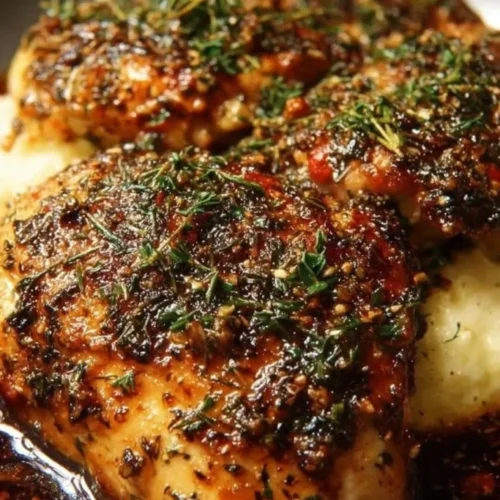
Garlic Herb Chicken
Ingredients
Chicken Ingredients
- 4 pieces boneless, skinless chicken breasts (about 1.25–1.5 lb total)
- 3 tablespoons olive oil for searing
- 4 cloves garlic, minced
- 2 tablespoons fresh parsley, chopped
- 1 tablespoon fresh thyme leaves
- 2 tablespoons butter plus extra for potatoes
- 1 cup chicken broth
Mashed Potato Ingredients
- 2 pounds russet potatoes peeled and cut into chunks
- 1/2 cup heavy cream can substitute with half-and-half
- 2 tablespoons brown sugar for the sauce
- 1 tablespoon balsamic vinegar for the sauce
- Salt to taste for seasoning
- Freshly ground black pepper to taste for seasoning
Instructions
Preparation
- Pat chicken dry with paper towels. Season both sides generously with salt and pepper.
- In a small bowl, combine minced garlic, chopped parsley, and thyme; rub over the chicken breasts and press it in. Let rest at room temperature for 10 minutes.
Cooking Chicken
- Heat 3 tablespoons olive oil in a large skillet over medium-high heat until shimmering.
- Add the chicken and leave undisturbed for 5–6 minutes to form a deep golden crust.
- Flip and cook another 5–6 minutes until chicken reaches an internal temperature of 165°F (74°C).
- Add 2 tablespoons butter to the pan, tilting to pool the fat, and baste the chicken with melted butter and pan juices for 1–2 minutes.
- Transfer chicken to a plate and tent with foil to rest.
Making the Sauce
- Reduce heat to medium in the same skillet. Add 2 tablespoons brown sugar and 1 tablespoon balsamic vinegar; stir constantly for about 2 minutes until sugar dissolves and begins to caramelize.
- Pour in 1 cup chicken broth and scrape up browned bits from the bottom with a wooden spoon. Simmer for 5–7 minutes until the sauce reduces by about half and becomes slightly syrupy. Taste and season with salt and pepper.
Making Mashed Potatoes
- While chicken cooks, peel and cut russet potatoes into evenly sized chunks.
- Place in a pot and cover with cold, salted water. Bring to a boil, reduce to a simmer and cook 15–20 minutes until fork-tender.
- Drain well and return to the pot. Add butter and 1/2 cup heavy cream and mash until smooth and creamy. Season with salt and pepper.
Serving
- Spoon a mound of mashed potatoes onto each plate, top with a chicken breast, and drizzle the reduced pan sauce over and around the chicken.
- Garnish with extra parsley or thyme if desired. Serve immediately.