
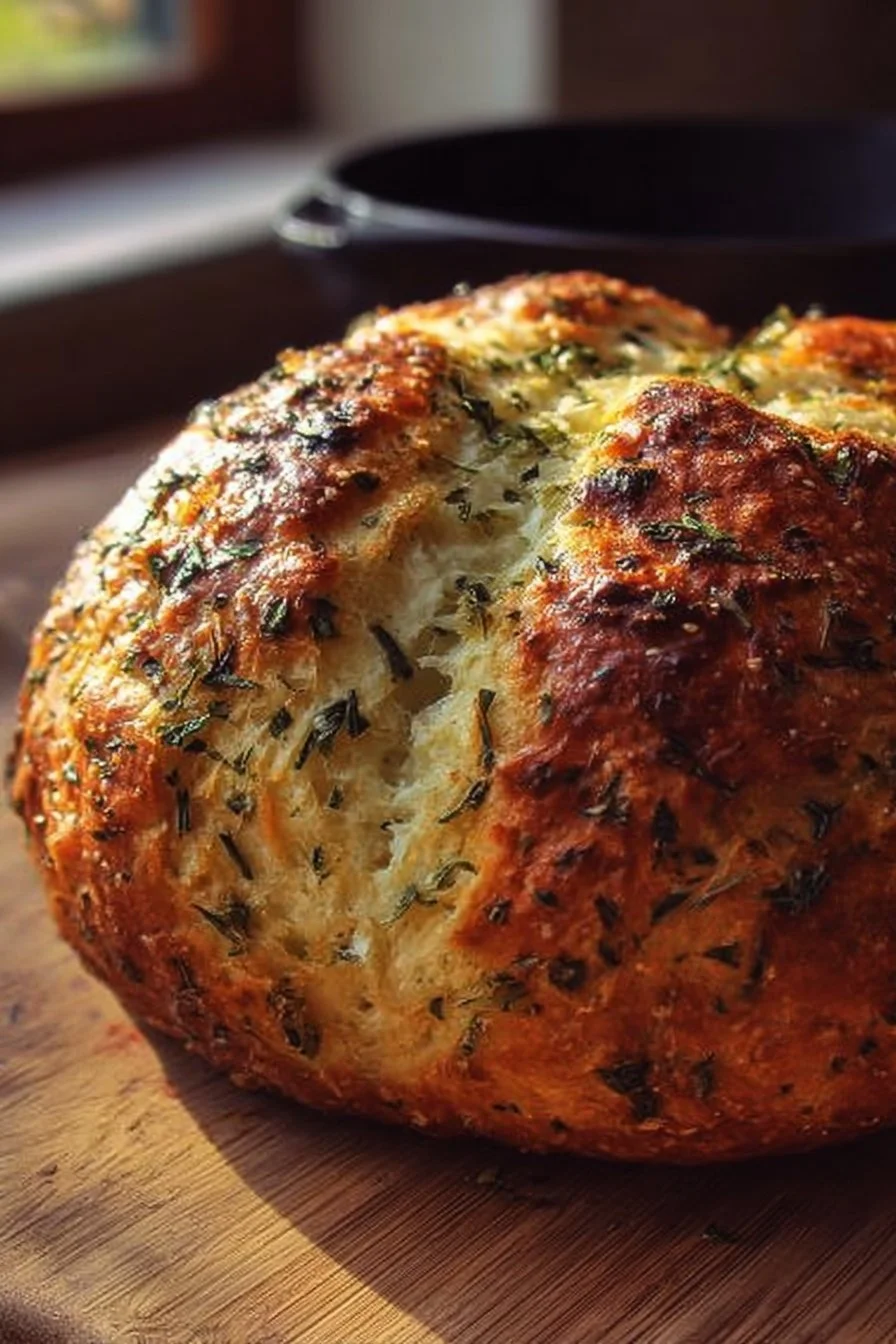
Soft, aromatic, crackly-crusted bread that tastes like dinner is already on the table — that’s what this Garlic Herb Dutch Oven Bread delivers. It’s a simple overnight loaf: a wet, shaggy dough fermented on the counter, then baked in a preheated Dutch oven until the crust is deep golden and the crumb is tender. Make it for a weeknight soup, a lazy weekend brunch, or any meal that could use fresh, warm bread with garlic and rosemary notes. If you enjoy one-pot, hands-off cooking, try a Dutch oven pot roast another night for a matching rustic meal.
Why you’ll love this dish
This bread is one of those recipes that looks and smells like effort but is almost entirely forgiving. You mix once, let a long, slow ferment build flavor, and then bake in a super-hot, lidded pot that traps steam to create an impressive crust. It’s budget-friendly, needs no kneading, and is a great beginner loaf for anyone intimidated by traditional artisan bread techniques.
“Loved the crunchy crust and garlicky aroma—perfect for dunking into olive oil.”
— a quick diner-style review after my first loaf
Good for weeknight meals, casual entertaining, or when you want fresh bread without babysitting dough. The rosemary and thyme give a Mediterranean lift, while the roasted garlic note makes even plain butter taste special.
Preparing Garlic Herb Dutch Oven Bread
This recipe follows three big stages: mix, rest, and bake. First, combine flour, salt, and a scant amount of instant yeast. Add warm water, minced garlic, chopped herbs, and olive oil, then stir to a wet, shaggy dough. Cover and ferment at room temperature for 12–18 hours. When ready, heat the Dutch oven, shape the dough gently, and bake covered for 30 minutes, then uncovered until deeply browned. Cool before slicing to finish the crumb structure.
Short timeline at a glance:
- Active hands-on time: ~15–25 minutes (mixing + shaping)
- Fermentation: 12–18 hours (overnight recommended)
- Bake time: 45–50 minutes
- Rest before slicing: at least 30 minutes
What you’ll need
- 375 g all-purpose flour (about 3 cups)
- 9 g fine salt (about 1 1/2 teaspoons)
- 1.5 g instant yeast (a scant 1/2 teaspoon) — very little yeast gives that long, flavorful ferment
- 360 ml warm water (about 1 1/2 cups), roughly 25–30°C (77–86°F)
- 4 cloves garlic, minced (or roast them first for milder, sweeter garlic flavor)
- 2 tablespoons fresh rosemary and thyme, chopped (total) — use one or both to taste
- 15 ml olive oil (1 tablespoon), plus more to coat the Dutch oven
Notes and substitutions:
- For a heartier loaf, replace up to 100 g of the all-purpose flour with bread flour.
- Want no-gluten? This recipe is not directly transferable; see Variations for tips on gluten-free approaches.
- If you prefer a softer crust, brush the top lightly with olive oil after the lid comes off halfway through baking.
Step-by-step instructions
- In a large bowl, whisk together the flour, salt, and instant yeast until evenly combined.
- Add the warm water, minced garlic, chopped rosemary and thyme, and the tablespoon of olive oil. Stir with a wooden spoon or spatula until there are no dry streaks. You should have a sticky, shaggy dough — wet and loose is expected.
- Cover the bowl tightly with plastic wrap and let it rest at room temperature for 12 to 18 hours. Overnight is convenient and develops good flavor.
- About 30 minutes before baking, preheat your oven to 230°C (450°F). Place your Dutch oven (lid on) inside the oven while it heats so the pot becomes thoroughly hot.
- When the oven is ready, lightly coat the bottom of the hot Dutch oven with olive oil. Dust your work surface with a little flour. Turn the dough out gently onto the floured surface and fold the edges toward the center once or twice to form a loose round. Don’t overwork it — keep the dough light and airy.
- Transfer the shaped loaf to the hot Dutch oven. If it’s difficult to move, set the dough on a square of parchment and lift that into the pot. Cover with the lid.
- Bake covered for 30 minutes. This trapped steam helps the crust expand and gives you an open crumb. Remove the lid and bake an additional 15–20 minutes until the crust is deep golden brown and the loaf sounds hollow when tapped.
- Remove the bread from the Dutch oven and cool on a wire rack for at least 30 minutes before slicing. Cooling finishes the crumb structure; slicing too soon makes the interior gummy.
Directions to follow
(Quick checklist for the day)
- Mix dry ingredients; add water, garlic, herbs, oil. Stir.
- Cover and leave on the counter 12–18 hours.
- Preheat oven with Dutch oven inside. Shape gently; bake covered 30 minutes then uncovered 15–20 minutes.
- Cool 30+ minutes before slicing.
Best ways to enjoy it
Tear it warm with good butter and flakey sea salt. It’s also perfect alongside soups, stews, and salads. Try thick slices with olive oil and balsamic for dipping, or use it to mop up roast pan juices.
For a complete rustic meal, serve it with roasted vegetables and a simple protein. It pairs especially well with herb-forward dishes — consider serving alongside fish or poultry; for a lighter seafood option, this bread would make a great partner to garlic butter baked tilapia because the herb and garlic notes echo nicely.
Plating ideas:
- Place slices in a bread basket lined with a tea towel for casual dinners.
- Make open-faced bruschetta with chopped tomatoes, basil, and a splash of balsamic.
- Use thick slices to soak up sauces from stews or eggplant ragù.
Storage and reheating tips
- At room temperature: Keep the loaf in a paper bag or wrapped in a clean kitchen towel for up to 2 days to maintain crust texture. Plastic will soften the crust.
- Refrigeration: Avoid refrigerating — it speeds staling.
- Freezing: Slice first, then freeze in an airtight bag for up to 3 months. Toast or reheat from frozen.
- Reheating: Warm slices in a 180°C (350°F) oven for 5–8 minutes, or toast until crisp. For a single slice, use a skillet over medium heat with a small pat of butter.
Food safety: because this is a no-dairy, low-risk bread, standard room-temperature fermentation is safe for the times indicated. If your kitchen is very warm (>26°C/80°F), shorten the bulk ferment window to avoid overproofing.
Pro chef tips
- Use a digital scale for accurate results. Small differences in flour weight affect hydration and crumb.
- Minimal yeast + long fermentation = flavor. Don’t be tempted to add more yeast to speed things up; you’ll lose complexity.
- Keep the dough wet. Hydration creates those irregular holes and a soft interior. If the dough feels tacky, that’s good — resist adding much extra flour.
- Heat the Dutch oven thoroughly. A cold pot will not give the same oven spring or crust.
- For extra oven spring, score the top with a sharp blade just before placing it in the hot pot.
- If you like a glossier crust, brush with olive oil when you remove the lid for the final bake.
Creative twists
- Cheesy herb loaf: Fold 50–75 g grated Parmesan or Gruyère into the dough before shaping.
- Sun-dried tomato and olive: Add 60 g chopped sun-dried tomatoes and 60 g chopped olives for a Mediterranean loaf.
- Roasted garlic version: Roast the garlic first for a milder, sweeter garlic flavor. Mash the roasted cloves into the dough with the water.
- Wholegrain swap: Replace 100–150 g of the all-purpose flour with whole wheat; add 10–15 ml extra water to compensate.
- Sourdough: Use 250–300 g active starter and reduce or omit instant yeast; adjust hydration and fermentation times accordingly.
Common questions
Q: How long does it actually take from start to finish?
A: Active hands-on time is about 15–25 minutes. Then plan 12–18 hours for fermentation and roughly 45–50 minutes for baking. Cooling adds another 30 minutes at least.
Q: The dough seems very wet. Is that normal?
A: Yes. This recipe uses a high hydration compared with traditional sandwich bread. The wet, sticky dough yields an open crumb and a crisp crust. Use a well-floured surface for shaping, but avoid kneading in lots of extra flour.
Q: Can I make this without a Dutch oven?
A: You can, but results differ. Use a heavy baking dish with a lid or place a shallow pan of boiling water on the oven bottom to create steam. A Dutch oven retains heat best and produces the highest, crispiest crust.
Q: Can I add cheese or seeds on top?
A: Yes. Brush the top lightly with olive oil when you remove the lid and sprinkle seeds or grated cheese for extra flavor and texture.
Q: How do I adjust this for a cooler or warmer kitchen?
A: In a cool kitchen (<20°C/68°F), allow more time for the bulk ferment; in a warm kitchen, shorten it. look for dough that has risen and shows bubbles — that’s the best indicator.
Q: Can I make this gluten-free?
A: This formula is for wheat flour. For gluten-free, use a tested gluten-free bread mix and xanthan gum, or follow a dedicated gluten-free recipe — oven times and hydration differ significantly.
Enjoy the process — the hands-off nature makes this recipe easy to fit into your routine, and the aromatic result is always worth the wait.
Garlic Herb Dutch Oven Bread
Ingredients
Dry Ingredients
- 375 g all-purpose flour About 3 cups
- 9 g fine salt About 1 1/2 teaspoons
- 1.5 g instant yeast A scant 1/2 teaspoon
Wet Ingredients
- 360 ml warm water About 1 1/2 cups, roughly 25–30°C (77–86°F)
- 4 cloves garlic, minced Or roast them first for milder flavor
- 2 tablespoons fresh rosemary and thyme, chopped Total; use one or both to taste
- 15 ml olive oil Plus more to coat the Dutch oven
Instructions
Mixing
- In a large bowl, whisk together the flour, salt, and instant yeast until evenly combined.
- Add the warm water, minced garlic, chopped herbs, and olive oil. Stir with a wooden spoon or spatula until there are no dry streaks — you should have a sticky, shaggy dough.
Fermentation
- Cover the bowl tightly with plastic wrap and let it rest at room temperature for 12 to 18 hours, preferably overnight.
Baking
- About 30 minutes before baking, preheat your oven to 230°C (450°F). Place your Dutch oven (lid on) inside the oven while it heats.
- Lightly coat the bottom of the hot Dutch oven with olive oil. Dust your work surface with flour, then gently turn the dough out onto the floured surface and fold the edges toward the center to form a loose round.
- Transfer the shaped loaf to the hot Dutch oven. Cover with the lid.
- Bake covered for 30 minutes, remove the lid, and bake an additional 15-20 minutes until the crust is deep golden brown and sounds hollow when tapped.
- Remove the bread from the Dutch oven and cool on a wire rack for at least 30 minutes before slicing.