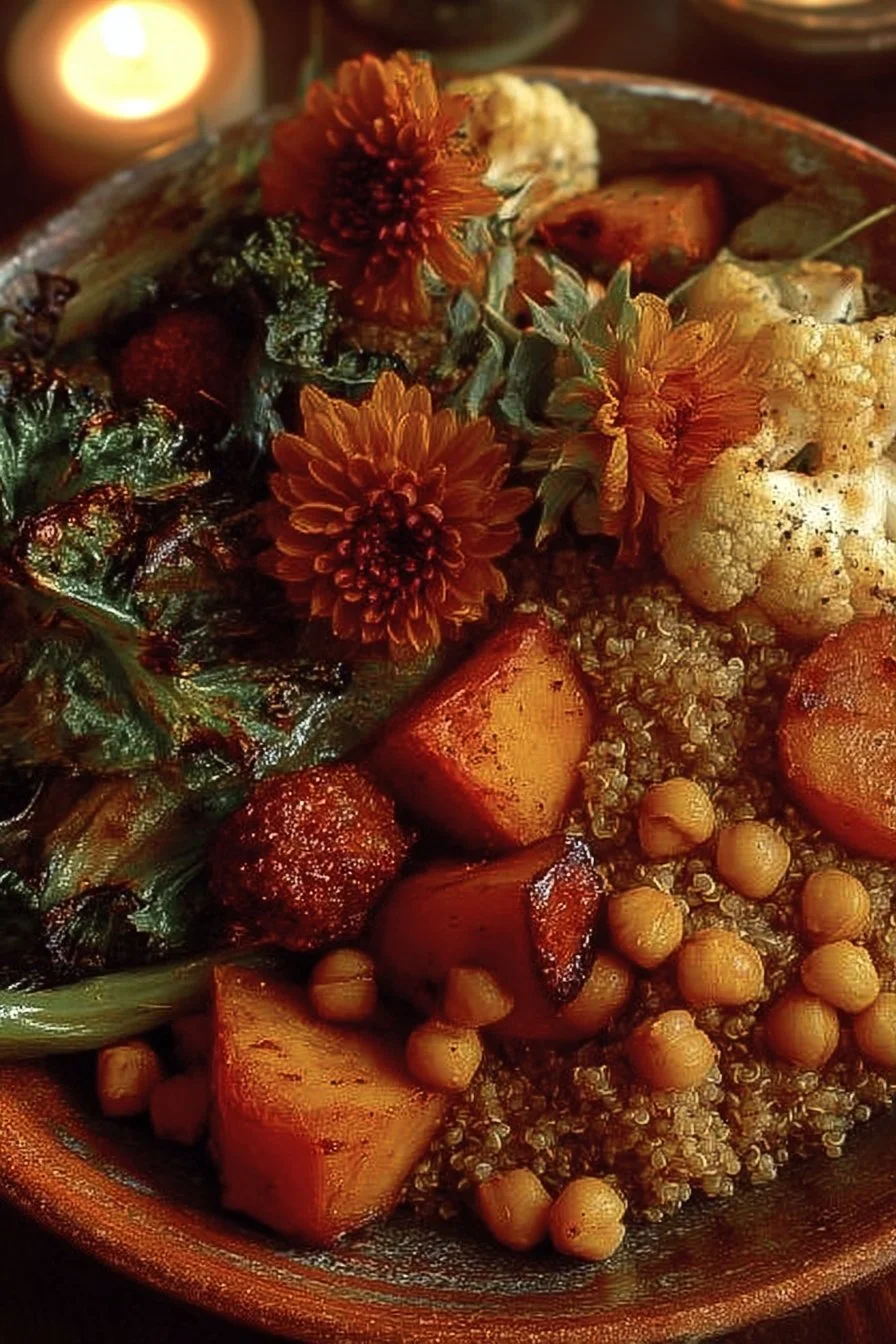
Bright, cozy, and rooted in seasonal produce, this Harvest Glow Bowl is all about texture and warmth—think caramelized sweet potatoes with a hint of spice, tender bell peppers and zucchini, chewy whole grains, and a hearty scoop of plant-based protein. The olive oil and anti-inflammatory spices (turmeric and ginger) bring a golden, aromatic lift while fresh herbs finish each bite with brightness. It’s an easy, comforting bowl that comes together with minimal fuss and makes a perfect weeknight dinner, meal-prep lunch, or a colorful addition to a casual weekend brunch—pair it with a crisp green salad for contrast or enjoy it solo for a nourishing one-bowl meal. If you’re looking for bright, wholesome bowls, this recipe shares the same crowd-pleasing friendliness as this fast, flavorful rice bowl.
Why You’ll Love This Harvest Glow Bowl
- Balanced textures: caramelized roasted vegetables, fluffy whole grains, and hearty plant protein create satisfying contrast.
- Simple and forgiving: roast, cook grains, toss — minimal hands-on time and easy swaps.
- Anti-inflammatory flavor: turmeric and ginger add warmth, color, and subtle health-forward notes.
- Versatile: works with chickpeas, lentils, quinoa, or brown rice depending on pantry staples.
- Meal-prep friendly: makes great leftovers and portions well for lunches.
- Comforting but light: cozy roasted flavors without being heavy or greasy.
- Seasonal and colorful: showcases late-summer and autumn vegetables beautifully.
- Herb-finished brightness: parsley or cilantro lifts the whole bowl for a fresh finish.
What Is Harvest Glow Bowl?
The Harvest Glow Bowl is a composed grain bowl built from three simple parts: roasted seasonal vegetables, a whole-grain base, and a plant-based protein. It’s flavored with olive oil, salt, pepper, and anti-inflammatory spices such as turmeric and ginger, then finished with fresh herbs. The cooking method is straightforward roasting for the vegetables and stovetop cooking for the grains—no complicated sauces required. On the palate you’ll find sweet caramelized edges, mellow roasted veggies, earthy grains, and a warm spice undertone from turmeric and ginger. People typically serve this as a weeknight dinner, a make-ahead lunch, or a light, vegetarian-friendly brunch option. The overall vibe is cozy, wholesome comfort—simple enough for a quick dinner but pretty enough to serve guests.
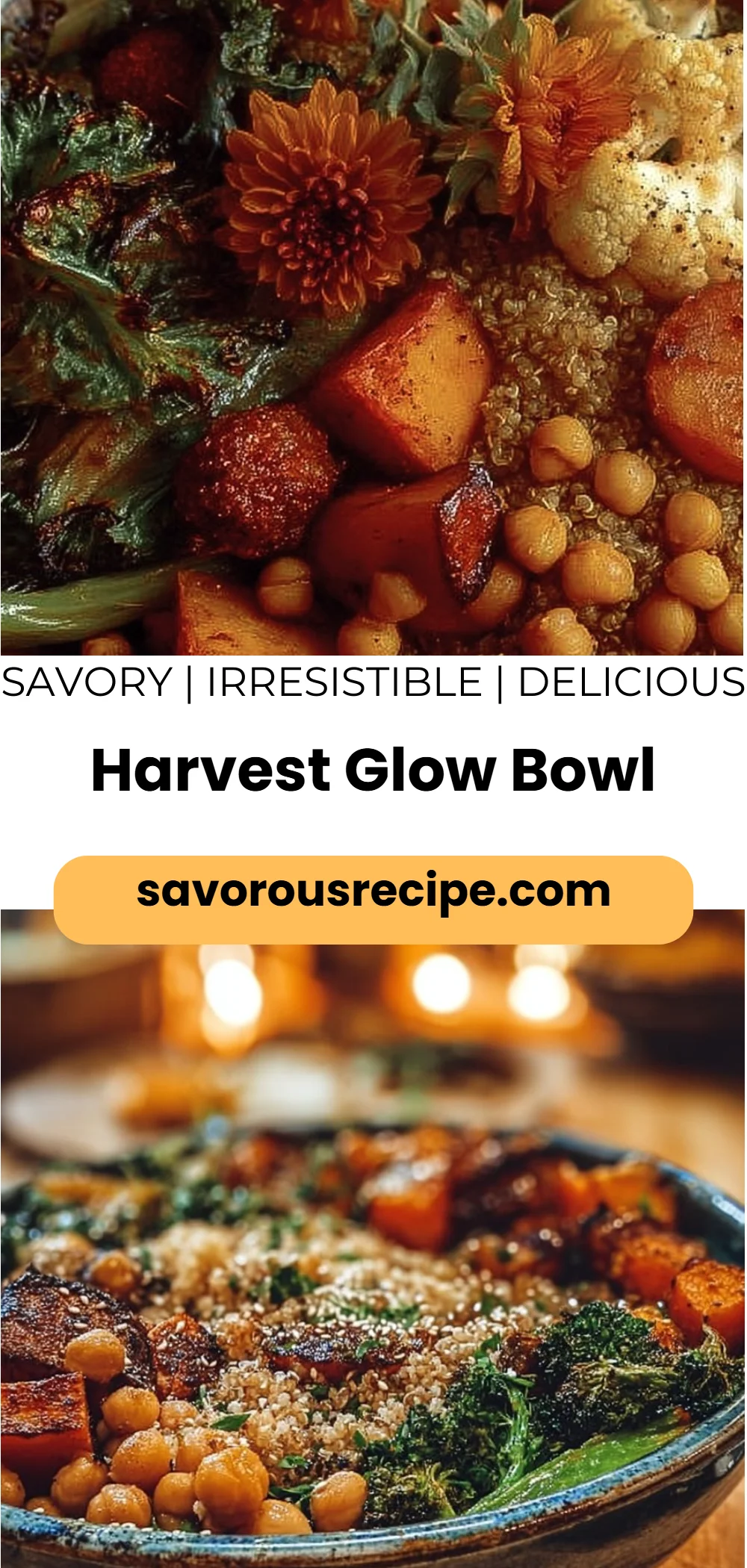
Ingredients for Harvest Glow Bowl
For the Base
- Whole grains (such as quinoa or brown rice), cooked according to package instructions
For the Roasted Vegetables
- Seasonal vegetables (such as sweet potatoes, bell peppers, and zucchini), chopped into bite-sized pieces
- Olive oil
- Anti-inflammatory spices (such as turmeric and ginger)
- Salt and pepper to taste
For the Protein & Garnish
- Plant-based protein (such as chickpeas or lentils), cooked
- Fresh herbs (such as parsley or cilantro) for garnish
Ingredient Notes (Substitutions, Healthy Swaps)
- Whole grains: If you prefer, use farro or barley if you’re not strictly gluten-free (note: farro and barley contain gluten). For a gluten-free option, stick with quinoa or certified gluten-free brown rice.
- Plant-based protein: Chickpeas are great for texture and roastability; lentils are softer and earthy. Both keep the bowl vegan and filling.
- Olive oil: Use light-tasting olive oil for a neutral roast, or extra-virgin for more flavor. For a lower-fat option, reduce the oil slightly and toss vegetables with a small amount of warm water and spices to keep them moist while roasting.
- Spices: Turmeric and ginger are the required anti-inflammatory spices—ground or fresh ginger both work. If using fresh ginger, mince finely and toss with the vegetables; if using ground turmeric, mix into the oil before coating the veggies.
- Salt and pepper: Adjust to taste. If watching sodium, reduce salt and rely on fresh herbs for finishing brightness.
- Herbs: Parsley is fresh and slightly peppery; cilantro adds citrusy brightness. Both are optional for garnish but recommended.
Step-by-Step Instructions
Follow these clear steps using only the provided directions.
Step 1 – Preheat the Oven
Preheat the oven to 400°F (200°C).
Visual cue: The oven should reach temperature before the vegetables go in so they roast evenly and develop color.
Step 2 – Chop and Season Vegetables
Chop the seasonal vegetables into bite-sized pieces and place them on a baking sheet. Drizzle with olive oil, and sprinkle with salt, pepper, and anti-inflammatory spices.
Visual cue: Vegetables should be in a single layer with a light, even sheen of oil and turmeric/ginger visible as flecks or a golden tint.
Pro cue: Don’t overcrowd the pan—give each piece space so they roast instead of steam.
Step 3 – Roast the Vegetables
Roast the vegetables in the oven for about 25–30 minutes, or until they are tender and slightly caramelized.
Visual cue: Look for golden-brown edges and caramelized surfaces on sweet potatoes and peppers.
Pro cue: Halfway through, shake the pan or flip pieces with a spatula to encourage even browning.
Step 4 – Prepare the Whole Grains
While the vegetables are roasting, prepare the whole grains according to package instructions.
Visual cue: Grains should be fluffy and separate—not mushy—so they hold up when tossed with roasted vegetables.
Pro cue: Fluff grains with a fork and let any excess steam escape before combining to avoid soggy grains.
Step 5 – Combine the Elements
In a large bowl, combine the cooked grains, roasted vegetables, and plant-based protein. Toss to combine.
Visual cue: You want an even distribution of grains, vegetables, and protein with visible herb flecks.
Pro cue: Warm the plant-based protein slightly if chilled so the whole bowl is served warm.
Step 6 – Serve and Garnish
Serve the bowl warm, garnished with fresh herbs.
Visual cue: Bright green parsley or cilantro sprinkled over the golden vegetables makes the dish pop.
Pro cue: Serve immediately while vegetables are still warm to maintain the contrast between warm roast and fresh herbs.
Pro Tips for Success
- Roast in a single layer: Overcrowding causes steaming and prevents caramelization.
- Cut vegetables uniformly: Aim for similar-sized pieces so everything finishes at the same time.
- Use the oven heat: 400°F is hot enough to caramelize without burning—watch the last 5 minutes to prevent over-browning.
- Season early: Toss vegetables with salt and spices before roasting to build layers of flavor.
- Texture balance: If using lentils, drain and rinse well; if using chickpeas, roast or warm them so they blend better with roasted vegetables.
- Grain doneness: Slightly undercook grains by a minute if you’ll reheat leftovers to avoid mushy texture later.
- Fresh herbs at the end: Add herbs right before serving to preserve their color and brightness.
- Leftover rescue: If the bowl gets soggy, re-crisp roasted vegetables in a hot skillet for a few minutes before serving.
Flavor Variations (OPTIONAL)
- Spicy version (OPTIONAL): Add a pinch of cayenne or a few shakes of red pepper flakes to the spice mix before roasting.
- Citrus bright (OPTIONAL): Squeeze a little lemon or lime juice over the finished bowl for a tangy lift (added at serving only).
- Earthy lentil swap (OPTIONAL): Use cooked green or brown lentils instead of chickpeas for a softer, more earthy note.
- Herb-forward (OPTIONAL): Double the fresh herbs and mix half into the grains for herbier bites throughout.
- Ginger-forward (OPTIONAL): Grate fresh ginger into the oil before tossing vegetables to boost that warm, spicy aroma.
- Grain switch (OPTIONAL): Swap quinoa for brown rice to change the texture and make the bowl nuttier.
Serving Suggestions
- Pair with a crisp green salad dressed simply with lemon juice and olive oil for a light contrast.
- Serve with warm whole-grain pita or crusty bread to scoop up any stray grains and juices.
- Make it a casual meal by offering bowls family-style, letting everyone add herbs as they like.
- For brunch, top with a runny egg (if not keeping strictly plant-based) for richness.
- An easy side: roasted beets or a quick slaw adds color and crunch alongside the bowl.
- Add a dollop of yogurt or a tahini drizzle (optional) if you want a creamy element—keep this optional to respect the ingredient list.
Also, if you enjoy hearty bowls, you might like the savory depth found in this garlic-butter inspired bowl for different flavor inspiration.
Make-Ahead, Storage & Reheating
- What to prepare ahead: Roast the vegetables and cook the grains up to 2–3 days in advance. Store separately for best texture.
- Refrigerator storage time: Store components in airtight containers for up to 3–4 days.
- Reheating methods:
- Oven: Reheat roasted vegetables at 350°F for 8–12 minutes to revive caramelization.
- Skillet: Warm vegetables and protein in a hot skillet with a tiny splash of oil to re-crisp edges.
- Microwave: Heat grains and veggies separately in 60–90 second increments, stirring between intervals, but expect softer texture.
- Texture changes after storage: Grains can absorb moisture and soften; reheating in a skillet or oven helps restore texture. Fresh herbs are best added after reheating.
Storage and Freezing Instructions
- Freezing: Freezing is not ideal for texture because roasted vegetables (especially zucchini and peppers) become softer and may release water when thawed. If you must freeze:
- Freeze roasted vegetables and cooked grains separately in airtight containers or freezer bags for up to 2 months.
- Thaw overnight in the refrigerator and re-crisp vegetables in a skillet or oven before serving.
- Recommended alternative: For best quality, refrigerate and consume within 3–4 days rather than freezing.
Nutrition Facts (Per Serving)
| Calories | Protein | Carbs | Fat | Fiber | Sodium |
|———|——–|——|—–|——|——-|
| 420 kcal | 14 g | 60 g | 12 g | 9 g | 420 mg |
Nutrition values are estimates and may vary depending on ingredients and portion sizes.
FAQ About Harvest Glow Bowl
Q: My vegetables aren’t caramelizing—what did I do wrong?
A: They may be overcrowded or under-oiled. Spread in a single layer, use enough oil to coat, and roast at 400°F.
Q: Can I use canned chickpeas?
A: Yes. Drain and rinse well; warm them briefly before combining for the best texture.
Q: How do I prevent mushy grains?
A: Follow package instructions closely and drain well. Fluff with a fork and let steam escape before tossing with veggies.
Q: Will this bowl reheat well?
A: Yes, but reheat in a skillet or oven to restore roasted textures; microwave reheating can make veggies softer.
Q: Can I make this nut-free or dairy-free?
A: The base recipe is already dairy-free and nut-free—no changes needed.
Q: How do I know when the sweet potatoes are done?
A: They should be tender when pierced with a fork and have golden-brown edges.
Notes
- Plating idea: Layer grains first, then artfully arrange roasted vegetables and protein on top for a restaurant-style bowl.
- Small flavor upgrade: Finish with a light drizzle of olive oil and a sprinkle of extra spices if needed after tasting.
- Season slowly: Taste before serving and adjust salt and pepper—roasting concentrates flavors and may need a final balance.
- Presentation tip: Add herbs just before serving to keep their color vivid and their aroma fresh.
- Portioning: This recipe scales well—double and roast veggies on two trays for larger gatherings.
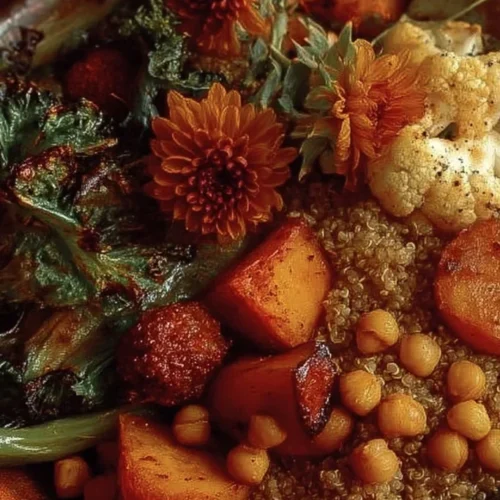
Harvest Glow Bowl
Ingredients
For the Base
- 2 Whole grains (e.g., quinoa or brown rice), cooked according to package instructions Use farro or barley if not gluten-free; otherwise, stick with quinoa or certified gluten-free brown rice.
For the Roasted Vegetables
- 2 cups Seasonal vegetables (e.g., sweet potatoes, bell peppers, zucchini), chopped into bite-sized pieces Chop uniformly for even cooking.
- 2 tablespoons Olive oil Use light-tasting for a neutral roast or extra-virgin for more flavor.
- 1 teaspoon Turmeric Add warmth and color; fresh ginger can also be used.
- 1 teaspoon Ginger Fresh or ground; minced fresh ginger can be tossed with vegetables.
- to taste Salt and pepper Adjust according to preference.
For the Protein & Garnish
- 1 cup Plant-based protein (e.g., chickpeas or lentils), cooked Use chickpeas for texture; lentils for a softer bite.
- 1/4 cup Fresh herbs (e.g., parsley or cilantro) for garnish Add right before serving.
Instructions
Preparation
- Preheat the oven to 400°F (200°C).
- Chop the seasonal vegetables into bite-sized pieces and place them on a baking sheet. Drizzle with olive oil, and sprinkle with salt, pepper, turmeric, and ginger.
- Roast the vegetables in the oven for about 25–30 minutes, or until they are tender and slightly caramelized.
- While the vegetables are roasting, prepare the whole grains according to package instructions.
Assembly
- In a large bowl, combine the cooked grains, roasted vegetables, and plant-based protein. Toss to combine.
- Serve the bowl warm, garnished with fresh herbs.