
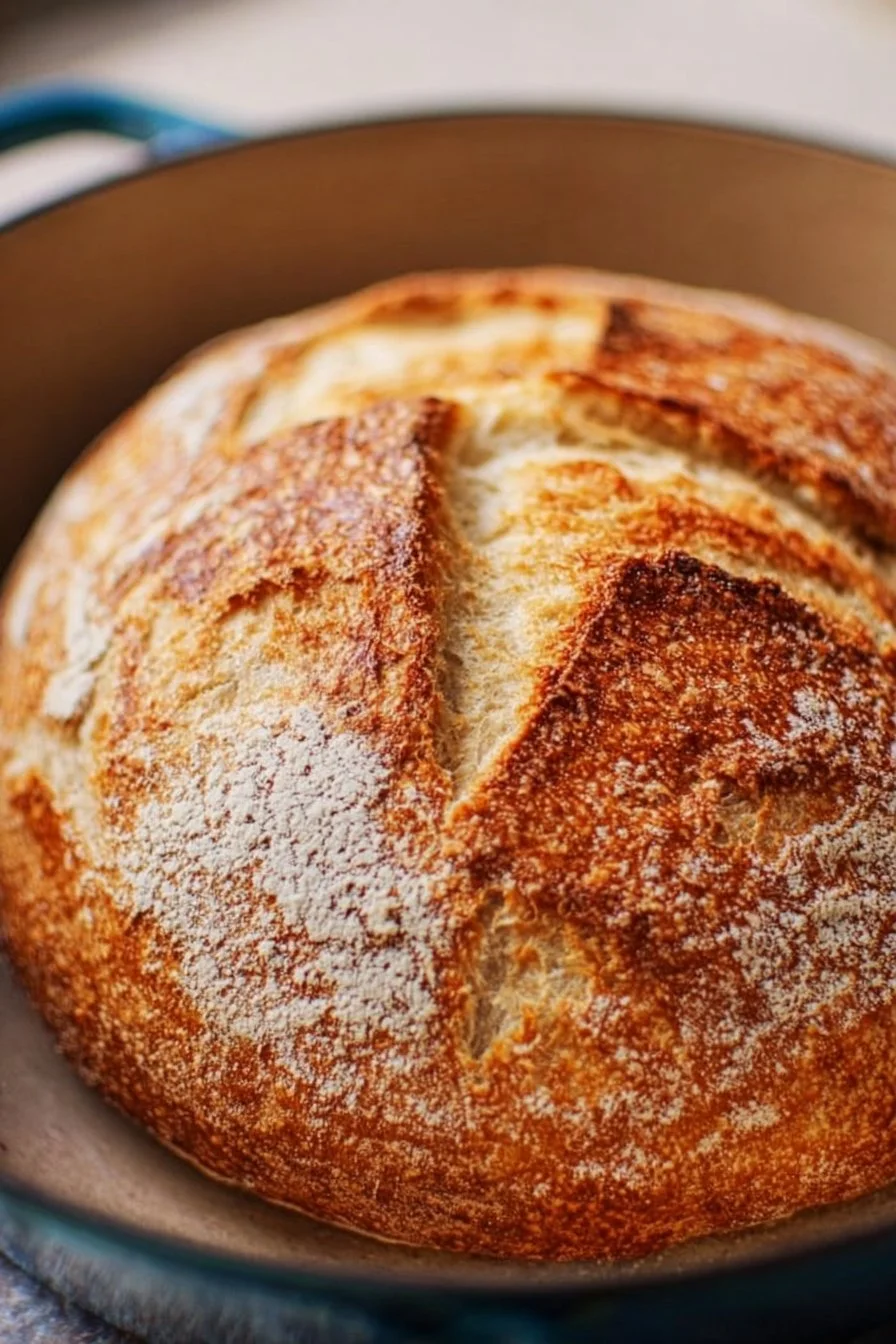
This no-fuss, crusty loaf comes together with almost zero hands-on time and gives you bakery-worthy results from a single bowl and a hot Dutch oven. A shaggy mix of flour, water, yeast, and salt ferments overnight into deep flavor and an open crumb — perfect for slathering with butter at breakfast or tearing into alongside a stew. If you love rustic, simple recipes that feel impressive, it’s also a great companion to a slow-simmered meal like a Dutch oven pot roast for a cozy dinner.
Why you’ll love this dish
No-knead Dutch oven bread is the recipe everyone turns to when they want maximum payoff for minimal effort. The long, slow rest develops flavor and structure without the muscle work of kneading. The hot pot traps steam so the crust blisters and cracks beautifully while the interior stays moist and open.
"I made this with a weeknight schedule — mixed it before bed and woke up to a light, airy loaf that tasted like a bakery buy." — home cook review
Reasons to try it:
- Practically hands-off: 10 minutes active work.
- Big flavor from time, not extra ingredients.
- Budget-friendly pantry staples.
- Great for beginners and experienced bakers alike.
- Makes a show-stopping centerpiece for soups, roasts, or cheese boards.
Step-by-step overview
This recipe follows five clear phases so you know what to expect:
- Mix: Whisk dry ingredients, stir in warm water into a shaggy dough (about 5 minutes).
- Bulk fermentation: Cover and let rest 12–18 hours at room temperature for flavor and rise.
- Preheat: Heat the Dutch oven (lid on) in a 450°F (232°C) oven for at least 30 minutes.
- Shape and rest: Turn the dough onto a floured surface, form a gentle round, rest 30 minutes.
- Bake: Bake covered 30 minutes, uncover and finish 15 minutes until deep golden. Cool 30–60 minutes before slicing.
What you’ll need
- 3 cups (about 375 g) all-purpose flour — strong AP works well.
- 1 1/2 teaspoons fine salt.
- 1/2 teaspoon instant yeast. (If using active dry yeast, dissolve in the warm water and let sit 5–10 minutes first.)
- 1 1/2 cups warm water (about 95–105°F / 35–40°C).
Optional: - Parchment paper for easy transfer and cleanup.
- Very large Dutch oven (6–7 quart) with lid—this size gives the loaf room to expand.
Substitutions/notes:
- Up to 25% of the flour can be whole wheat for more flavor; if using more, expect a denser crumb.
- Instant yeast works straight into the dry ingredients; active dry needs proofing in water.
- Hydration is intentionally high — the dough will be sticky and shaggy.
Step-by-step instructions
- In a large bowl, whisk together flour, salt, and instant yeast until evenly mixed.
- Pour in the warm water and stir with a wooden spoon or spatula until a shaggy, sticky dough forms. Stop as soon as it’s combined — don’t overmix.
- Cover the bowl tightly with plastic wrap or a reusable lid and let sit at room temperature for 12–18 hours. The dough should be bubbly and roughly doubled.
- Place your Dutch oven (lid on) in the oven and preheat to 450°F (232°C) for at least 30 minutes so the pot and lid are scorching hot.
- Turn the dough out onto a heavily floured surface. Gently shape it into a round using a bench scraper or floured hands — don’t press flat. Let it rest uncovered for 30 minutes to relax.
- Carefully remove the hot Dutch oven from the oven. If using parchment, transfer the dough seam-side down onto a square of parchment and lower into the pot. Otherwise, slide the dough directly into the hot vessel.
- Cover and bake for 30 minutes, then remove the lid and bake an additional 15 minutes until the crust is a deep golden brown and sounds hollow when tapped.
- Transfer the loaf to a wire rack and cool for at least 30–60 minutes before slicing — cooling completes the crumb set and makes slicing cleaner.
Best ways to enjoy it
Serve slices warm with butter and flaky salt, or use thick slices for hearty sandwiches. It shines alongside soups, salads, roasted vegetables, and braises. For a contrasting fried treat on a brunch board, pair a few slices with something different like our take on Indian fry bread to offer both crispy fried and rustic oven-baked breads.
Creative plating ideas:
- Tear into wedges and arrange around a fondue pot or a bowl of olive oil and balsamic.
- Hollow half the loaf and make a bread bowl for chili or creamy soup.
- Slice thick and toast for bruschetta with tomato, basil, and a drizzle of olive oil.
Storage and reheating tips
- Room temperature: Keep the loaf in a paper bag or wrapped loosely in a tea towel for up to 2 days to preserve crust crispness. Avoid airtight containers at room temp (they soften the crust).
- Refrigeration: Not recommended for bread storage — it speeds staling.
- Freezing: Slice the cooled loaf, wrap portions tightly in plastic and foil, and freeze up to 3 months. Toast or reheat slices directly from frozen.
- Reheating: Refresh slices in a 350°F (175°C) oven for 5–10 minutes, or toast. For a whole loaf, spritz with water and reheat at 350°F for 10–12 minutes to revive the crust.
Helpful cooking tips
- Use an oven thermometer to ensure an accurate 450°F — hotter ovens give better oven spring.
- Don’t be tempted to add more flour during shaping; a slightly sticky dough yields a more open crumb. Dust hands and surface lightly instead.
- If you want extra oven spring and a blistered crust, leave the lid on for the first 30 minutes exactly — that trapped steam is essential.
- Score or slash? This method places the loaf seam-side down; you can slash the top before baking for a decorative look, but it’s not required.
- If you don’t have a Dutch oven, bake on a preheated baking stone and create steam by placing a metal pan of hot water on the oven floor (results vary; pot method is more reliable).
- Let the bread cool before slicing. It continues to firm as it cools, and cutting too early gives a gummy crumb.
Creative twists
- Herbed crust: Fold in 1–2 tablespoons of chopped fresh rosemary, thyme, or oregano into the dough.
- Cheesy loaf: Add 3/4 to 1 cup grated cheddar or Parmesan folded gently in at the end of mixing.
- Seeded top: Brush the shaped dough with water and press in sesame, poppy, or mixed seeds before resting.
- Olive and garlic: Fold in 1/2 cup chopped olives and 1 tablespoon minced roasted garlic for a savory loaf.
- Sweet version: Fold in 1/2 cup raisins and 1 teaspoon cinnamon for a breakfast loaf.
- Dietary swaps: For gluten-free, a direct swap won’t work — use a tested gluten-free bread blend and follow a recipe designed for that flour’s hydration and binding needs.
Common questions
Q: Why let the dough rest 12–18 hours?
A: The long bulk ferment develops flavor and improves the dough’s structure without kneading. Cooler kitchens may need the full 18 hours; warmer rooms shorten the time.
Q: Can I use active dry yeast instead of instant?
A: Yes. Dissolve the active dry yeast in the warm water and wait 5–10 minutes until foamy before mixing into the dry ingredients.
Q: My dough is very sticky — is that normal?
A: Totally. This is a high-hydration dough. Use floured hands or a bench scraper to shape; adding a lot more flour will yield a denser loaf.
Q: What if I don’t have a Dutch oven?
A: You can use a deep cast-iron pot with a lid or mimic steam by baking on a preheated stone and adding a pan of boiling water to the oven. The Dutch oven method is easiest for consistent results.
Q: How do I get big open holes in the crumb?
A: Use minimal handling, high hydration, and a gentle shaping technique. Also make sure the dough had enough time to ferment and develop strength.
If you want any variations adapted to dietary needs (gluten-free, lower sodium) or step-by-step photos for each stage, I can add a printable card or timing chart to help you bake with confidence.
No-Knead Dutch Oven Bread
Ingredients
Main Ingredients
- 3 cups all-purpose flour Strong AP works well.
- 1 1/2 teaspoons fine salt
- 1/2 teaspoon instant yeast If using active dry yeast, dissolve in warm water and let sit for 5–10 minutes first.
- 1 1/2 cups warm water About 95–105°F / 35–40°C.
Optional Ingredients
- Parchment paper For easy transfer and cleanup.
- Very large Dutch oven (6–7 quart) with lid This size gives the loaf room to expand.
Instructions
Preparation
- In a large bowl, whisk together flour, salt, and instant yeast until evenly mixed.
- Pour in the warm water and stir with a wooden spoon or spatula until a shaggy, sticky dough forms. Stop as soon as it’s combined — don’t overmix.
- Cover the bowl tightly with plastic wrap or a reusable lid and let sit at room temperature for 12–18 hours. The dough should be bubbly and roughly doubled.
Preheat & Bake
- Place your Dutch oven (lid on) in the oven and preheat to 450°F (232°C) for at least 30 minutes so the pot and lid are scorching hot.
- Turn the dough out onto a heavily floured surface. Gently shape it into a round using a bench scraper or floured hands — don’t press flat. Let it rest uncovered for 30 minutes to relax.
- Carefully remove the hot Dutch oven from the oven. If using parchment, transfer the dough seam-side down onto a square of parchment and lower into the pot. Otherwise, slide the dough directly into the hot vessel.
- Cover and bake for 30 minutes, then remove the lid and bake an additional 15 minutes until the crust is a deep golden brown and sounds hollow when tapped.
- Transfer the loaf to a wire rack and cool for at least 30–60 minutes before slicing — cooling completes the crumb set and makes slicing cleaner.