
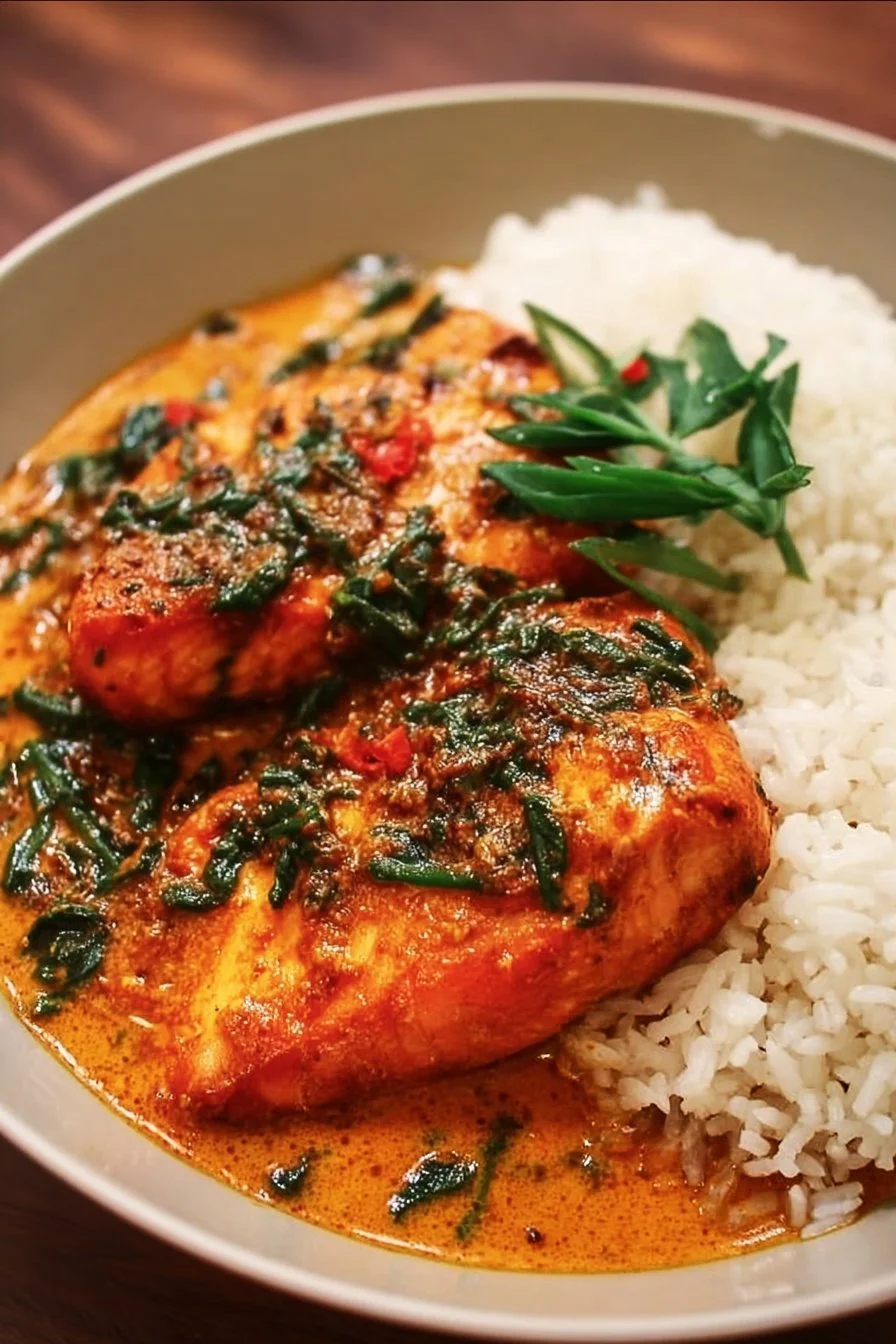
Salmon in a fragrant Thai-style coconut curry is one of those weeknight recipes that looks restaurant-worthy but comes together with pantry staples and minimal fuss. This version bakes the fish gently in a red curry–spiked coconut sauce, then tops it with quickly sautéed peppers and spinach for color and crunch. If you enjoy bold salmon flavors in different formats, you might also like the bright contrast of BBQ Salmon Tacos with Mango Slaw for another quick salmon meal idea.
Why you’ll love this dish
This salmon curry delivers big flavor with very little hands-on time. The coconut milk and Thai red curry paste create a rich, slightly spicy sauce that keeps the salmon moist while baking. It’s fast enough for a weeknight but elegant enough for guests. It’s also flexible—swap the vegetables or serve the curry over noodles instead of rice.
“Simple ingredients, impressive flavor — this curry comes together in under 30 minutes and tastes like you ordered takeout.” — a satisfied cook
Practical reasons to try it:
- Quick: around 25–30 minutes from start to finish.
- Minimal cleanup: everything bakes in one dish.
- Crowd-pleasing: balanced heat, citrus, and creaminess suit many palates.
- Healthy: salmon provides omega-3s and protein; add veg for fiber.
The cooking process explained
You’ll start by making a smooth curry sauce with coconut milk, red curry paste, fish sauce, lime juice, and a touch of sugar. The salmon fillets sit in that sauce and bake gently, absorbing flavor while staying tender. Meanwhile, sauté the bell peppers until they soften, then wilt the spinach. Finish by plating the salmon over rice and spooning the pan sauce and vegetables on top.
What you’ll need
- 4 salmon fillets (about 6 oz each), skin on or off
- 1 (13.5–14 oz) can coconut milk (use light or full-fat depending on richness desired)
- 2 tablespoons Thai red curry paste (adjust for heat)
- 1 tablespoon fish sauce
- 1 tablespoon lime juice (fresh is best)
- 1 teaspoon sugar (balances acidity)
- 1 cup bell peppers, sliced (mix colors if you like)
- 1 cup fresh spinach
- Fresh cilantro for garnish
- Cooked rice for serving
Notes and substitutions: - Coconut cream can replace coconut milk for a thicker sauce. If using canned cream, thin with 2–4 tablespoons water.
- For milder heat, start with 1 tablespoon curry paste and add more to taste.
- Firm tofu or shrimp can replace salmon for dietary swaps.
Step-by-step instructions
- Preheat your oven to 400°F (200°C). Lightly oil a baking dish or line it with parchment for easy cleanup. Pat the salmon fillets dry with paper towels and season lightly with salt and pepper.
- In a medium bowl, whisk together the coconut milk, Thai red curry paste, fish sauce, lime juice, and sugar until smooth.
- Place the salmon fillets in the baking dish and pour the curry mixture over them, making sure each piece is partially submerged in sauce.
- Bake for 15–20 minutes, depending on thickness. The edges should flake easily and the internal temperature reaches at least 125–145°F depending on your doneness preference (FDA recommends 145°F).
- While the salmon bakes, heat a skillet over medium heat with a little oil. Sauté the sliced bell peppers until they begin to soften, about 4–5 minutes.
- Add the spinach to the skillet and stir until just wilted, 1–2 minutes. Season the vegetables with a pinch of salt.
- Serve the salmon over cooked rice. Spoon extra curry sauce and the sautéed vegetables over the fillets. Garnish with fresh cilantro and an optional lime wedge.
How to plate and pair
Serve each salmon fillet on a bed of jasmine or basmati rice to soak up the sauce. For texture contrast, garnish with fresh cilantro, thinly sliced scallions, or toasted peanuts. Pair with:
- A crisp cucumber salad to cut the richness.
- Lightly steamed green beans or broccolini.
- A dry Riesling or a citrusy Sauvignon Blanc for wine pairing.
Storage and reheating tips
- Refrigeration: Cool leftovers within 2 hours and store in an airtight container. Keep refrigerated for up to 3–4 days.
- Freezing: Transfer to a freezer-safe container and freeze for up to 2 months for best quality. Note: texture of the fish can change after freezing.
- Reheating: Reheat gently in a 275°F (135°C) oven for 10–15 minutes covered, or warm on the stovetop over low heat. Microwaving works in a pinch—heat in short bursts to avoid overcooking. If the sauce separates a bit after reheating, stir in a splash of coconut milk to bring it back together.
Helpful cooking tips
- Bring salmon to room temperature for 10–15 minutes before baking to promote even cooking.
- Don’t overbake: check at the 12–15 minute mark if fillets are thin. Salmon continues to cook slightly after you remove it from the oven.
- If your coconut milk looks separated, whisk it thoroughly before mixing with curry paste.
- Taste the curry sauce before baking. You can adjust with more lime for brightness, sugar for balance, or a dash of soy if you want more savory depth.
- Use a thermometer: 125–130°F yields a medium, moist fillet; 145°F is fully cooked per guidelines.
Recipe variations
- Make it creamy and green: swap red curry paste for green curry paste and add Thai basil.
- Vegetarian option: use thick tofu steaks baked in the curry sauce; reduce baking time slightly.
- Add pineapple or mango for a sweet-tart tropical twist.
- For a crispy finish: sear the salmon skin-side down in a hot skillet for 2–3 minutes before baking.
For an alternative texture pairing, consider serving the curry with a crisp rice base like the technique shown for crispy rice salmon to add crunch.
Pro chef tips
- Use a light hand with fish sauce; it’s salty and potent. Start with the recipe amount and adjust after tasting.
- If you want a thicker pan sauce at the end, remove the salmon after baking and simmer the sauce briefly on the stovetop to reduce.
- To prevent the spinach from turning mushy, add it to the skillet just until it wilts—overcooking loses color and texture.
Common questions
Q: Can I use frozen salmon straight from the freezer?
A: It’s best to thaw salmon in the fridge overnight for even cooking. If you must cook from frozen, add 5–8 minutes to the bake time and check doneness carefully.
Q: Is this curry spicy?
A: Heat depends on your curry paste. Thai red curry paste has medium heat; reduce to 1 tablespoon for mild or add more to taste. Coconut milk helps mellow the spice.
Q: Can I make this ahead for meal prep?
A: Yes. Store components separately if possible (rice, salmon, vegetables). Reheat gently to avoid drying the fish. For best texture, eat within 3–4 days.
Q: Is the fish safe if cooked to lower temperatures?
A: The USDA recommends cooking fish to an internal temperature of 145°F. Many chefs prefer salmon at 125–130°F for better texture; if you choose a lower temperature, be aware of the small increased food-safety risk, especially for pregnant people, young children, or immunocompromised individuals.
Q: Can I thicken the sauce without changing flavor?
A: Simmer the sauce briefly after removing the salmon to reduce it, or stir in a slurry of 1 teaspoon cornstarch mixed with 1 tablespoon water and heat until it thickens.
If you want a printable recipe card or variations tailored to dietary needs, tell me which swap you prefer (gluten-free, dairy-free, vegetarian) and I’ll adapt the steps and measurements.
Salmon in a Fragrant Thai-Style Coconut Curry
Ingredients
Main Ingredients
- 4 pieces salmon fillets (about 6 oz each), skin on or off
- 1 can coconut milk (13.5–14 oz) Use light or full-fat depending on richness desired
- 2 tablespoons Thai red curry paste Adjust for heat
- 1 tablespoon fish sauce Use sparingly because it’s salty
- 1 tablespoon lime juice Fresh is best
- 1 teaspoon sugar Balances acidity
- 1 cup bell peppers, sliced Mix colors if you like
- 1 cup fresh spinach
- to taste fresh cilantro for garnish
- to serve cooked rice Jasmine or basmati recommended
Instructions
Preparation
- Preheat your oven to 400°F (200°C). Lightly oil a baking dish or line it with parchment for easy cleanup.
- Pat the salmon fillets dry with paper towels and season lightly with salt and pepper.
- In a medium bowl, whisk together the coconut milk, Thai red curry paste, fish sauce, lime juice, and sugar until smooth.
Baking
- Place the salmon fillets in the baking dish and pour the curry mixture over them, making sure each piece is partially submerged in sauce.
- Bake for 15–20 minutes, depending on thickness. The edges should flake easily and the internal temperature should reach at least 125–145°F.
Sautéing Vegetables
- While the salmon bakes, heat a skillet over medium heat with a little oil.
- Sauté the sliced bell peppers until they begin to soften, about 4–5 minutes.
- Add the spinach to the skillet and stir until just wilted, 1–2 minutes. Season the vegetables with a pinch of salt.
Serving
- Serve the salmon over cooked rice. Spoon extra curry sauce and the sautéed vegetables over the fillets.
- Garnish with fresh cilantro and an optional lime wedge.