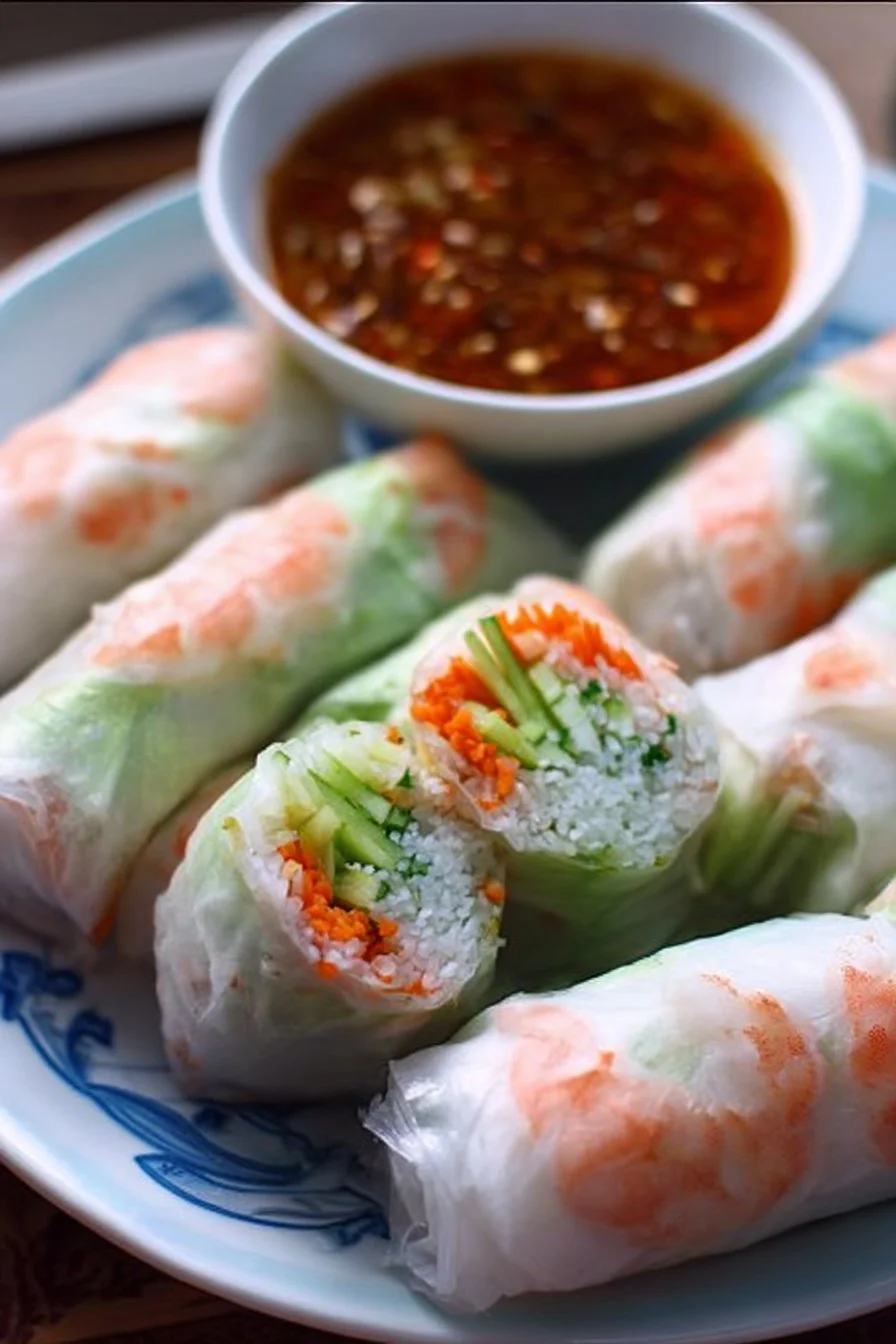
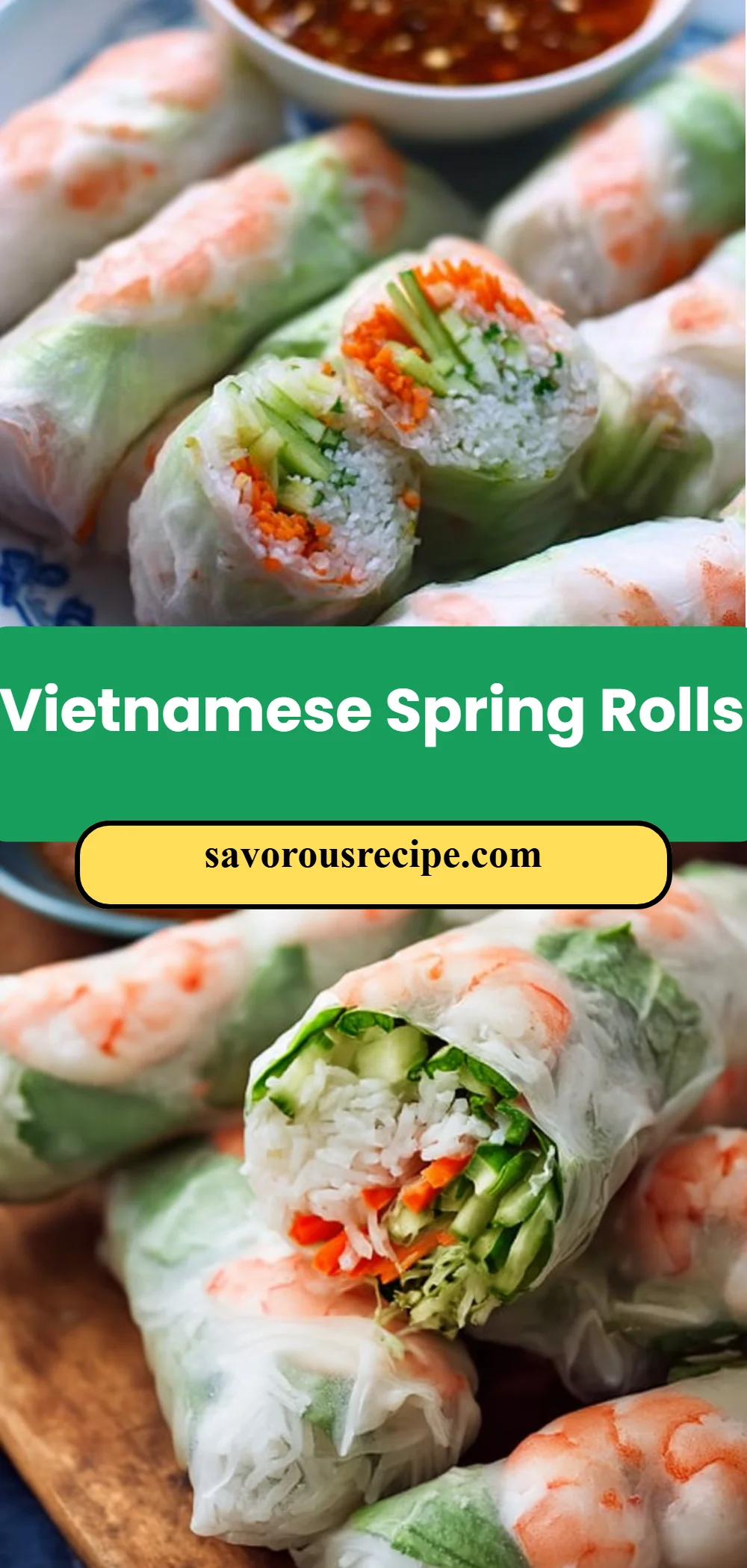
Bright, fresh, and endlessly satisfying, Vietnamese spring rolls are a celebration of crisp textures and bright herbaceous flavors wrapped in delicate rice paper. Each bite gives you a tender ribbon of rice vermicelli, the snap of julienned vegetables, fragrant mint and cilantro, and a savory center of cooked shrimp or tofu—balanced by a rich peanut or sweet hoisin dipping sauce. They’re surprisingly simple to assemble, totally customizable, and perfect for a light lunch, a party appetizer, or a make-ahead picnic. If you’re curious about a crispy take, try a built-in variation like crispy air fryer spring rolls for a different texture that still honors the filling.
Why You’ll Love This Vietnamese Spring Rolls
- Bright, fresh flavors from herbs and raw vegetables that feel light but satisfying.
- Contrasting textures: tender vermicelli and shrimp/tofu against crisp veggies and soft rice paper.
- Ready in about 30 minutes when ingredients are prepped—great for quick dinners or entertaining.
- Naturally gluten-free (when using gluten-free dipping sauces) and easy to make vegetarian.
- Highly customizable: swap proteins, herbs, or omit noodles for a lower-carb option.
- No frying required—this is a refreshing, healthy alternative to fried appetizers.
- Easy to scale up for a crowd: make a DIY rolling station and let guests assemble their own rolls.
- Fun to plate and impressive to serve—perfect for summer meals or light gatherings.
What Is Vietnamese Spring Rolls?
Vietnamese spring rolls (gỏi cuốn) are fresh, cold rolls made by wrapping assorted fillings in translucent rice paper. Unlike fried egg rolls, these are not deep-fried; the rice paper is briefly softened in warm water and then filled, folded, and rolled. The taste profile is a bright mix of fresh herbs, crisp vegetables, and the mild, slightly sweet flavor of rice vermicelli, balanced by the savory-sweet dip—typically a peanut sauce or hoisin-based dip.
People serve these rolls as appetizers, light lunches, picnic food, or part of a family-style meal. They have a clean, refreshing vibe—great for hot weather or when you want something light but flavorful. Because they travel well (if kept chilled and separate from sauces), they’re also a favorite for potlucks and packed lunches.
Ingredients for Vietnamese Spring Rolls
For the Base
- Rice paper wrappers
For the Filling
- Cooked shrimp or tofu
- Fresh vegetables: lettuce, carrots, cucumber, bell peppers
- Fresh herbs: mint, cilantro, basil
- Rice vermicelli noodles
For Serving
- Peanut sauce or hoisin sauce for dipping
Ingredient Notes (Substitutions, Healthy Swaps)
- Shrimp or tofu: The recipe already provides a simple protein swap—use cooked shrimp for a traditional touch or firm tofu for a vegetarian option.
- Rice paper wrappers: These are naturally gluten-free. If you need a sturdier roll, look for slightly thicker rice papers, but the standard kind works best for the soft, delicate finish.
- Fresh vegetables: Any crisp, raw vegetables you like will work within the same texture family—stick to crunchy, non-mushy items for contrast.
- Herbs: If you don’t love cilantro, double up on basil and mint for the same bright, herbal lift.
- Rice vermicelli noodles: Omit for a lower-carb or lighter roll—these are optional and the rolls still work beautifully without them.
- Dipping sauces: The recipe lists peanut sauce and hoisin sauce. Both are great; peanut sauce adds richness while hoisin keeps things sweeter and lighter. If you prefer a protein-forward pairing, try using the filling ideas in a chicken spring rolls recipe for inspiration on different protein preparations.
Step-by-Step Instructions
Step 1 – Cook and prepare the fillings
- Cook the shrimp or tofu and let cool. For shrimp, poach or steam until opaque; for tofu, pan-sear or bake until it has a little color. Boil the rice vermicelli according to package directions, drain, and rinse with cold water. Chop the lettuce, julienne the carrots, cucumber, and bell peppers, and pick the herbs from their stems.
Visual cue: Ingredients should be cool, dry, and neatly sliced—no oversized chunks.
Pro cue: Dry the vegetables in a salad spinner or pat with paper towels so excess moisture doesn’t make the rice paper soggy.
Step 2 – Soften the rice paper wrapper
2. Fill a shallow bowl or pie plate with warm water. Dip one rice paper wrapper in the water for about 10–15 seconds until it becomes soft and pliable. Lay it immediately on a clean, damp towel or a non-stick surface.
Visual cue: The wrapper will go from opaque to translucent and feel soft but still slightly firm—don’t over-soak.
Pro cue: If the wrapper feels too sticky, briefly rest it on a damp towel to cool; over-soaking causes tearing.
Step 3 – Layer the filling
3. Place a small amount of rice vermicelli in the center of the wrapper, then arrange a few pieces of shrimp or tofu, a small pile of shredded lettuce, carrot, cucumber, bell pepper, and a few leaves of mint, cilantro, and basil. Keep the filling compact and centered.
Visual cue: The fillings should form a compact log in the bottom third of the wrapper, not spread edge-to-edge.
Pro cue: Use the bottom third of the wrapper so you can fold up and roll tightly without stuffing the roll.
Step 4 – Fold and roll
4. Fold the left and right sides of the wrapper over the filling, then lift the bottom edge up over the filling and roll tightly toward the top to seal. Keep tension as you roll so the spring roll stays compact.
Visual cue: You should end up with a tidy cylinder, seam-side down. If there are gaps, the roll wasn’t tight enough.
Pro cue: A light dab of water on the far edge of the wrapper helps seal the roll securely.
Step 5 – Repeat
5. Repeat with the remaining wrappers and filling until everything is used. Place finished rolls seam-side down on a plate lined with a damp towel to prevent sticking.
Visual cue: Rolls should look uniform and slightly glossy from the rice paper.
Pro cue: Use a shallow tray with a damp towel between layers if stacking for a crowd—don’t pile directly or they’ll stick.
Step 6 – Serve
6. Cut rolls in half on the diagonal if desired and serve alongside peanut sauce or hoisin sauce for dipping.
Visual cue: The cross-section should show neat layers of vermicelli, veggies, herbs, and protein.
Pro cue: Offer small dipping bowls so guests can customize their sauce amounts and keep rolls from getting soggy.
Pro Tips for Success
- Prep everything before you dip: Have all fillings sliced and within arm’s reach so the rice paper doesn’t over-soak.
- Keep a damp towel nearby for placing finished rolls to prevent sticking and drying.
- Don’t overfill: Too much filling makes rolling difficult and increases the chance of tearing.
- Cut rolls with a sharp, wet knife for clean halves; wipe the knife between cuts to avoid drag.
- Use firm tofu and pat dry well for the best texture and to prevent excess moisture.
- If a wrinkle or small tear appears, patch it with a tiny piece of soaked rice paper pressed gently over the hole.
- Serve sauces on the side—sauces applied too early will make the rice paper soggy.
- For a neater presentation, tuck herbs and bright vegetables toward the outside so they show through the wrapper.
Flavor Variations (Optional)
- Vegetarian-forward (optional): Use tofu as the main protein and double up on mint and basil for a herb-forward bite.
- Noodle-free (optional): Omit rice vermicelli for a lighter, lower-carb version—still satisfying and colorful.
- Herb-forward (optional): Add extra mint/cilantro/basil for a punchier, aromatic roll without changing other ingredients.
- Vegetable-heavy (optional): Increase the ratio of bell pepper and cucumber for more crunch and color.
- Saucy swap (optional): Serve with hoisin for a sweeter finish or peanut sauce for a richer, creamier dip.
Serving Suggestions
- Serve as an appetizer at parties with small dipping bowls of both peanut and hoisin sauce.
- Build a rolling station for guests with prepped fillings and let everyone assemble their own rolls.
- Pair with a light soup or salad for a complete, summery lunch.
- Offer as part of a Vietnamese-inspired spread with steamed rice and fresh greens for dinner.
- Plate 2–3 halves per person on a long platter garnished with extra herbs for an elegant appetizer.
- Pack whole rolls in a chilled lunch box with sauce in a leakproof container for a healthy midday meal.
Make-Ahead, Storage & Reheating
- Make-ahead prep: You can prepare and store all fillings (cooked shrimp/tofu, sliced vegetables, herbs, and cooked vermicelli) up to 24 hours in the refrigerator, separately. Keep herbs wrapped in damp paper towel inside a sealed container to stay fresh.
- Assembled storage time: Assembled spring rolls are best eaten the day they’re made. If necessary, store wrapped tightly in plastic wrap or in an airtight container lined with a damp paper towel in the fridge for up to 24 hours.
- Reheating: These fresh rolls are not meant to be reheated. If you must warm a component (like tofu), reheat it separately and reassemble the rolls to keep the rice paper texture intact.
- Texture changes: Note that rice paper firms and becomes less delicate after refrigeration; freshly assembled rolls have the best texture.
Storage and Freezing Instructions
- Freezing assembled rolls is not recommended because rice paper becomes mushy and loses its delicate texture when thawed.
- If you want to freeze components, freeze cooked shrimp or tofu separately (wrapped airtight) and thaw before assembling fresh rolls. Vegetables and herbs do not freeze well for fresh rolls—use them fresh for the best texture and flavor.
- For long-term storage, freeze cooked proteins and store dried vermicelli and rice papers in a cool, dry place.
Nutrition Facts (Per Serving)
| Calories | Protein | Carbs | Fat | Fiber | Sodium |
|———|——–|——|—–|——|——-|
| 300 kcal | 15 g | 35 g | 12 g | 4 g | 400 mg |
Nutrition values are estimates and may vary depending on ingredients and portion sizes.
FAQ About Vietnamese Spring Rolls
Q: Why did my rice paper tear when I tried to roll?
A: Most tears happen from over-soaking or overfilling. Soak only until pliable (10–15 seconds) and keep fillings compact.
Q: How long can I store prepped fillings?
A: Store cooked proteins, noodles, and chopped vegetables separately in the fridge for up to 24 hours for best freshness.
Q: Can I make these vegan?
A: Yes—use tofu as the protein and ensure your dipping sauce is vegan-friendly (peanut sauce typically is; check hoisin for additives).
Q: What if my rolls are soggy after refrigerating?
A: Sogginess occurs when rolls absorb moisture. Assemble just before serving, or store fillings separately and roll fresh.
Q: Can I use leafy greens other than lettuce?
A: Yes—use mild greens like butter lettuce or young spinach leaves for a tender, not bitter, base.
Q: How do I keep the herbs from overpowering the roll?
A: Use small sprigs or tear larger herb leaves to distribute their flavor evenly without overwhelming other components.
Notes
- Presentation tip: Arrange rolls with the cut side up to show colorful cross-sections and garnish with extra herbs.
- Flavor upgrade: Serve with both peanut and hoisin so guests can try contrasting flavors.
- Seasoning adjustment: Taste cooked tofu and season lightly before assembling if it seems bland; shrimp is often salty enough without extra seasoning.
- Plate with variety: Offer a small bowl of extra herbs and sliced vegetables so diners can customize texture and flavor.
- Keep it tidy: Use a damp towel as your work surface to prevent sticking and make rolling smoother.
Vietnamese Spring Rolls
Ingredients
For the Base
- 8 pieces Rice paper wrappers Thinner rice paper works best for a delicate finish.
For the Filling
- 8 oz Cooked shrimp or firm tofu Use cooked shrimp for traditional rolls or firm tofu for a vegetarian option.
- 1 cup Fresh vegetables: lettuce, carrots, cucumber, bell peppers Choose crunchy, non-mushy vegetables for texture.
- 1 cup Fresh herbs: mint, cilantro, basil Adjust herb quantities as desired.
- 3 oz Rice vermicelli noodles Optional; omit for a lower-carb version.
For Serving
- 1 cup Peanut sauce or hoisin sauce for dipping Both sauces provide great flavor; choose based on preference.
Instructions
Preparation
- Cook the shrimp or tofu until done (shrimp until opaque; tofu until slightly golden).
- Boil the rice vermicelli noodles according to package directions, then drain and rinse with cold water.
- Chop and prepare the fresh vegetables and herbs, ensuring they are cool and dry.
Assembling the Rolls
- Soften a rice paper wrapper in warm water for 10-15 seconds until pliable.
- Layer the filling ingredients in the center of the wrapper.
- Fold the sides over the filling and roll tightly to seal the spring roll.
- Repeat the process until all ingredients are used, placing finished rolls seam-side down on a damp towel.
Serving
- Cut rolls in half diagonally if desired and serve with dipping sauces.