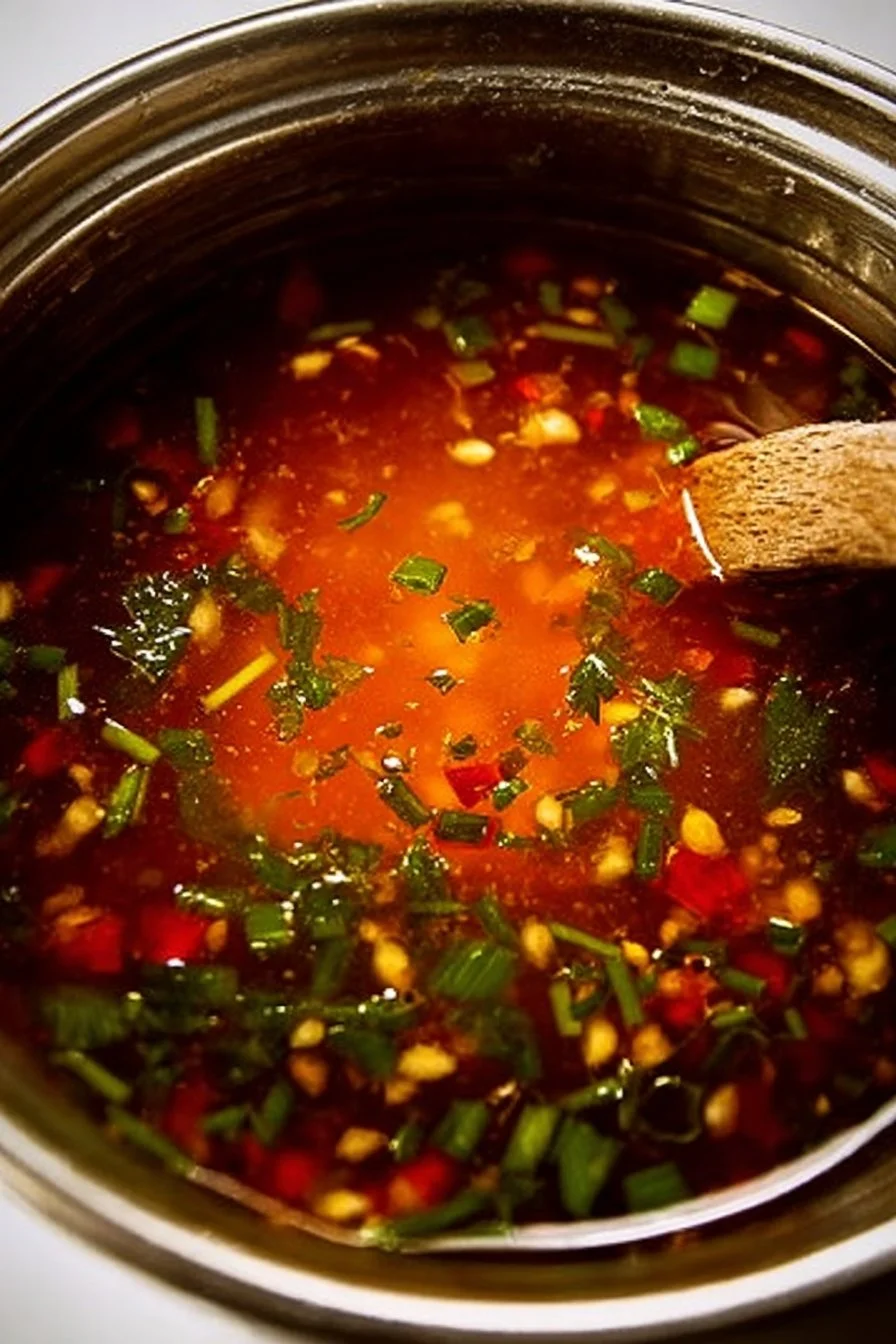
This Homemade Spring Roll Sauce is a silky, tangy, and slightly sweet dip that makes every bite of a fresh roll sing. Bright rice vinegar cuts through the salty depth of soy sauce, while honey (or sugar) brings a glossy sweetness and sesame oil adds that toasty, nutty whisper. Fresh minced garlic and grated ginger give it a lively, aromatic pop; a pinch of red pepper flakes wakes up the palate if you like heat. It’s fast to whisk together, fridge-friendly, and perfect for dunking crisp vegetables, shrimp, or tofu—try it as a finishing drizzle for a rice bowl. For more ideas on how to pair this sauce with rolls and other dips, check out best spring roll recipes with dipping sauces.
Why You’ll Love This Homemade Spring Roll Sauce
- Balanced flavor: salty, sweet, tangy, and aromatic in one simple mix.
- Ready in minutes: no cooking required—just whisk and serve.
- Low-ingredient magic: uses pantry staples you likely already have.
- Versatile: pairs with fresh spring rolls, summer rolls, grilled meats, and salads.
- Flexible heat level: add red pepper flakes to taste for a gentle kick.
- Crowd-pleasing: mild enough for kids, nuanced enough for adventurous eaters.
- Make-ahead friendly: flavors meld in the fridge, so it often tastes even better the next day.
- Clean, glossy texture: a perfect coating sauce for dipping without being too syrupy.
What Is Homemade Spring Roll Sauce?
This is a simple Asian-inspired dipping sauce designed to accompany fresh, chilled spring rolls (also called summer rolls). It tastes bright and salty from soy sauce, tangy from rice vinegar, and gently sweet from honey or sugar, rounded by sesame oil’s toasted undertone and aromatic fresh garlic and ginger. No cooking method is needed—everything is whisked together in a bowl—so it’s a cold sauce that’s perfect for warm-weather meals, light weeknight dinners, or as part of an appetizer spread. The overall vibe is casual and comforting: it elevates simple ingredients and turns a humble roll into something special.
Ingredients for Homemade Spring Roll Sauce
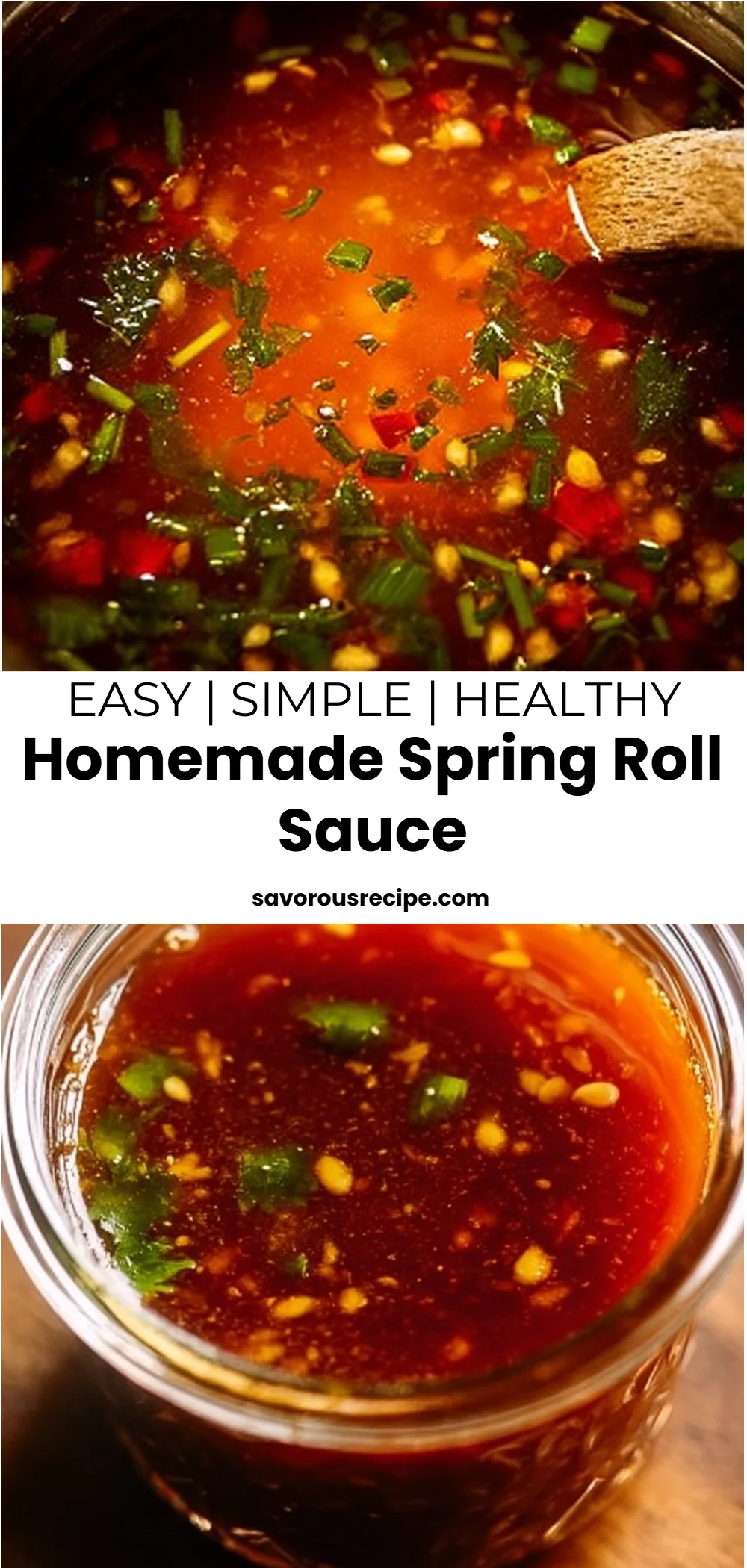
For the Sauce
- 1/4 cup soy sauce
- 2 tablespoons rice vinegar
- 2 tablespoons honey or sugar
- 1 teaspoon sesame oil
- 1 garlic clove, minced
- 1 teaspoon grated ginger
Optional for heat
- Red pepper flakes (optional, to taste)
For Serving (Optional)
- Chopped fresh cilantro (for garnish, optional)
Ingredient Notes (Substitutions, Healthy Swaps)
- Soy sauce: Use low-sodium soy sauce if you’re watching salt. For a gluten-free option, substitute with gluten-free tamari (note that this slightly changes the flavor profile but keeps the essence of the sauce).
- Rice vinegar: Mild and slightly sweet—do not substitute with white vinegar (it’s too sharp). Apple cider vinegar can be used in a pinch but will shift the flavor.
- Honey or sugar: Honey gives a rounder mouthfeel; granulated sugar works fine and makes the sauce vegan if you choose sugar (ensure it’s vegan-certified if that matters). For a lower-calorie swap, a small amount of liquid sweetener like erythritol syrup can work—start with less and adjust.
- Sesame oil: A little goes a long way. If you don’t have it, omit rather than replacing with another oil; the sesame flavor is distinctive.
- Garlic and ginger: Fresh is recommended for brightness. If you must, a small pinch (about 1/8 teaspoon) of garlic powder or 1/4 teaspoon of ground ginger can substitute, but fresh is best.
- Red pepper flakes: Optional for spice—use to taste.
Step-by-Step Instructions
Step 1 – Measure and prep your aromatics
Mince the garlic clove and grate the fresh ginger so they’re ready to combine. This releases their oils and ensures even distribution.
Visual cue: You should have small, moist pieces of garlic and a fluffy pile of grated ginger.Step 2 – Combine the liquid ingredients
In a small bowl, pour in 1/4 cup soy sauce, 2 tablespoons rice vinegar, and 2 tablespoons honey (or sugar). Whisk gently until the honey or sugar dissolves into the liquids.
Pro cue: If using sugar, whisk a little longer or let the mixture sit for 1 minute and whisk again to fully dissolve the sugar.Step 3 – Add sesame oil
Stir in 1 teaspoon sesame oil. This tiny amount adds a lot of aroma without overpowering the sauce.
Visual cue: The sauce will have a slight sheen from the sesame oil.Step 4 – Add garlic and ginger
Add the minced garlic and grated ginger to the bowl and whisk until everything is well combined. Taste and adjust.
Pro cue: Fresh aromatics are potent—if the sauce seems too sharp, let it rest 5–10 minutes to mellow.Step 5 – Adjust heat (optional)
Sprinkle red pepper flakes into the sauce a little at a time, tasting as you go, until you reach your preferred spice level. Remember the heat intensifies slightly as it sits.
Visual cue: Small flecks of red pepper will float through the glossy sauce.Step 6 – Serve and garnish
Transfer to a small dipping bowl and garnish with chopped fresh cilantro if using. Serve immediately with fresh spring rolls or refrigerate until needed.
Pro cue: For the cleanest presentation, give the sauce a final whisk right before serving to reincorporate any settled aromatics.
Pro Tips for Success
- Use fresh garlic and ginger for the brightest flavor; jarred forms lose some brightness.
- Whisk thoroughly so the honey or sugar fully dissolves—no gritty texture.
- Taste as you go: soy sauces vary in saltiness, so you may want to tweak vinegar or honey amounts slightly.
- If the sauce tastes too strong, add a tiny splash more rice vinegar or a pinch more honey to balance.
- Let it rest for 10–15 minutes before serving when possible; the flavors marry and mellow beautifully.
- Make in small batches—this sauce is best fresh but still keeps well for a few days.
- If serving for a crowd, place extra sauce in small ramekins so everyone can dunk easily.
Flavor Variations (OPTIONAL)
- Spicy Peanut Twist (optional): Stir in 1 tablespoon of smooth peanut butter for a nutty, creamy dip—start small and whisk until smooth. (Note: this is optional and adds a new ingredient.)
- Citrus Bright (optional): Add a teaspoon of fresh lime juice to brighten the sauce even more—works well with seafood rolls.
- Garlicky Kick (optional): Increase to 2 cloves of garlic for a bolder aromatic hit.
- Smoky Heat (optional): Substitute red pepper flakes with a pinch of smoked paprika for smoky warmth without extra heat.
- Herb-Forward (optional): Fold in finely chopped cilantro or mint at the end for a fresh herbal note.
(Each variation is optional and preserves the base sauce—you can stick with the original recipe to maintain the classic balance.)
Serving Suggestions
- Fresh spring rolls with shrimp, rice noodles, and crisp vegetables—classic pairing.
- Summer salad bowls: drizzle a little over a bowl of mixed greens, shredded carrots, and sliced cucumber.
- Grilled tofu or chicken skewers for a quick appetizer—serve sauce on the side for dipping.
- Rice paper wraps with avocado and herbs for vegetarian snacks.
- As a finishing sauce: toss lightly with warm rice or soba noodles for a quick, flavor-packed side.
- Party platter: arrange sauce alongside vegetable crudités and bite-sized rolls for easy grazing.
For additional ideas tailored to a variety of rolls and sauces, check out dipping sauce for spring rolls.
Make-Ahead, Storage & Reheating
- Make-ahead: The sauce can be mixed and stored in the refrigerator up to 3 days. Flavors will marry and often taste more cohesive after a short rest.
- Refrigerator storage time: Keep covered in an airtight container for 3–5 days. The aromatics will infuse the sauce; give it a stir before serving.
- Reheating: No reheating required. If the coldness slightly dulls flavors, let it sit at room temperature for 10–15 minutes before serving.
- Texture changes: Honey or sugar may settle or thicken when cold; a quick whisk fixes the texture. Sesame oil can separate slightly—just stir to recombine.
Storage and Freezing Instructions
- Freezing: Freezing is not recommended for this sauce. The fresh garlic and ginger and the emulsion of sesame oil and soy sauce can separate and become grainy after thawing.
- Alternative: If you need to preserve it longer, store in the refrigerator in a small airtight jar and use within 3–5 days. Make a fresh batch if you need longer storage.
Nutrition Facts (Per Serving)
| Calories | Protein | Carbs | Fat | Fiber | Sodium |
|———|——–|——|—–|——|——-|
| 45 kcal | 2 g | 8 g | 1.5 g | 0.1 g | 700 mg |
Nutrition values are estimates and may vary depending on ingredients and portion sizes.
FAQ About Homemade Spring Roll Sauce
My sauce tastes too salty—what can I do?
- Add a touch more rice vinegar or a small spoonful of honey/sugar to balance the saltiness. Diluting with a teaspoon of water can also help.
The sauce is gritty—did I do something wrong?
- If you used granulated sugar and didn’t whisk long enough, the sugar can remain undissolved. Whisk again or let the sauce sit for a minute and re-whisk. Using honey avoids this issue.
Can I use this with hot spring rolls or fried rolls?
- Yes—this cold sauce pairs well with warm fried rolls too. Let it come to room temperature for the best flavor contrast.
How long will this sauce keep in the fridge?
- Store in an airtight container for 3–5 days. Give it a quick whisk before serving.
Can I omit the sesame oil?
- You can, but sesame oil contributes a key toasty note. Omitting it will yield a cleaner, less nutty sauce.
My sauce has separated—can I fix it?
- Yes. Whisk it vigorously to recombine. If texture is still off, transfer to a small blender or shake it in a tightly sealed jar.
Notes
- Serve in small dipping bowls for a polished presentation and easy dipping.
- For a subtle texture boost, leave a pinch of grated ginger and minced garlic visible rather than straining them out.
- Adjust sweetness and acidity to taste: some soy sauces are saltier, and rice vinegars vary—taste and tweak.
- Garnish with finely chopped cilantro for color and fresh aroma right before serving.
- If serving with kids, hold the red pepper flakes and let adults add heat to individual bowls.
- Small jars or squeeze bottles are handy if you plan to use the sauce as a drizzle on bowls or salads.
Homemade Spring Roll Sauce
Ingredients
For the Sauce
- 1/4 cup soy sauce Use low-sodium or gluten-free tamari if needed.
- 2 tablespoons rice vinegar Do not substitute with white vinegar.
- 2 tablespoons honey or sugar Honey gives a rounder mouthfeel; sugar works fine for vegan option.
- 1 teaspoon sesame oil A little goes a long way.
- 1 clove garlic, minced Fresh is recommended for brightness.
- 1 teaspoon grated ginger Fresh is better than dried.
Optional for heat
- Red pepper flakes Add to taste.
For Serving (Optional)
- Chopped fresh cilantro For garnish.
Instructions
Preparation
- Mince the garlic clove and grate the fresh ginger.
- In a small bowl, combine soy sauce, rice vinegar, and honey (or sugar). Whisk gently until dissolved.
- Stir in sesame oil until well combined.
- Add minced garlic and grated ginger, whisk until combined and taste to adjust.
- If desired, add red pepper flakes for heat.
- Transfer to a bowl and garnish with chopped cilantro if using. Serve immediately.