
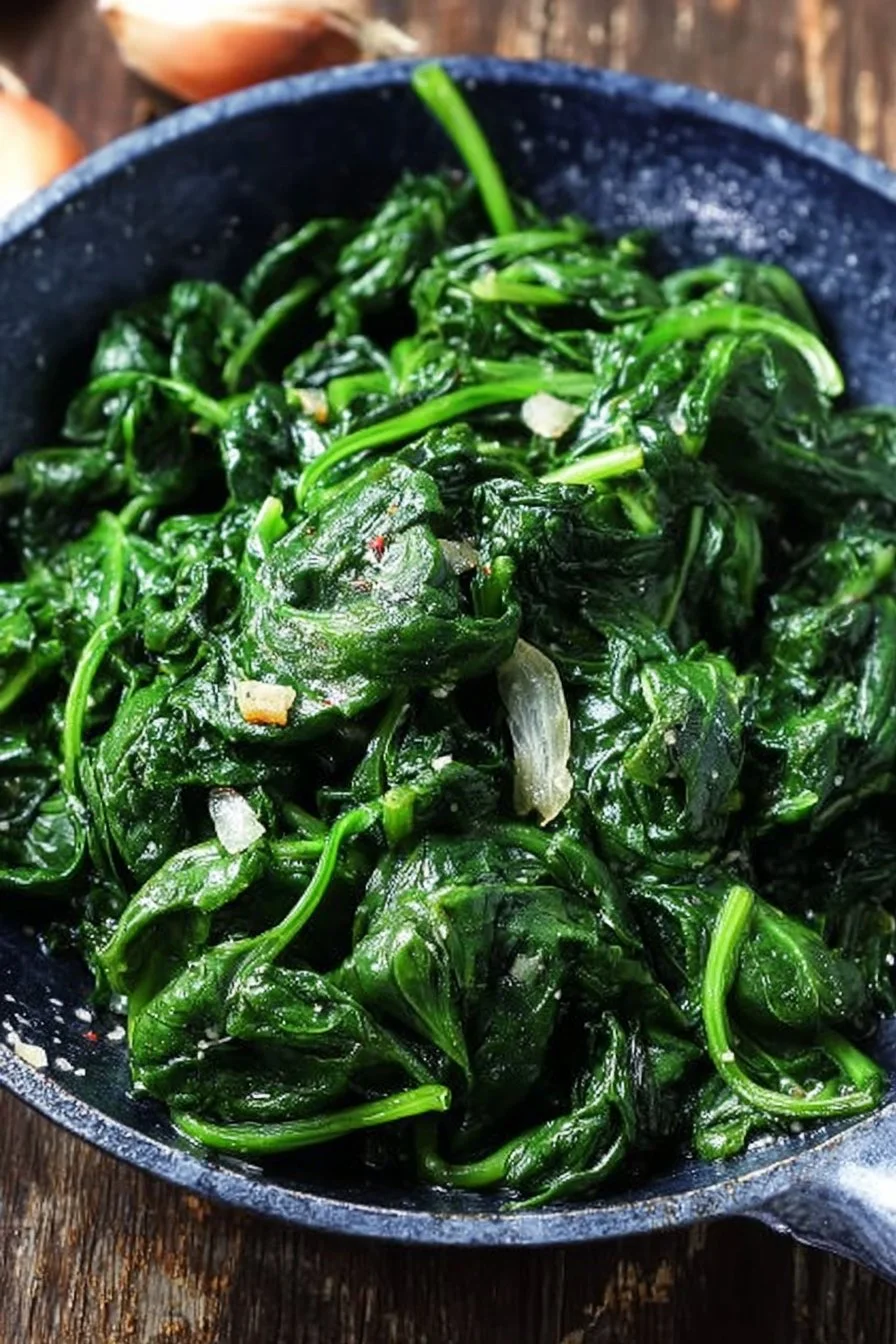
Fresh, garlicky sautéed spinach is one of those tiny kitchen wins: a handful of ingredients, five minutes at the stove, and you have a tender, bright green side that elevates weeknight dinners, brunch spreads, or holiday plates. This version leans on olive oil, garlic, and a final shower of Parmesan for a savory finish that complements everything from roasted chicken to simple pasta. If you’re serving a casual brunch, it also pairs nicely with a refreshing drink like a quick non‑alcoholic punch to balance the savory greens.
Why you’ll love this dish
This sautéed spinach recipe is fast, forgiving, and dependable. It’s the sort of dish you can make when you need a healthy green in a hurry or when you want to boost a meal with minimal fuss. It’s also budget-friendly — a big bag of baby spinach shrinks down to a flavorful side that feeds several people.
“I always keep this recipe in my weeknight rotation — five minutes, tiny cleanup, and it tastes like I spent hours on it.”
Reasons to reach for this recipe:
- Ultra-fast: ready in about 5 minutes on the stove.
- Minimal ingredients: pantry staples deliver big flavor.
- Versatile: works as a side, a bed for proteins, or folded into pastas and omelets.
- Crowd-pleasing: mild enough for kids, flavorful enough for adults.
How this recipe comes together
A quick overview before you start: warm oil, briefly toast the garlic, add a large pile of spinach, and toss until just wilted. Timing is short — the garlic needs only about 30–60 seconds to become fragrant, and the spinach wilts in 2–3 minutes. Finish with salt, pepper, and grated Parmesan off the heat so the cheese melts gently without becoming gluey.
Expect to:
- Heat olive oil over medium heat.
- Sauté minced garlic until aromatic (don’t let it brown).
- Add fresh spinach in batches if needed, stirring until wilted.
- Season, remove from heat, and sprinkle with Parmesan.
Key ingredients
- Fresh spinach (baby spinach or young leaves) — about 8–10 ounces will wilt down to a generous side for 2–4 people.
- Substitution: mature spinach works but may need tougher stems removed.
- Olive oil — extra virgin for flavor; use a neutral oil if you prefer a higher smoke point.
- Garlic — 1–2 cloves, minced; adjust to taste.
- Parmesan cheese — freshly grated for best melt and flavor.
- Salt and black pepper — to taste.
Notes on ingredients:
- Buying pre-washed baby spinach saves time, but always check for grit. If using a big bundle, wash and spin dry.
- Freshly grated Parmesan has better texture and flavor than pre-shredded blends.
Step-by-step instructions
- Heat 1–2 tablespoons olive oil in a large skillet over medium heat. Use a wide pan so the spinach has room to wilt quickly.
- Add 1–2 cloves minced garlic. Sauté about 30–60 seconds until fragrant. Watch carefully — garlic turns bitter if it browns.
- Add the fresh spinach to the skillet. If it’s a large quantity, add in two batches. Stir and toss until leaves are just wilted, about 2–3 minutes total.
- Season with salt and freshly ground black pepper to taste. Taste and adjust — a little salt brings out the spinach’s natural sweetness.
- Remove the pan from the heat and immediately sprinkle with 1–2 tablespoons grated Parmesan. Toss briefly so the residual heat melts the cheese.
- Serve warm on its own or as a bed for proteins.
Timing: active cooking takes 3–5 minutes. Total time including prep is around 8–10 minutes.
Serving suggestions
- Serve alongside grilled or roasted chicken, fish, or steak. The garlicky, cheesy greens cut through richer proteins.
- Fold the warm spinach into scrambled eggs or an omelet for breakfast.
- Toss with pasta and a splash of reserved pasta water; for a creamier finish, mix with ricotta or finish with a knob of butter. If you want a heartier main built around spinach, consider pairing it with a pasta like this creamy gnocchi with spinach and feta.
- For plating: tuck the spinach under sliced meat or spoon it down the center of the plate for an elegant look. Garnish with extra Parmesan and a squeeze of lemon if you like brightness.
Storage and reheating tips
- Refrigeration: Cool spinach to room temperature and store in an airtight container for up to 3–4 days. Add a paper towel to absorb excess moisture.
- Freezing: Cooked spinach can be frozen, but texture softens; freeze in a shallow container or freezer bag for up to 2 months for use in cooked dishes (soups, stews, casseroles).
- Reheating: Reheat gently on the stove over low heat or in a microwave in short bursts. If it looks dry, add a teaspoon of olive oil or a splash of water. Avoid overheating — prolonged heat makes spinach watery and unappealing.
- Safety: Don’t leave cooked spinach at room temperature for more than 2 hours to avoid bacterial growth.
Pro chef tips
- Dry leaves = better sauté: Excess water causes steaming, not sautéing. Use a salad spinner or pat leaves dry.
- High heat, quick tosses: Medium to medium-high heat gives a quick wilt and keeps color vivid. Toss often for even cooking.
- Garlic timing: Add garlic just before the spinach. If garlic cooks too long, it can brown and taste bitter.
- Don’t overcook: Spinach should be tender but still bright green. Overcooking makes it dull and mushy.
- Season near the end: Salt draws out moisture; seasoning at the end keeps the texture better.
- Keep a lid handy: If you need the spinach to wilt faster, cover the pan for 20–30 seconds, then remove the lid and toss to finish.
Flavor swaps
- Make it vegan: Skip the Parmesan and finish with toasted pine nuts or a sprinkle of nutritional yeast for a cheesy note.
- Add heat: Toss in red pepper flakes with the garlic for a spicy kick.
- Lemon and herbs: A squeeze of lemon and a handful of chopped parsley or dill brightens the dish.
- Asian twist: Use sesame oil in place of olive oil and finish with a splash of soy sauce and toasted sesame seeds.
- Add mix-ins: Sauté sliced mushrooms with the garlic first, then add spinach for more body. Crumbled bacon or crispy pancetta also pairs well.
Your questions answered
Q: Can I use frozen spinach instead of fresh?
A: Yes — but thaw and squeeze out as much moisture as possible. Frozen spinach works best in cooked dishes like frittatas, soups, or pasta rather than as a plated side because the texture is softer.
Q: How much spinach does one bunch yield after cooking?
A: A typical 10–12 ounce bag of baby spinach cooks down to roughly 1–1.5 cups. Fresh volumes vary, so plan for about 3–4 ounces per person as a side.
Q: Can I make this ahead for a dinner party?
A: You can sauté spinach an hour or two ahead and reheat gently before serving, but it’s best fresh. If you must make it earlier, store it loosely covered and reheat in a skillet with a splash of oil to revive the texture.
Q: How do I prevent spinach from becoming bitter?
A: Avoid overcooking and burning the garlic. Use fresh, bright spinach and finish with a pinch of salt and a squeeze of lemon if needed to balance any bitterness.
Q: Is this recipe gluten-free and low-carb?
A: Yes — the recipe is naturally gluten-free and low in carbohydrates. Adjust toppings as needed for dietary preferences.
If you’d like a printable card or a version scaled up for a crowd, tell me how many servings you need and I’ll convert the ingredients and timings.
Garlicky Sautéed Spinach
Ingredients
Main Ingredients
- 8-10 ounces Fresh baby spinach Use pre-washed for convenience.
- 1-2 tablespoons Olive oil, extra virgin Use a neutral oil if preferred for higher smoke point.
- 1-2 cloves Garlic, minced Adjust garlic quantity to taste.
- 1-2 tablespoons Parmesan cheese, freshly grated For best melt and flavor.
- Salt and black pepper To taste.
Instructions
Cooking
- Heat olive oil in a large skillet over medium heat.
- Add minced garlic and sauté for about 30–60 seconds until fragrant, being careful not to let it brown.
- Add fresh spinach to the skillet. If there is a large quantity, you can add it in batches. Stir and toss until the leaves are just wilted, which should take about 2–3 minutes.
- Season with salt and freshly ground black pepper to taste, and remove the pan from heat.
- Immediately sprinkle with grated Parmesan cheese and toss briefly so the cheese melts with the residual heat.