
Start here
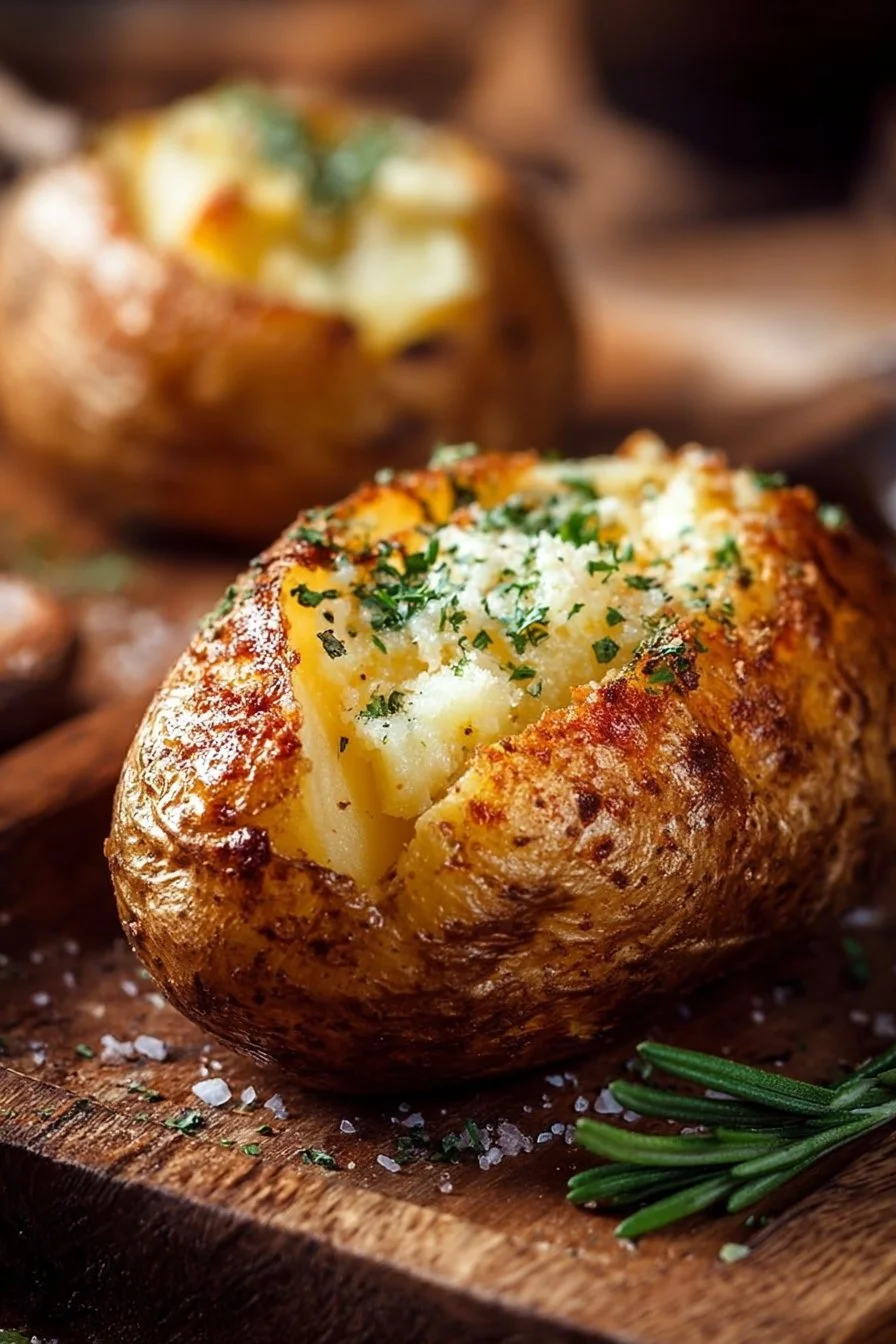
There’s something deeply satisfying about a perfectly baked potato: crackling skin, cottony interior, and endless topping possibilities. These restaurant-style baked potatoes use large russet spuds, a slick of olive oil, salt and pepper, and a hot oven to deliver that diner-quality contrast of crisp exterior and pillowy inside. If you enjoy exploring potato varieties and want context on sweeter options, see this primer on Murasaki sweet potatoes for comparison.
Why you’ll love this dish
These are the baked potatoes you order when you want a side that feels special but is incredibly simple to make. They’re budget-friendly, family-approved, and scale easily for a crowd. Make them for weeknight dinners, as a loaded weekend treat, or when hosting — guests love the theatrical opening and endless topping choices.
“Crispy skin, fluffy center — tastes like it came from a steakhouse. We serve ours with butter and chives and never have leftovers.” — home cook review
The cooking process explained
This recipe is intentionally minimal so the potato’s natural flavor shines. The sequence is straightforward:
- Preheat the oven very hot (425°F / 220°C) to build crispy skin.
- Clean and dry the potatoes so oil and salt adhere.
- Oil and salt the exterior to create a flavorful, crunchy crust.
- Prick with a fork so steam escapes safely while baking.
- Bake directly on the oven rack for even heat circulation. Time varies with size — plan for 45–60 minutes.
Understanding these steps helps you predict the result: hotter oven + direct rack = crispier skin; proper oil and salt = better mouthfeel and seasoning.
Key ingredients
- Large baking potatoes (Russet variety recommended) — choose similar sizes for even baking.
- Olive oil — a tablespoon or two per potato (enough to coat). Extra-virgin is fine; regular olive oil works too.
- Kosher salt or coarse sea salt — for a crunchy, seasoned skin.
- Freshly ground black pepper — to taste.
Notes/substitutions:
- Yukon Golds can be used, but they have thinner skins and a creamier texture; reduce bake time by ~10–15 minutes.
- For lower oil, use a light spray of oil, but expect slightly less-crisp skin.
How to prepare it
- Preheat your oven to 425°F (220°C). Position a rack in the center.
- Scrub each potato under running water with a stiff brush to remove dirt. Pat completely dry with a towel — moisture prevents crisping.
- Rub about 1 tablespoon of olive oil over each potato; use your hands to coat evenly. Sprinkle generously with kosher salt and a grind of pepper.
- Prick each potato 4–6 times all over with a fork to allow steam to escape.
- Place the potatoes directly on the oven rack (no baking sheet) so air circulates and the skins crisp. Bake 45–60 minutes, depending on size, until a fork or skewer slides in easily. For an extra-check, the internal temperature should be around 205°F (96°C) for a fluffy interior.
- Remove with tongs or an oven mitt and let cool a few minutes before slicing open and serving. For inspiration on other potato varieties, consult this Murasaki sweet potato guide if you’re curious how different roots behave in the oven.
Safety note: baked potatoes are hot inside — let them rest briefly and handle with mitts.
Best ways to enjoy it
- Classic: split open, fluff the flesh with a fork, add butter, salt, pepper, and chopped chives.
- Loaded: sour cream, shredded cheddar, crispy bacon, and scallions.
- Vegetarian/vegan: olive oil or vegan butter, steamed broccoli, nutritional yeast, or a spoonful of chili.
- Steakhouse style: top with melted herb butter and a sprinkle of flaky sea salt.
For a composed plate, serve the potato alongside roasted meats, fresh greens, or a braised vegetable for contrast.
Storage and reheating tips
- Refrigeration: Store cooled baked potatoes in an airtight container or wrapped in foil for up to 3–4 days. If you plan to keep skins crispier, wrap loosely with paper first.
- Freezing: Fully baked potatoes can be frozen for up to 3 months. Wrap individually in foil and place in a freezer bag. Texture will change slightly; best used in casseroles or mashed preparations after freezing.
- Reheating: Oven method (best for crisp skin): Preheat to 350°F (175°C) and reheat 20–30 minutes if refrigerated, longer from frozen. Microwave method (quickest): pierce and microwave on high 2–4 minutes, then finish under a hot broiler or in the oven for a few minutes to restore crispness.
Food safety: never leave baked potatoes at room temperature for more than 2 hours to prevent bacterial growth.
Pro chef tips
- Choose uniform, large russets so everything finishes at the same time.
- Dry thoroughly after washing — residual moisture steams the skin and stops crisping.
- Use kosher salt for even coverage; its larger flakes cling to the oiled skin and add crunch.
- Bake directly on the rack and avoid wrapping in foil during initial bake; foil traps steam and softens the skin.
- If you want ultra-crisp skin, finish under a preheated broiler for 1–2 minutes while watching closely.
- To speed things up without losing much quality, microwave the potato 4–6 minutes, then transfer to the oven for 15–20 minutes to crisp.
Recipe variations
- Twice-baked: scoop cooked flesh, mix with sour cream and cheese, return to skins, and bake until golden.
- Herb & garlic: rub skins with garlic oil and top with chopped parsley and grated Parmesan.
- Tex-Mex: top with black beans, salsa, avocado, and lime crema.
- Vegan loaded: coconut yogurt or cashew cream, scallions, and grilled mushrooms.
- Miniature version: use baby potatoes, roast on a sheet pan at 400°F for 30–40 minutes until tender.
Common questions
Q: How long does it take to prep and cook?
A: Active prep is about 5–10 minutes (scrub, dry, oil, salt, prick). Bake time is 45–60 minutes at 425°F for large russets.
Q: Can I bake potatoes at a lower temperature for longer?
A: Yes — baking at 375°F will work but expect 75–90 minutes. Higher heat promotes crisp skin; lower heat yields a softer skin and slightly different texture.
Q: How can I tell when a baked potato is done?
A: A fork or skewer should slide in with little resistance, and the interior should feel fluffy when you open it. For precision, the internal temperature should read about 205°F (96°C).
Q: Is it safe to prick potatoes before baking?
A: Yes — pricking prevents steam from building up and reduces the chance of the potato splitting open unexpectedly.
Q: Can I prepare these ahead of time and reheat for guests?
A: Absolutely. Bake them fully, cool, refrigerate, then reheat in a 350°F oven for 20–30 minutes before serving to restore texture.

Baked Potatoes
Ingredients
Main Ingredients
- 4 pieces Large russet potatoes Choose uniform sizes for even baking.
- 1-2 tablespoons Olive oil Extra-virgin or regular olive oil works.
- to taste Kosher salt or coarse sea salt For a crunchy, seasoned skin.
- to taste Freshly ground black pepper
Instructions
Preparation
- Preheat your oven to 425°F (220°C) and position a rack in the center.
- Scrub each potato under running water with a stiff brush to remove dirt. Pat completely dry with a towel.
- Rub about 1 tablespoon of olive oil over each potato, coating evenly. Sprinkle generously with kosher salt and a grind of pepper.
- Prick each potato 4–6 times all over with a fork to allow steam to escape.
Baking
- Place the potatoes directly on the oven rack and bake for 45-60 minutes, depending on size, until a fork or skewer slides in easily.
- Remove with tongs or an oven mitt and let cool for a few minutes before slicing open and serving.